

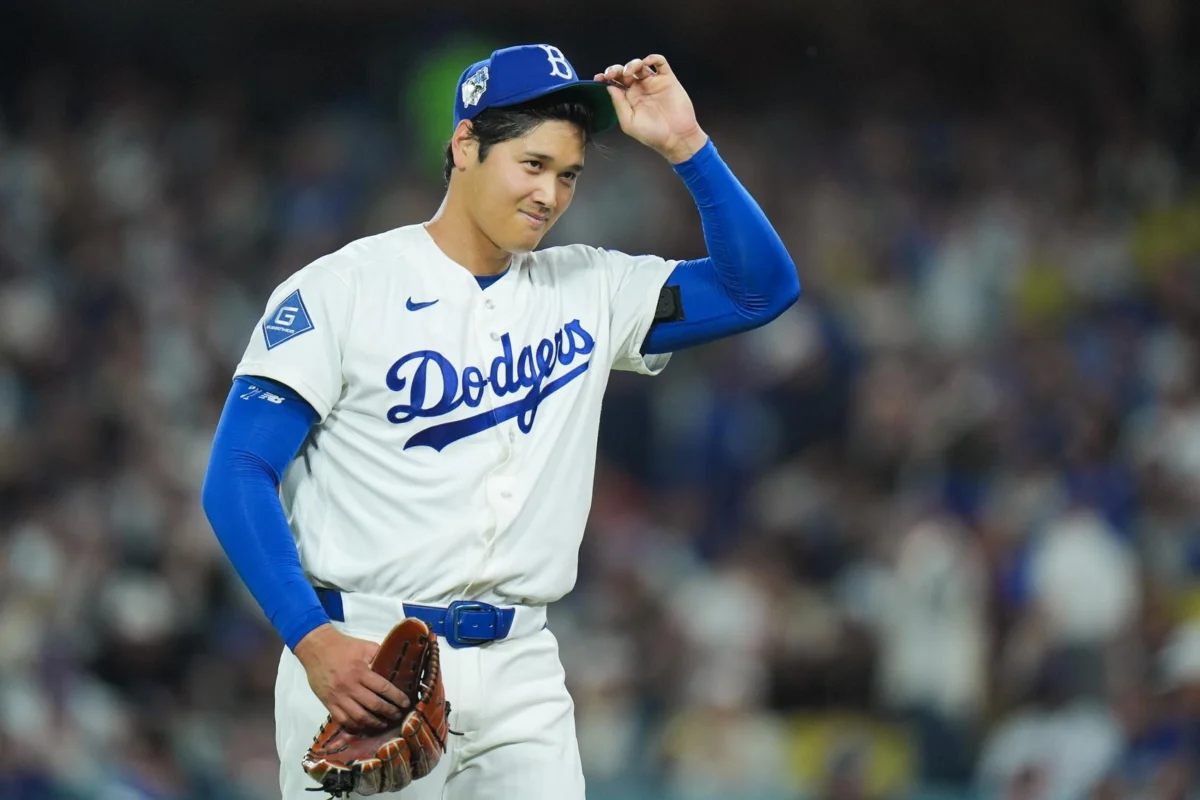
Shohei Ohtani delivered a masterclass on the pitcher’s mound for the Los Angeles Dodgers on Wednesday night, striking out 10 batters in a commanding performance. This exceptional outing came just days after he was intentionally kept out of the designated hitter role due to a pitch that struck him earlier in the week. His 22 swing-and-misses against the New York Mets marked a personal best since joining the Dodgers, showcasing a remarkable level of control and power. Ohtani’s dominance was particularly evident in the sixth inning, where he struck out the side on a mere 14 pitches, contributing significantly to the Dodgers’ decisive 8-2 victory. Over six innings, the right-hander conceded only one run and two hits, a testament to his stellar form.
"It was truly a pleasure to witness him dedicate his full attention to a single discipline," remarked manager Dave Roberts, reflecting on Ohtani’s singular focus. "Channeling all that energy into pitching proved incredibly beneficial. In his last few starts, I sensed he was grappling with himself at times, but tonight, he was exceptionally brilliant." This strategic decision to have Ohtani concentrate solely on pitching marked the first time since May 28, 2021, during his tenure with the Los Angeles Angels, that he was not included in the batting lineup on a night he took the mound.
Ohtani himself acknowledged the unusual circumstances, noting, "The breaks between innings felt slightly longer than usual. That was really the only discernible difference. I found it to be a very productive period, allowing me to delve deeper into game-planning." The soreness Ohtani experienced stemmed from a pitch thrown by Mets pitcher David Peterson on Monday, which unfortunately connected with the back of his right shoulder.
Roberts had anticipated this scenario, stating before the game, "Had he not been hit by that pitch, he would have been batting and pitching tonight. However, I believe that by allowing him to solely focus on pitching, it will be a boon for both his mental and physical state. Hopefully, this is just a brief period of fatigue that we can move past." A positive indicator, according to Roberts, was Ohtani’s decision not to ice his shoulder after the game, suggesting a significant improvement in his condition.
The manager further elaborated that Ohtani had been feeling progressively better since Monday. Nevertheless, the collective judgment of the training staff, coaches, and Roberts leaned towards caution, deeming it prudent for him to forgo hitting in the series finale. Ohtani himself admitted to initial surprise at this decision. "Because I had never before asked him to pitch without also hitting," Roberts explained. "I believe he understands that I am making a decision that is in the best interest of the player, for him, and for the team."
Since being hit by the pitch, Ohtani’s performance at the plate has seen a dip, as he has gone 0 for 7. However, his remarkable on-base streak reached an impressive 48 games after he was intentionally walked in the eighth inning on Tuesday, securing the fourth-longest such streak in franchise history. Roberts expressed confidence that Ohtani would return to his dual-threat role as both a hitter and pitcher in his upcoming start. Nonetheless, he did not rule out the possibility of strategically resting Ohtani from hitting on future pitching days.
"It’s always a difficult decision to exclude your best hitter from the lineup," Roberts conceded. "The subsequent question then becomes, when he does hit on days he pitches, where is the optimal position in the batting order for him? I believe there are valid arguments for both scenarios – perhaps moving him down slightly in the order to give him a breather and allow him to settle into the game. However, I am not yet prepared to make that definitive decision. It is, however, something that I am keeping in mind."
Stepping into the designated hitter role for Ohtani was Dalton Rushing, who made an immediate impact by blasting a grand slam in the eighth inning. "I’m not getting used to it," Rushing quipped with a chuckle. "He told me to hit a homer for him. I guess it worked out in the end." When questioned about a potential return to his dual-threat capabilities, Ohtani responded with a smile, "Yeah, totally. We had a really good DH hit today, so I’m very open to that."
On the mound, Ohtani’s streak of 28 2/3 consecutive innings without allowing an earned run was finally broken by an RBI double from the Mets’ MJ Melendez in the fifth inning. "It just added a little more intensity after they scored a run," Ohtani remarked. "But overall, it felt really nice and easy and loose throughout the whole outing. So, I think that’s the reason why I threw a little harder." Roberts observed a noticeable increase in Ohtani’s intensity after Melendez’s second double. "He was throwing 98 miles per hour all night, with some 99s, and then in the fifth inning, he reached back for 100," Roberts noted. "That’s impressive."
Ohtani’s transition to pitching for the Dodgers last season saw him post a 1-1 record with a 2.87 ERA, accumulating 62 strikeouts in 47 innings over 14 starts. His four-seam fastball averaged a career-best 98.4 mph last year, underscoring his formidable pitching prowess. His remarkable 48-game on-base streak now stands as the longest for a Japanese-born player, surpassing the legendary Ichiro Suzuki’s 43-game streak in 2009. This sustained success highlights Ohtani’s unique ability to excel at the highest level in both pitching and hitting, a feat rarely seen in modern baseball. The strategic management of his workload, especially in light of the recent injury scare, is a crucial element for the Dodgers as they navigate the demanding baseball season. The team’s commitment to prioritizing Ohtani’s long-term health and performance, while still capitalizing on his extraordinary talents, will be a key narrative to follow throughout the year. His dedication to overcoming the setback and returning to his dominant form serves as an inspiration to fans and teammates alike, reinforcing his status as one of baseball’s most captivating athletes. The Dodgers’ approach to Ohtani’s dual role, balancing his offensive contributions with his pitching duties, is a delicate dance that manager Dave Roberts appears to be navigating with careful consideration and a deep understanding of his star player’s needs. The potential for strategic adjustments in his batting order on pitching days, as mentioned by Roberts, suggests a forward-thinking approach to maximizing his effectiveness and longevity. This nuanced management strategy is vital for a player whose physical demands are arguably the highest in the sport. The successful outcome of Wednesday’s game, with Ohtani’s pitching brilliance and the team’s overall offensive output, further validates the decision-making process, even with the initial surprise it may have caused Ohtani himself. The narrative surrounding Ohtani is not just about his individual achievements, but also about how the Dodgers are building a championship-caliber team around his unprecedented talents. The development of other players, like Dalton Rushing, who can step up and contribute significantly when called upon, is also a crucial aspect of the team’s overall strength. Ohtani’s willingness to embrace these strategic shifts, even when they deviate from his established routine, speaks volumes about his maturity and commitment to the team’s success. The ongoing story of Shohei Ohtani is a captivating blend of athletic marvel, strategic team management, and a testament to the evolving landscape of professional baseball.