


In a stark display of frustration over perceived lack of solidarity during the recent conflict with Iran, the Pentagon has internally drafted a series of policy options aimed at sanctioning NATO allies deemed unsupportive of U.S. military operations. These proposed measures, revealed by a U.S. official speaking on condition of anonymity, range from ostracizing recalcitrant nations within the alliance to potentially reassessing long-standing diplomatic commitments. The confidential email underscores a deep-seated concern within the U.S. defense establishment that certain NATO partners failed to provide essential access, basing, and overflight rights – collectively known as ABO – crucial for projecting power and sustaining operations against Iran.
The internal document explicitly labels ABO as “the absolute baseline for NATO,” indicating that the refusal or reluctance of some allies to grant these fundamental permissions has escalated tensions to high levels within the Pentagon. While the email does not suggest a complete U.S. withdrawal from the North Atlantic Treaty Organization, a move President Donald Trump has previously mused about, it does outline a tiered approach to punitive actions. One significant proposal involves suspending “difficult” countries from holding prominent or prestigious positions within NATO’s command structure and decision-making bodies. This move, the official explained, is intended to send a potent signal of displeasure and to diminish any lingering “sense of entitlement” among European allies, who the U.S. feels have not sufficiently contributed to collective security in this instance.
President Trump has been an outspoken critic of NATO allies, particularly their perceived failure to deploy naval assets to ensure the free passage of global shipping through the Strait of Hormuz, which was effectively blockaded following the commencement of the air war on February 28. His public pronouncements have often been sharp, questioning the value of the alliance if its members are unwilling to reciprocate the security guarantees provided by the United States. In an interview with Reuters on April 1, Trump provocatively asked, “Wouldn’t you if you were me?” when questioned about the possibility of the U.S. exiting NATO, highlighting the deep fissures that have emerged in transatlantic relations.
However, the Pentagon email, as described by the official, steers clear of recommending the outright abandonment of the alliance or the closure of U.S. military bases stationed across Europe. The scope of potential force drawdowns from the continent, a widely anticipated development, remains undisclosed within the reviewed options. This suggests a desire within the administration to leverage existing alliances while simultaneously demanding greater burden-sharing and commitment from partners.
Responding to inquiries about the internal memo, Pentagon Press Secretary Kingsley Wilson issued a statement that echoed the President’s sentiments. “As President Trump has said, despite everything that the United States has done for our NATO allies, they were not there for us,” Wilson stated. “The War Department will ensure that the President has credible options to ensure that our allies are no longer a paper tiger and instead do their part. We have no further comment on any internal deliberations to that effect.” This firm stance indicates that the U.S. is prepared to take concrete steps to realign its security partnerships based on reciprocal commitment.
The U.S.-led military engagement with Iran has cast a long shadow over the future of the 76-year-old NATO alliance. Analysts and diplomats have voiced unprecedented concerns that the U.S. might, in turn, be less inclined to defend European allies should they face aggression. The United Kingdom, France, and other European nations have maintained that directly participating in the U.S. naval blockade would constitute entering the war itself. Their stated willingness to assist in keeping the Strait open is contingent upon the establishment of a lasting ceasefire or the complete cessation of hostilities, a position that has evidently been met with impatience by Washington.
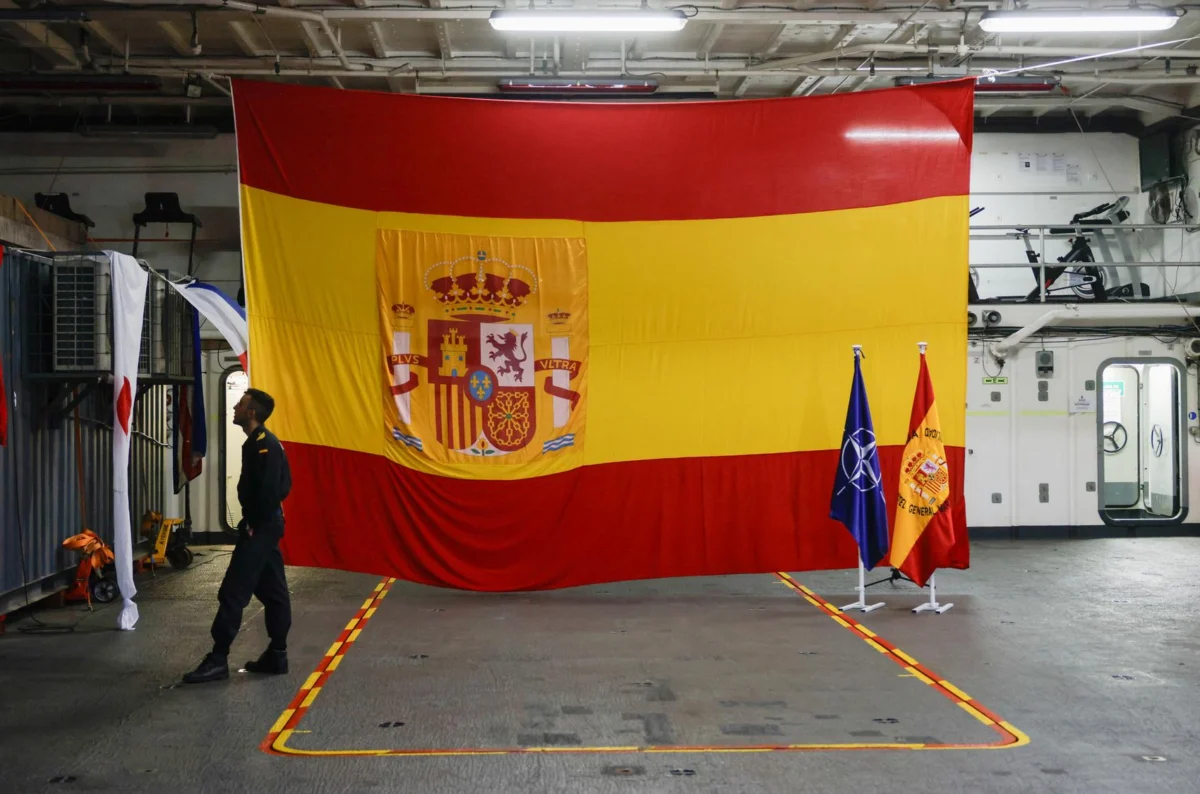
Trump administration officials have consistently emphasized that NATO cannot operate as a unilateral endeavor, stressing the principle of mutual obligation. Their frustration has been particularly directed at Spain, where the Socialist government declared its refusal to permit the use of its bases or airspace for offensive operations against Iran. This stance is significant given the presence of two key U.S. military installations in Spain: Naval Station Rota and Morón Air Base, both vital logistical hubs.
The policy options detailed in the email are designed to send a robust message to NATO allies, aiming to curtail what the U.S. perceives as a passive reliance on American security assurances. The proposal to suspend Spain from the alliance, while acknowledged to have a limited direct impact on U.S. military operations, is considered to carry substantial symbolic weight. The exact mechanisms for such a suspension within NATO are not immediately clear, and Reuters could not ascertain whether established procedures exist for expelling or suspending a member state.
Beyond direct NATO sanctions, the memo also contemplates a more unconventional tactic: reassessing U.S. diplomatic support for certain European territorial claims, notably the Falkland Islands. This option suggests a broader strategy of leveraging U.S. influence to press allies for greater alignment with American foreign policy objectives. The Falkland Islands, administered by the United Kingdom, remain a subject of dispute with Argentina, whose current President, Javier Milei, is a notable ally of Donald Trump. The historical context of the 1982 Falklands War, a brief but bloody conflict between Britain and Argentina, underscores the sensitivity of this territorial claim.
President Trump’s public commentary has often been sharp, even extending to personal critiques of foreign leaders. He has repeatedly disparaged British Prime Minister Keir Starmer, characterizing him as “cowardly” for his reluctance to join the U.S. war with Iran and famously dismissing British aircraft carriers as “toys.” While Britain initially resisted a U.S. request to allow aircraft to conduct offensive strikes against Iran from two British bases, it later permitted defensive missions aimed at protecting regional residents, including British citizens, amidst escalating Iranian retaliatory actions. This nuanced response, balancing national interests with alliance commitments, appears to have been insufficient for the more demanding U.S. stance.
Earlier this month, Defense Secretary Pete Hegseth articulated the administration’s perspective at a Pentagon press briefing, stating that the conflict with Iran had “laid bare” fundamental vulnerabilities. He highlighted the strategic reality that Iran’s longer-range missiles, while not capable of reaching the U.S. mainland, pose a direct threat to European allies. Hegseth’s remarks underscored the perceived imbalance in security responsibilities: “We get questions, or roadblocks, or hesitations… You don’t have much of an alliance if you have countries that are not willing to stand with you when you need them.” This sentiment encapsulates the core of the Pentagon’s internal deliberation—a call for more robust and reliable partnership within the NATO framework, especially in times of heightened global security challenges.