




Japan Braces for Tsunami Threat After Powerful 7.5 Magnitude Offshore Quake
A significant seismic event has rattled Japan’s northeastern coast, with a powerful magnitude 7.5 earthquake striking offshore, triggering urgent warnings for potentially devastating tsunami waves of up to 3 meters. Authorities have issued a stark plea for residents in vulnerable coastal areas to seek higher ground and stay away from the shoreline as the nation mobilizes its emergency response mechanisms.
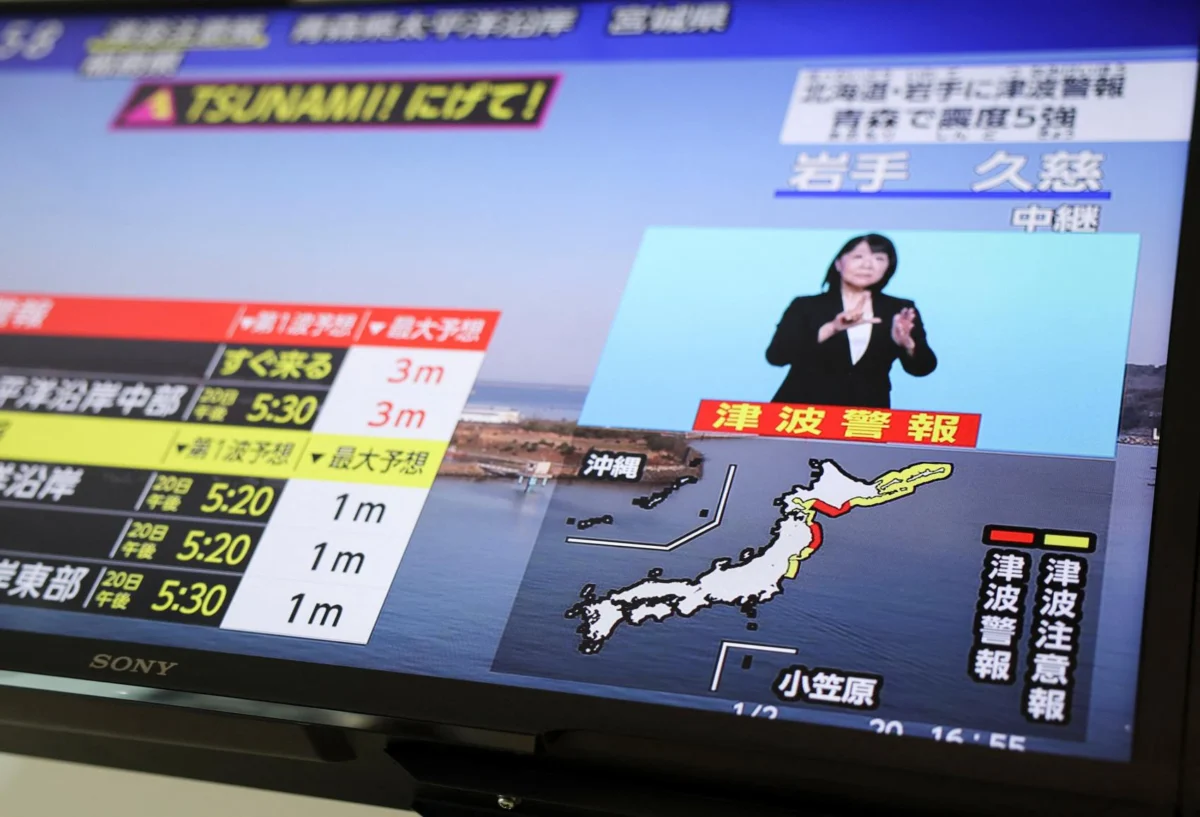
The seismic activity, which commenced at 4:52 p.m. local time, has placed the prefectures of Iwate and Aomori, situated at the northern tip of Japan’s main island of Honshu, and the northern island of Hokkaido under particular alert. These regions are anticipated to bear the brunt of the predicted tsunami impacts. In the immediate hour following the initial tremor, monitoring systems detected waves reaching heights of up to 80 centimeters, underscoring the immediate danger, while the more severe 3-meter wave threat persists.
Communities with vivid memories of the catastrophic 2011 earthquake and tsunami, including the port towns of Otsuchi and Kamaishi, have once again been forced into emergency preparedness. Public broadcaster NHK reported that evacuation orders have been issued for thousands of residents in these areas, a somber reminder of the devastating power of nature. The scars of the 2011 disaster, which claimed tens of thousands of lives and led to the Fukushima Daiichi nuclear power plant meltdowns, remain deeply etched in the collective memory of these coastal communities.

A map illustrating the epicenter of the recent 7.5-magnitude earthquake off the Japanese coast highlights the seismic vulnerability of the region. Image: AP
In response to the unfolding situation, Prime Minister Sanae Takaichi announced the immediate establishment of a government emergency task force. Speaking to reporters from her Tokyo offices, she emphasized the critical importance of citizen safety, urging those in affected zones to prioritize evacuation and seek secure locations. “Possible damage and casualties are now being looked into,” Takaichi stated, underscoring the government’s commitment to assessing the full extent of the impact and coordinating relief efforts.
An official from the Japan Meteorological Agency (JMA), addressing the nation via a separate televised press conference, cautioned that the threat might extend beyond the initial waves. The agency warned of the potential for significant aftershocks in the coming days and weeks, a common occurrence following major seismic events and a factor that adds to the ongoing anxiety and preparedness requirements for the affected populations.

The urgency of the situation was palpable as footage broadcast by NHK showed vessels departing from Hachinohe port in Aomori Prefecture, a precautionary measure taken in anticipation of the incoming tsunami. The screen was emblazoned with a stark “Tsunami! Evacuate!” alert, a visual testament to the gravity of the warning. According to the JMA, a 3-meter tsunami poses a grave threat to low-lying areas, with the potential to inundate buildings and sweep away anything caught in its powerful currents. The force of such waves can be immense, capable of causing widespread destruction and posing a direct threat to human life.
The tremor’s impact was also felt in the disruption of transportation networks. Kyodo News agency reported that bullet train services in Aomori were temporarily halted as a direct consequence of the shaking, a measure taken to ensure passenger safety and prevent potential accidents on the railway lines.
The earthquake itself registered an upper 5 on Japan’s sophisticated seismic intensity scale. This level of shaking is significant enough to make it challenging for individuals to move freely and can lead to the collapse of unreinforced concrete block walls. The JMA pinpointed the epicenter of the quake in the Pacific Ocean, at a relatively shallow depth of 10 kilometers, a factor that can influence the intensity of ground shaking and the generation of tsunamis.
Japan’s geographical position on the “Ring of Fire,” a horseshoe-shaped zone of intense seismic and volcanic activity that encircles the Pacific Basin, makes it one of the most earthquake-prone countries in the world. The nation experiences tremors with remarkable frequency, with seismic events occurring, on average, at least every five minutes. This constant seismic activity is a defining characteristic of life in Japan, necessitating robust infrastructure, advanced warning systems, and a culture of preparedness.
The nation accounts for approximately 20% of all earthquakes globally that register a magnitude of 6.0 or higher. This statistic underscores the inherent seismic risks that Japan continuously navigates, a reality starkly exemplified by the 2011 Tohoku earthquake and tsunami, a catastrophic event that not only resulted in immense loss of life but also triggered the meltdowns at the Fukushima nuclear power plant, a disaster with long-lasting environmental and societal consequences.
In the immediate aftermath of this latest seismic event, a critical concern for many was the safety of nuclear facilities. Fortunately, there are currently no nuclear power plants operating in the directly affected areas. Both Hokkaido Electric Power Co. and Tohoku Electric Power Co. have reported that their idled nuclear facilities in the region have not registered any abnormalities. This news provides a measure of reassurance, given the devastating precedent set by the Fukushima disaster and the heightened public anxiety surrounding nuclear safety in the wake of any significant earthquake.
The proactive measures taken by the government, the vigilance of the JMA, and the immediate response from local authorities and residents highlight Japan’s ingrained preparedness for such natural disasters. The focus now shifts to monitoring the tsunami’s progress, assessing any potential damage, and ensuring the safety and well-being of all citizens in the threatened regions. The resilience of the Japanese people, forged through generations of living with seismic uncertainty, will undoubtedly be called upon once again as they navigate the aftermath of this powerful earthquake and the ongoing threat of the tsunami.
© Thomson Reuters 2026.