Japan Turns Used Diapers into New Ones in Groundbreaking Recycling Initiative
In a nation grappling with overflowing landfills and a rapidly aging population, a pioneering recycling project is giving a second life to a surprisingly significant waste stream: used diapers. Billions of disposable diapers, a substantial portion of which come from seniors rather than infants, are destined for landfills or incineration each year in Japan. Now, a revolutionary breakthrough promises to transform this environmental challenge into a sustainable resource, one soiled nappy at a time.
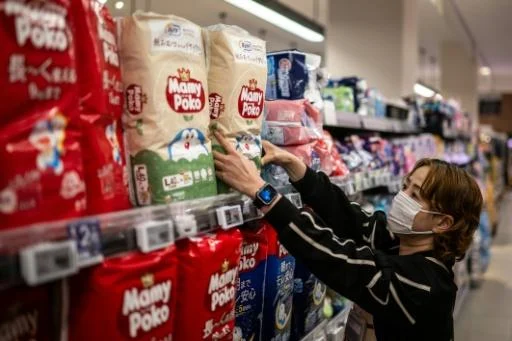
This pilot program, hailed as a world-first, focuses on reclaiming the primary components of disposable diapers to manufacture new ones. The initiative offers a beacon of hope for alleviating the pressure on Japan’s already strained landfill sites and addresses the burgeoning demand for adult diapers in an increasingly elderly society. Takahisa Takahara, the president of Unicharm, a leading Japanese hygiene product manufacturer spearheading this endeavor, highlighted the shifting demographics of diaper use. “The demand for baby diapers is on the decline. However, a growing number of elderly individuals are now using diapers, and more recently, even pets are contributing to this market,” Takahara explained to AFP. He articulated a vision where the environmental guilt associated with disposable products could be reframed into a positive action, making the use of recycled materials economically viable and socially normalized.
Unicharm’s groundbreaking scheme is currently being trialed in two forward-thinking municipalities in southern Japan: Shibushi and Osaki. These communities are already distinguished by their impressive waste recycling rates, managing to repurpose 80 percent of their household refuse – a figure four times the national average. The decision for these localities, collectively home to approximately 40,000 residents, to adopt such radical waste management strategies dates back about 25 years. At that time, projections indicated that their communal rubbish dump would reach full capacity by 2004. Today, thanks to their persistent efforts, that same landfill site is now expected to remain operational for an additional four decades.
The inclusion of diapers in the recycling drive commenced in 2024, with residents being instructed to label designated bin bags with their names. This measure aims to ensure accountability and facilitate the tracking of collected materials. Kenichi Matsunaga, an environment official in Shibushi, emphasized the core objective of the initiative: “Ultimately, our top priority is to reduce our trash and extend the life of the landfill,” he stated to AFP. The collected diapers undergo a rigorous multi-stage process. Initially, they are shredded to break down their structure. This is followed by a thorough washing process to remove impurities. Subsequently, the material is separated into its constituent components: pulp, plastic, and super-absorbent polymer (SAP). These separated materials then become the feedstock for new products.
Unicharm has already demonstrated success in recycling these reclaimed materials into products that do not require the same stringent sanitary standards as new diapers. Toilet paper is one such example, offering a practical and immediate application for the recycled pulp. The company’s most significant achievement, however, lies in its ability to successfully reprocess the pulp, which constitutes the bulk of a diaper’s material, for use in the manufacturing of new diapers. This complex process involves a specialized ozone treatment designed to achieve sterilization, bleaching, and deodorization, ensuring the safety and quality of the recycled components. Tsutomu Kido, a senior executive officer in charge of Unicharm’s recycling business, elaborated on the company’s future ambitions. He revealed that by 2028, Unicharm aims to incorporate the recycled plastic and absorbent polymer from soiled diapers into the production of new ones, thus closing the loop entirely.
Currently, Unicharm’s recycled products are available for purchase in select local stores. These items are priced approximately 10 percent higher than comparable products made from virgin raw materials, a reflection of the innovative and resource-intensive recycling process. In addition to retail availability, the recycled products are also being distributed to selected childcare and senior care facilities, providing tangible benefits to vulnerable populations. Looking ahead, Unicharm is actively exploring methods to further optimize the recycling process, including a focus on reducing water consumption. The company has set an ambitious target of collaborating with 20 municipalities by 2035 to expand its diaper recycling program nationwide.
The Challenge of an Aging Nation and Environmental Responsibility
Japan faces a significant environmental hurdle in its waste management practices. The nation’s recycling rate, at less than 20 percent of municipal waste, lags considerably behind many developed countries. According to data from the National Institute for Environmental Studies, this figure starkly contrasts with the recycling rates of countries like Germany (67 percent), Britain (44 percent), and the United States (around 32 percent). Despite this, Japan’s per capita waste generation is notably lower than the OECD average, with an average American producing nearly three times more waste than their Japanese counterpart. Japan does, however, excel in generating electricity through waste incineration, a common practice for managing non-recyclable refuse.
The demographic landscape of Japan, characterized by its rapidly aging population, plays a crucial role in the escalating diaper waste issue. The country is home to nearly 100,000 centenarians, and in this demographic, the use of diapers and related incontinence products is more prevalent among seniors than among infants. Statistics from the Japan Hygiene Products Industry Association reveal a striking shift: in 2024, Japan produced 9.6 billion adult diapers and incontinence pads, surpassing the 8 billion produced for babies. This trend is projected to intensify. By 2030, the association predicts that Japan will be discarding approximately 2.6 million tons of used diapers annually, an increase from around 2.2 million tons in 2020. The Ministry of the Environment has also highlighted the growing proportion of diapers in the national waste stream, forecasting that by 2030, used diapers will constitute 7.1 percent of Japan’s total trash by weight, up from 5.2 percent in 2020.
Recognizing the urgency of this situation, the Japanese national government has set a goal to encourage greater participation in diaper recycling. By 2030, the aim is for at least 100 out of Japan’s more than 1,700 municipalities to either initiate their own diaper recycling programs or actively engage in discussions to develop such initiatives. This forward-thinking policy is a testament to Japan’s commitment to finding innovative solutions to environmental challenges, particularly those exacerbated by its unique demographic profile. The success of Unicharm’s pilot project in Shibushi and Osaki offers a compelling model for how these national aspirations can be realized, demonstrating that even the most challenging waste streams can be transformed into valuable resources, thereby contributing to a more sustainable future for Japan and potentially the world.
© 2026 AFP