


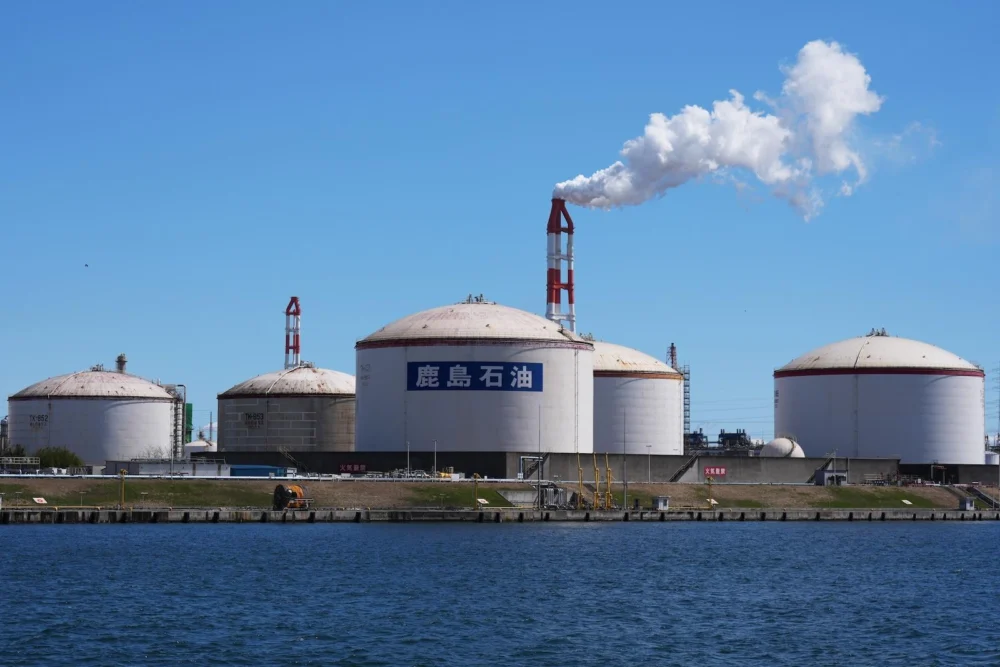
In a significant move to preempt potential energy crunches and stabilize global petroleum markets, Japan has initiated the release of its strategic oil reserves. This proactive step, taken ahead of a broader International Energy Agency (IEA) coordinated effort, underscores growing concerns over supply disruptions stemming from the escalating conflict between the U.S. and Iran, and the resultant impact on vital shipping routes.
This marks Japan’s first draw from its reserves since 2022, when it participated in a coordinated release orchestrated by the IEA following Russia’s full-scale invasion of Ukraine. The initial phase of the current release involves making available 15 days’ worth of reserves held by the private sector. This will be followed by the release of a month’s supply of state-held oil, demonstrating a layered and comprehensive approach to bolstering market confidence and ensuring adequate supply.
The decision to tap reserves was driven by projections of a substantial decline in Japan’s crude oil imports from late March onwards. This anticipated shortfall is directly linked to the effective closure of the Strait of Hormuz, a critical chokepoint for a significant portion of global tanker traffic. Chief Cabinet Secretary Minoru Kihara elaborated on the government’s strategy, stating, “We plan to make efforts so that (the released oil) will circulate in the market smoothly.” He further emphasized the government’s commitment to maintaining energy security, asserting that Japan will “continue to take every possible step to ensure the stable supply of energy, through international coordination and without ruling out any options.” This indicates a dual approach of domestic action and robust international diplomacy.
The International Energy Agency, an influential intergovernmental organization comprising 32 member countries, including Japan, confirmed on Sunday that a planned coordinated release of oil by its members would commence “soon.” Last week, the IEA announced that its member nations would collectively make 400 million barrels of oil available to the market. This substantial injection is a direct response to the severe disruptions anticipated and already being felt in the energy sector due to the ongoing Middle East conflict. The IEA’s swift action signals a united front among major oil-consuming nations to mitigate the economic fallout of geopolitical instability.
The repercussions of these geopolitical tensions have not gone unnoticed in the financial markets. Crude oil futures have experienced a significant surge, fueled by the increasing likelihood of a prolonged conflict. The benchmark West Texas Intermediate (WTI) crude oil futures contract briefly surpassed the $100 per barrel mark again in New York on Sunday, mirroring a similar spike observed just a week prior. This volatility highlights the delicate balance of global oil supply and demand, where even the perception of future shortages can trigger substantial price increases.
To facilitate the smooth integration of released oil into the market and to provide immediate relief to refiners and trading companies, the Japanese government is also adjusting its mandatory reserve requirements. Under Japan’s robust oil stockpiling law, the current mandatory 70-day reserve requirement for these entities will be reduced to 55 days’ worth. This adjustment will effectively allow them to draw down their existing stocks, thereby increasing the availability of petroleum products in circulation without imposing an immediate burden of replenishment.
The scale of Japan’s current reserve release is unprecedented. Prime Minister Sanae Takaichi announced last Wednesday that the government plans to release approximately 80 million barrels of oil. This figure represents the largest such release in Japan’s history, equivalent to 45 days of domestic consumption. For context, this amount is a staggering 1.8 times larger than the oil released following the devastating 2011 Great East Japan Earthquake and tsunami, which crippled the nation’s northeast. This significant volume underscores the gravity with which Japan views the current energy security landscape.
Preparations are actively underway to facilitate the sale of oil from government-held reserves to wholesale distributors. This logistical undertaking involves ensuring that the released oil can be efficiently transferred and made available to the market, thereby translating strategic reserves into tangible supply. The process is designed to be as seamless as possible to minimize any potential bottlenecks and to ensure the timely delivery of oil to where it is most needed.
Japan’s strategic petroleum reserve system is a cornerstone of its energy security policy. As of the close of 2025, the nation maintained substantial reserves totaling approximately 470 million barrels of oil. This quantity is equivalent to 254 days of domestic consumption, providing a significant buffer against supply disruptions. These reserves are strategically divided: 146 days’ worth are government-owned, 101 days’ worth are held by the private sector, and the remainder is jointly stored by oil-producing countries, reflecting a multi-faceted approach to reserve management and international cooperation.
The current draw from reserves marks the seventh instance since the inception of Japan’s oil reserve system in the 1970s. Each previous utilization of these strategic stockpiles has been in response to significant global energy shocks, highlighting the system’s critical role in navigating periods of international instability. The repeated reliance on these reserves underscores their importance as a critical tool for maintaining economic stability and national security.
Japan’s acute vulnerability to disruptions in the Middle East stems from its heavy reliance on imported crude oil. The nation imports over 90 percent of its crude oil from the Middle East, making it particularly susceptible to any impediment to oil and gas transportation from the Persian Gulf. The effective closure of the Strait of Hormuz, a critical maritime artery, has directly contributed to sharp rises in crude oil prices since the commencement of the current Middle East conflict on February 28th. This geopolitical flashpoint, coupled with the inherent fragility of global energy supply chains, necessitates proactive measures like the current reserve release to safeguard against severe economic consequences and ensure the continued functioning of Japan’s energy-dependent economy.
The strategic decision by Japan to release its oil reserves is a testament to its commitment to global energy market stability and its preparedness to act decisively in the face of escalating geopolitical risks. By taking this initiative ahead of the IEA’s broader action, Japan aims to send a clear signal to the market, reassuring stakeholders and mitigating speculative price surges. The move also highlights the interconnectedness of global energy markets and the responsibility that major consuming nations bear in managing supply and demand dynamics, particularly during times of heightened international tension.
The effectiveness of this release will be closely monitored, not only by Japan but also by other nations and market participants. The government’s commitment to ensuring the smooth circulation of released oil and its openness to “any options” suggests a flexible and adaptive approach to energy security. This proactive stance, coupled with international collaboration, is crucial in navigating the complex and often unpredictable landscape of global energy supply in the current geopolitical climate. The move is a clear indication that Japan is prioritizing energy security and is willing to utilize its strategic assets to achieve this critical objective.
Beyond the immediate impact on oil prices, Japan’s decision also has broader implications for international energy policy. It reinforces the importance of strategic petroleum reserves as a vital tool for responding to supply shocks and underlines the necessity of coordinated action among major economies. The IEA’s role in facilitating such coordinated releases is paramount, ensuring that collective action can effectively counterbalance disruptions and prevent undue economic hardship. Japan’s initiative serves as a powerful example of leadership within the IEA framework, encouraging other member states to consider similar measures if necessary.
The ongoing conflict in the Middle East, coupled with the resulting impact on global shipping lanes, presents a multifaceted challenge to energy security. The Strait of Hormuz, through which a significant portion of the world’s oil passes, remains a focal point of concern. Any disruption to this vital waterway has immediate and far-reaching consequences for oil-producing nations and consuming countries alike. Japan’s proactive release of reserves is a strategic response designed to cushion the blow of potential supply interruptions and to maintain the flow of essential energy resources.
The intricate web of global energy trade means that even regional conflicts can have a ripple effect worldwide. The volatility observed in crude oil futures is a clear indicator of this sensitivity. The prospect of prolonged hostilities in the Middle East fuels uncertainty, leading traders and investors to price in higher risk premiums. Japan’s decision to inject oil into the market aims to temper this speculation and to provide a tangible supply buffer, thereby contributing to a more stable and predictable energy environment.
The scale of Japan’s reserves, representing over 250 days of domestic consumption, is a testament to its long-term commitment to energy security. The strategic division of these reserves between government holdings and private sector stocks, along with joint storage arrangements with producing nations, reflects a sophisticated and resilient approach. This diversified holding strategy enhances the nation’s ability to respond effectively to a range of scenarios, from localized disruptions to widespread global crises.
As the world navigates an era of increasing geopolitical complexity, the importance of energy security cannot be overstated. Japan’s decisive action in releasing its strategic oil reserves serves as a crucial reminder that proactive measures and international cooperation are indispensable in safeguarding against supply shocks and ensuring the continued economic well-being of nations worldwide. The ongoing efforts to stabilize the market and ensure the smooth distribution of petroleum products will be critical in mitigating the broader economic impacts of the current Middle East conflict.
© KYODO