


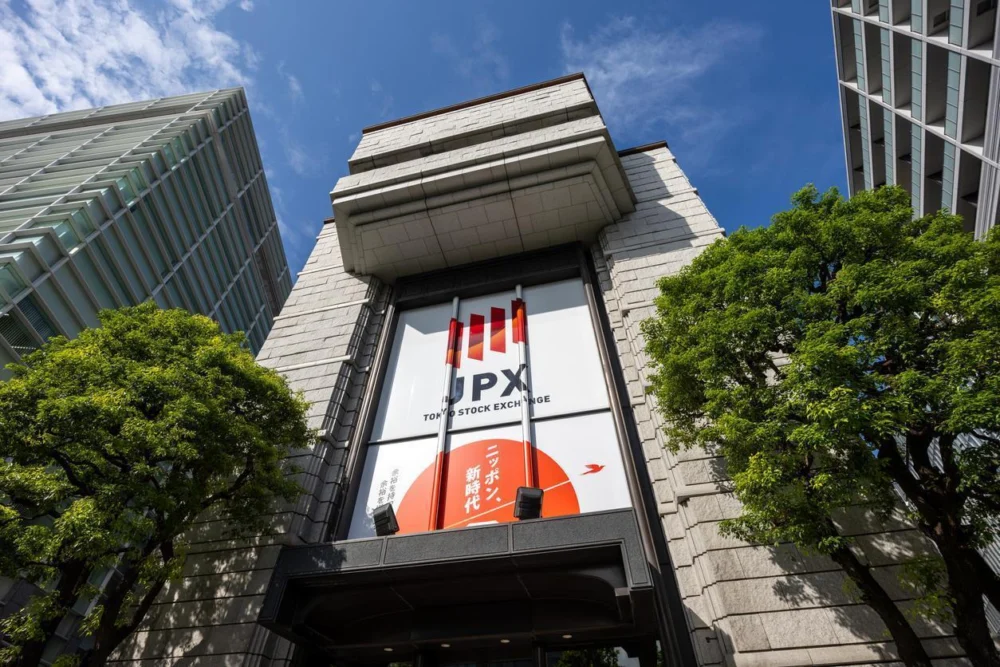
Monday witnessed a seismic shock reverberate through Tokyo’s financial markets, as the benchmark Nikkei 225 index experienced its third-largest point decline in history, plummeting by over 2,800 points. This dramatic sell-off was fueled by escalating fears of a protracted conflict in the Middle East, which sent crude oil futures soaring to concerning new heights. The Nikkei 225 closed the trading session at 52,728.72, marking a substantial loss of 2,892.12 points, or a steep 5.20 percent, from its Friday closing. The broader Topix index also succumbed to the prevailing bearish sentiment, finishing the day down 141.09 points, or 3.80 percent, at 3,575.84.
The sell-off was broadly distributed across the market, with the top-tier Prime Market seeing significant declines in sectors such as nonferrous metals, glass and ceramics products, and machinery. These industries, often sensitive to global economic shifts and commodity prices, bore the brunt of the investor panic. Meanwhile, the Japanese yen weakened against the U.S. dollar, with the greenback trading in the upper 158 yen range in Tokyo. This currency movement underscored the prevailing anxieties about the economic repercussions of spiraling crude oil prices, which directly impact import costs and inflation for energy-dependent nations like Japan.
The darkening geopolitical landscape, particularly in the Middle East, cast a long shadow over investor confidence. Reports suggesting a potential deployment of U.S. ground troops within Iran, attributed to President Donald Trump’s expressed interest, significantly diminished expectations for a swift resolution to the ongoing conflict. This development, coupled with the announcement of Mojtaba Khamenei’s appointment as Iran’s supreme leader following the tragic killing of his father, Ayatollah Ali Khamenei, intensified fears that the military confrontation and the subsequent surge in crude oil prices could be prolonged. Investors, already on edge, interpreted these events as signals of a deepening and potentially enduring regional instability.
The leadership transition within Iran, while a significant internal event, did little to assuage global concerns. Wataru Akiyama, a strategist in the Investment Content Department at Nomura Securities Co., offered a pragmatic perspective, stating, “There is a view that even if the top leader changes, Iran’s religious regime is unlikely to change drastically.” This sentiment suggests that fundamental policy directions, particularly those pertaining to regional engagement and potential military actions, might remain consistent, regardless of the individual at the helm. This perceived continuity of the regime’s core ideology further fueled the apprehension about an extended period of uncertainty and potential conflict.
The surge in crude oil prices has been a direct consequence of the escalating Middle East tensions. The benchmark West Texas Intermediate (WTI) crude oil futures contract experienced a dramatic spike, temporarily breaching the $119 per barrel mark in New York trading on Sunday. This represented the highest level since June 2022, a stark indicator of the market’s sensitivity to supply chain disruptions and geopolitical risks in a crucial oil-producing region. This price surge occurred despite the fact that WTI had closed below the $100 mark just the previous Friday, highlighting the rapid and significant shift in market sentiment.
The market’s reaction suggests a growing expectation of sustained conflict. Masahiro Ichikawa, chief market strategist at Sumitomo Mitsui DS Asset Management Co., noted, “The market already seems to be factoring in four or five more weeks (of the conflict), or even longer, as President Trump has said.” This perspective indicates that traders and investors are building the potential duration of the conflict into their risk assessments, leading to a more cautious and defensive market posture. The mention of President Trump’s statements adds another layer of complexity, as his pronouncements have often influenced global market sentiment and geopolitical discourse.
The sheer scale of the Nikkei’s intraday decline, at one point surpassing 4,200 points, underscored the widespread panic that gripped the market. Every sector experienced selling pressure, reflecting a broad-based retreat from riskier assets. The downturn was particularly amplified by the sharp sell-off in heavyweight technology shares. These companies, which had enjoyed a period of robust growth and had been significant drivers of the market’s ascent until February, now found themselves facing renewed downward pressure. The reversal in the tech sector, a bellwether for global economic sentiment, further exacerbated the broader market decline.
The complex interplay of geopolitical events, energy market volatility, and investor psychology has created a precarious environment for global financial markets. The Middle East, a region of immense strategic importance to the global energy supply, remains a focal point of instability. Any perceived threat to this supply chain triggers immediate and often severe reactions from traders and investors worldwide. The current situation, characterized by an intensification of conflict and uncertainty surrounding its duration, has prompted a significant reassessment of risk premiums across various asset classes.
The economic implications of sustained high oil prices are far-reaching. For energy-importing nations like Japan, this translates to higher import bills, potentially wider trade deficits, and increased inflationary pressures. Businesses face higher operating costs, which can impact profitability and investment decisions. Consumers, in turn, may experience higher prices for fuel, transportation, and a wide range of goods and services that rely on energy inputs. This can lead to a slowdown in consumer spending, a critical component of economic growth. The Bank of Japan, already grappling with achieving its inflation targets, faces an even more complex challenge in managing monetary policy amidst these external shocks.
The political developments within Iran, while seemingly internal, have profound global implications. The succession of Mojtaba Khamenei, especially in the context of his father’s assassination, introduces an element of uncertainty regarding future policy and Iran’s role in regional and international affairs. The historical precedent of the Iranian Revolution and its subsequent impact on global politics serves as a stark reminder of the potential for significant shifts in geopolitical dynamics stemming from developments within the Islamic Republic. Investors are closely watching for any signals that might indicate a change in Iran’s foreign policy or its approach to regional conflicts.
The interconnectedness of global markets means that events in one region can have rapid and significant ripple effects elsewhere. The sell-off in Tokyo is indicative of a broader global trend of risk aversion. As investors grapple with heightened uncertainty, they tend to move their capital away from equities and towards safer assets like government bonds or gold. This flight to safety can further depress stock markets and create liquidity challenges in certain sectors. The synchronized nature of market movements in recent times underscores the need for a comprehensive understanding of global economic and political trends.
The surge in crude oil prices is not merely a financial market phenomenon; it has tangible consequences for the global economy. The International Monetary Fund (IMF) and other international economic bodies have repeatedly warned about the risks posed by volatile energy prices to global economic growth and stability. Disruptions to oil supply can lead to stagflationary pressures – a combination of stagnant economic growth and high inflation – a scenario that is particularly challenging for policymakers to address. The current situation bears close monitoring to assess its potential to derail the fragile global economic recovery.
The technological sector’s recent performance, characterized by its earlier surge and subsequent decline, offers a valuable case study in market sentiment. Technology stocks are often seen as growth stocks, highly sensitive to economic outlooks and interest rate environments. Their earlier strength reflected optimism about innovation and economic expansion. However, their current vulnerability to broader market downturns highlights how even perceived growth sectors can be susceptible to macroeconomic headwinds and geopolitical shocks. The performance of these bellwether stocks provides crucial insights into the underlying health of the market and investor confidence.
The impact of such a significant market downturn extends beyond the immediate financial losses. It can erode consumer and business confidence, leading to a more cautious approach to spending and investment. This can create a self-reinforcing cycle of economic slowdown. Policymakers, including central banks and governments, will be closely scrutinizing the situation to determine the appropriate course of action. Measures may include monetary policy adjustments, fiscal stimulus packages, or diplomatic interventions to de-escalate regional tensions. The effectiveness of these responses will be crucial in mitigating the long-term economic consequences of the current crisis.
The historic plunge in Tokyo stocks serves as a stark reminder of the inherent volatility and interconnectedness of the global financial system. As the situation in the Middle East continues to evolve, investors and policymakers alike will be closely watching for developments that could either de-escalate the conflict or lead to further escalation, with profound implications for markets and economies worldwide. The coming days and weeks will be critical in determining the trajectory of oil prices, geopolitical stability, and ultimately, the health of the global economy.