


Iran Unleashes Barrage on Israel and US Bases, Vowing Retribution for Sunk Warship Amid Escalating Regional Conflict
Tehran, Iran – In a dramatic escalation of regional tensions, Iran launched a new wave of strikes Thursday morning targeting Israeli and American military installations, simultaneously issuing a stark warning that the United States would face severe repercussions for its role in the sinking of an Iranian warship in the Indian Ocean. The assertion of retribution came as Israel announced its own “large-scale” offensive against targets within Iran.
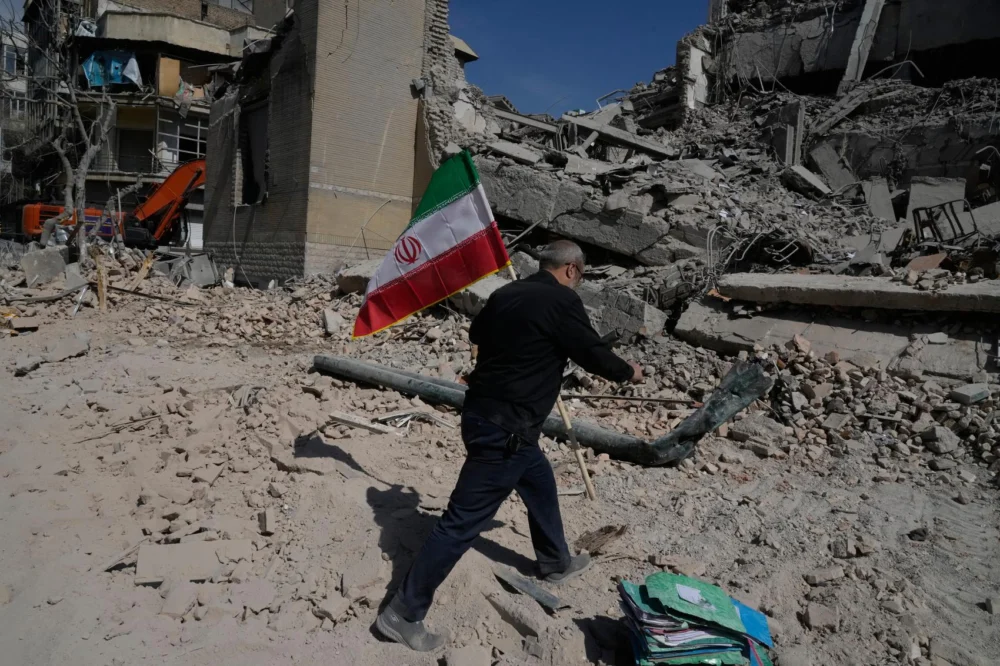
Air raid sirens wailed across major Israeli cities, including Tel Aviv and Jerusalem, as the nation confirmed multiple incoming missile threats. Iranian state television reported that U.S. bases were also within the crosshairs of these retaliatory strikes. In response, the Israeli military declared it had initiated a significant assault on infrastructure in Iran’s capital, Tehran, identifying the Iranian-backed Hezbollah militant group in Lebanon as a target for “large-scale wave of strikes against infrastructure.” Explosions were subsequently reported in various locations across Tehran, underscoring the rapidly intensifying conflict.
The immediate catalyst for Iran’s retaliatory actions appears to be the U.S. Navy’s dramatic sinking of the Iranian warship “Dena” in the Indian Ocean on Tuesday night. The incident resulted in the tragic loss of at least 87 Iranian sailors. Iranian Foreign Minister Abbas Araghchi vehemently condemned the act, labeling it an “atrocity at sea” and issuing a chilling prophecy on social media: “Mark my words: The U.S. will come to bitterly regret (the) precedent it has set.” He detailed that the frigate, carrying nearly 130 crew members and reportedly a guest of India’s Navy, was struck in international waters without any prior warning.
The current conflagration, which began on Saturday, has been characterized by the United States and Israel as a deliberate campaign aimed at crippling Iran’s leadership, its extensive missile arsenal, and its controversial nuclear program. While the stated objectives have been broad, including the potential toppling of the Iranian government, the precise aims and timelines have appeared fluid, suggesting an open-ended and unpredictable conflict. The intensity of the combined American and Israeli strikes against Iran reached a fever pitch on Wednesday, prompting state television to announce the postponement of the mourning ceremony for Iranian Supreme Leader Ayatollah Ali Khamenei, who was reportedly killed early in the conflict. This news drew parallels to the massive public outpouring for his predecessor, Ayatollah Ruhollah Khomeini, whose funeral in 1989 was attended by millions.
In the United States, President Donald Trump expressed his satisfaction with the military’s performance, remarking that they were “doing very well on the war front, to put it mildly.” This sentiment was echoed by his Republican colleagues in the U.S. Senate, who decisively voted down a resolution that sought to halt the ongoing hostilities in Iran. The conflict has not been confined to direct confrontations, as Iran has retaliated by firing on Bahrain, Kuwait, and Israel. Furthermore, Turkey reported that NATO defense systems had successfully intercepted a ballistic missile launched from Iran before it could enter Turkish airspace, highlighting the expanding reach of the conflict.
The human cost of this escalating war is already staggering. According to official figures from the involved nations, more than 1,000 individuals have perished in Iran, with over 70 fatalities reported in Lebanon and approximately a dozen in Israel. The ripple effects have extended far beyond military casualties, severely disrupting global oil and gas supplies, creating significant bottlenecks in international shipping routes, and leaving hundreds of thousands of travelers stranded across the Middle East. Regional powers are on high alert, bracing for further potential dangers. This comes just a day after Iran’s paramilitary Revolutionary Guard issued a dire threat, vowing “the complete destruction of the region’s military and economic infrastructure.”
In Qatar, authorities initiated precautionary evacuations of residents near the U.S. Embassy in Doha, underscoring the heightened security concerns. The skies over Dubai, a major city in the United Arab Emirates, were filled with the sound of fighter jets, while Saudi Arabia announced the destruction of a drone in its territory bordering Jordan. The conflict’s reach continued to expand geographically, with a new incident off the coast of Kuwait suggesting a widening threat to commercial shipping lanes. The United Kingdom Maritime Trade Operations Center reported an explosion near Kuwait early Thursday, indicating a tanker may have come under attack, though the specific cause remains unconfirmed. This echoes past tactics employed by Iran, which has previously used limpet mines to target vessels.
The strategic waterways of the Gulf of Oman and the Strait of Hormuz, critical for approximately one-fifth of the world’s oil shipments, have been particularly vulnerable. The disruption of traffic through this vital strait, coupled with Iranian attacks, has led to a significant surge in Brent crude prices, which have risen by 15% since the conflict’s inception, reaching their highest point since July 2024.
U.S. Defense Secretary Pete Hegseth confirmed that the torpedo responsible for sinking the Iranian warship in the Indian Ocean was launched from an American submarine. Sri Lankan authorities reported the rescue of 32 crew members and the recovery of 87 bodies from the wreckage. Israel, in its offensive operations, stated it had targeted buildings associated with Iran’s internal security command, as well as the Basij, a volunteer force of the Revolutionary Guard known for its brutal suppression of internal dissent. Reports from January indicated that this crackdown resulted in thousands of deaths.
Despite these targeted strikes, Iranian Foreign Minister Abbas Araghchi has asserted that his country’s command structure has become decentralized, with individual units operating with considerable autonomy. This decentralized approach, he suggested, could diminish the impact of attacks on top command and control centers. During a Pentagon briefing, Secretary Hegseth refrained from providing a definitive timeline for U.S. operations, which President Trump has indicated could extend for a month or longer. “You can say four weeks, but it could be six. It could be eight. It could be three,” Hegseth stated. “Ultimately, we set the pace and the tempo. The enemy is off balance, and we’re going to keep them off balance.”
U.S. and Israeli military officials report a discernible decline in missile launches from Iran, attributing this to their successful strikes against ballistic missiles, launchers, and drones. In Israel, the Homefront Command announced a loosening of nationwide restrictions, permitting workplaces to reopen on Thursday, provided a shelter is accessible nearby. However, schools are to remain closed.
Despite these apparent successes, explosions were heard early Thursday in Israel, which reported its defensive systems were engaged in intercepting at least three waves of Iranian missiles. The human toll continues to mount: Iran’s Foundation of Martyrs and Veterans Affairs reported 1,045 fatalities by Wednesday, while 11 deaths have been confirmed in Israel. Six U.S. service members have been killed, including a major whose identity was released on Wednesday. In Lebanon, eight additional fatalities were reported, including two individuals in a building struck by the Israeli military in the Beddawi refugee camp near Tripoli, and three on a coastal highway. The Israeli military has not provided specifics on these targets.
Late Wednesday, in Beirut’s southern suburbs, two Israeli drone strikes occurred almost simultaneously, hitting two vehicles. Three people were killed and six injured, according to the health ministry. The Israeli military stated it had targeted a Hezbollah operative, promising further details. Israel’s military also claimed to have struck “several command centers” utilized by Hezbollah in Beirut, releasing video footage of a building being hit, though without further elaboration. Israeli Defense Minister Israel Katz revealed that the offensive against Iran was initially planned for mid-2026 but that “the need arose to bring everything forward to February.” He cited internal events within Iran, President Trump’s policy stances, and the strategic advantage of “creating a combined operation” as key factors in this accelerated timeline.
The internal protests that have gripped Iran have exerted unprecedented pressure on its leadership. President Trump had previously threatened military action in response to the government’s crackdown on these demonstrations before shifting his focus to Iran’s contentious nuclear program. White House press secretary Karoline Leavitt stated on Wednesday that the U.S. initiated its operation partly out of concern that Iran might preemptively strike U.S. personnel and assets in the region. She also noted that a phone call between President Trump and Israeli Prime Minister Benjamin Netanyahu prior to the airstrikes was “important with respect to the timeline.”
The leadership in Iran is reportedly engaged in a complex process of selecting a successor to Ayatollah Ali Khamenei, who had governed the country for 37 years. This marks only the second instance of a new supreme leader being chosen since the 1979 Islamic Revolution. Potential candidates range from hardliners advocating for continued confrontation with the West to reformists who favor diplomatic engagement. Mojtaba Khamenei, the Supreme Leader’s son, has long been considered a contender, despite never having held a formal government position. In a clear indication of the regime’s intent to consolidate power, the head of Iran’s judiciary issued a stern warning: “those who cooperate with the enemy in any way will be considered an enemy.”
Israeli Defense Minister Katz posted on X that Iran’s next supreme leader “will be a target for elimination” if he continues to pose a threat to Israel, the United States, and other nations. The report included contributions from Associated Press writers Rising in Bangkok, Becatoros in Athens, Greece, and Magdy in Cairo, as well as Sally Abou AlJoud in Beirut, Lebanon, Melanie Lidman in Tel Aviv, Israel, Julia Frankel in Jerusalem, and Giovanna Dell’Orto in Miami.
© Copyright 2026 The Associated Press. All rights reserved. This material may not be published, broadcast, rewritten or redistributed without permission.