
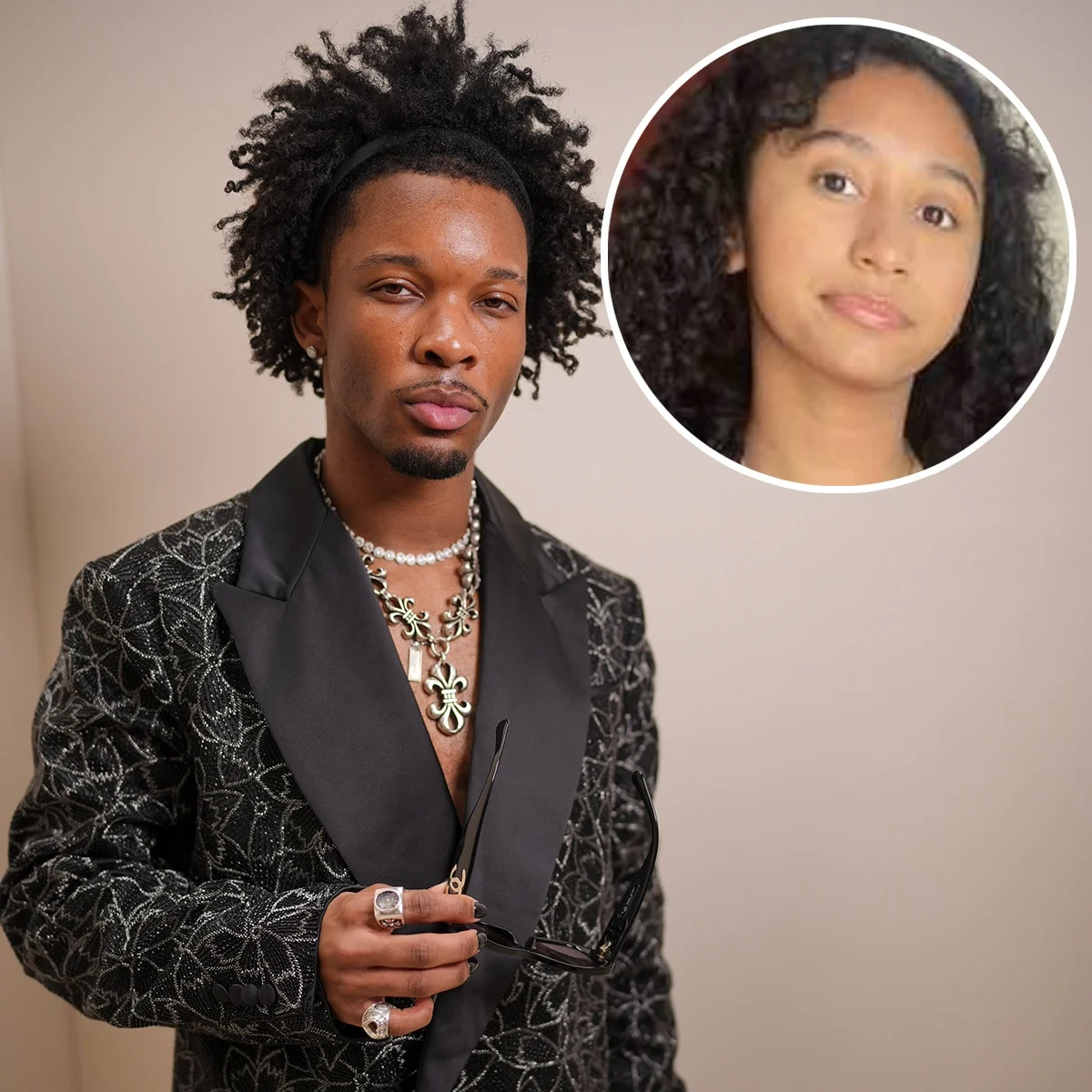
The world of alternative pop was sent into a tailspin this week as the grim details of a long-running investigation finally culminated in a high-profile arrest. David Anthony Burke, the 21-year-old artist known globally by his stage name D4vd, has been taken into custody by the Los Angeles Police Department on suspicion of murder. The victim, 15-year-old Celeste Rivas Hernandez, was found dead in a vehicle registered to the singer last autumn, marking the beginning of a case that has horrified fans and the public alike. For the family of the young girl, who spent years in a state of agonizing uncertainty, the news of the arrest has brought a somber sense of closure, even as the legal battle looms on the horizon.
Jesus Rivas, the father of Celeste and the patriarch of a family shattered by loss, broke his silence shortly after the news of Burke’s arrest became public. Speaking through his legal representative, Patrick Steinfeld, Rivas expressed a sentiment of profound relief. In a brief but powerful statement provided to the media on April 18, he simply said, “Thank God. Justice for Celeste.” It was a message that resonated with many who have followed the tragic timeline of Celeste’s disappearance and the subsequent discovery of her remains. For the Rivas family, the path to this moment has been paved with grief, starting from the day Celeste was first reported missing from her home in Lake Elsinore, California, in April 2024.
The arrest of David Anthony Burke took place on April 16, 2026, following a exhaustive investigation by the LAPD’s Robbery-Homicide Division. Burke, who skyrocketed to fame with the viral hit “Romantic Homicide,” now finds himself at the center of a real-life tragedy that stands in stark, haunting contrast to the melancholic themes of his music. Currently held without bail, the musician is scheduled to make his initial appearance in a Los Angeles courtroom on April 20. The gravity of the charges has cast a dark shadow over what was once one of the most promising careers in the modern "bedroom pop" scene.
The defense, however, is preparing for a rigorous fight. Burke’s legal team, a powerhouse trio consisting of Blair Berk, Marilyn Bednarski, and Regina Peter, has wasted no time in asserting their client’s innocence. In a statement released to the press on April 17, the attorneys were emphatic. “Let us be clear,” they stated, “the actual evidence in this case will show that David Burke did not murder Celeste Rivas Hernandez and he was not the cause of her death.” This staunch denial sets the stage for a complex legal proceeding where forensic evidence and timelines will likely be the deciding factors.
The mystery began to unravel on September 8, 2024, when a pungent, unmistakable odor led workers at a Hollywood tow yard to a white Tesla. The vehicle had been impounded after being found abandoned in the winding, affluent streets of the Hollywood Hills. Upon inspecting the car, which was registered to Burke in Hempstead, Texas, authorities made a gruesome discovery. Hidden within the front trunk—the "frunk" common to electric vehicles—were the human remains of a young female, wrapped in a bag. The car had been sitting in the lot for several days before the odor became impossible to ignore, a detail that highlights the tragic indignity of Celeste’s final resting place.
The identification process was arduous due to the condition of the remains. On September 16, the Los Angeles County Medical Examiner’s Office confirmed that the body belonged to Celeste Rivas Hernandez. The girl had been just 13 years old when she vanished on April 5, 2024, sparking a desperate search by her family and local authorities. By the time she was found, she should have been celebrating her 15th birthday. Instead, the medical examiner noted that her body was in a "severely decomposed" state, making it nearly impossible to determine the exact moment of her passing. Despite these challenges, LAPD Captain Scot Williams later revealed that investigators believe the teenager had been dead for "at least several weeks" before her discovery.
The contrast between the victim’s life and the suspect’s rise to stardom is jarring. David Anthony Burke was born in Queens, New York, before moving to Houston at the age of 13—ironically the same age Celeste was when she went missing. Burke’s journey to fame was an unconventional one, rooted in the digital age. He began as a dedicated gamer, streaming Fortnite on YouTube. His transition into music was born of necessity; frustrated by copyright strikes on his gaming videos, his mother reportedly told him to simply make his own music. Using nothing but an app on his smartphone, he began crafting lo-fi, emotional tracks that struck a chord with a generation of listeners.
His breakout single, "Romantic Homicide," became a cultural phenomenon, fueled by its success on TikTok. The song, characterized by its raw vocals and themes of heartbreak and finality, propelled him from his bedroom in Houston to the global stage. By April 2025, he had released his debut album, Withered, and was embarking on a world tour that saw him performing for thousands of adoring fans. However, as his professional life reached its zenith, the investigation into the body found in his Tesla was quietly intensifying behind the scenes. When news of the discovery first broke in late 2024, Burke’s representatives claimed he was fully cooperating with the authorities while remaining on tour. Eventually, the pressure of the ongoing investigation led to the cancellation of his remaining U.S. tour dates.
While the music industry grapples with the downfall of one of its bright young stars, the focus for many remains on the life of Celeste Rivas Hernandez. In October 2024, she was finally laid to rest at the Queen of Heaven Cemetery and Mortuary in Rowland Heights. Friends and family gathered to remember a girl described as a "beloved daughter, sister, cousin, and friend." A GoFundMe campaign, established to help the family navigate the sudden and staggering costs of a funeral and burial, spoke of a family "heartbroken and devastated." The community support for the Rivas family has been a small glimmer of light in an otherwise dark narrative, highlighting the human cost that often gets lost in the sensationalism of celebrity-adjacent crimes.
The legal proceedings ahead are expected to be lengthy and meticulously scrutinized. Prosecutors will likely focus on the forensic link between the victim and the vehicle, as well as any digital or physical evidence that might connect Burke to Celeste during the months she was missing. The defense, meanwhile, appears poised to challenge the cause of death and the timeline, potentially pointing toward other individuals who may have had access to the vehicle or suggesting an alternative sequence of events.
The case of Celeste Rivas Hernandez is a haunting reminder of the vulnerabilities of youth and the unpredictable nature of fame. As David Anthony Burke sits in a jail cell awaiting his day in court, the public is left to wonder how a young man who sang so poignantly about the pains of the heart could find himself accused of such a cold-blooded crime. For the Rivas family, the trial represents the next chapter in a long journey toward accountability. While no verdict can bring Celeste back, the arrest of a suspect offers the first tangible hope that those responsible for her death will finally be held to account under the law.
As the April 20 court date approaches, Los Angeles remains on edge, waiting for more details to emerge from the Robbery-Homicide Division. The investigation remains active, and authorities have encouraged anyone with information regarding Celeste’s disappearance or her time in Los Angeles to come forward. For now, a family grieves, a career lies in ruins, and a city seeks answers for a 15-year-old girl whose life was cut tragically short.