

Keegan-Michael Key: The Master Craftsman Elevating Commercials into Unforgettable Art
In an age saturated with digital content and an ever-present deluge of advertising, the modern viewer navigates a landscape bristling with marketing messages. From the hyper-stylized theatrics of blockbuster campaigns to the quirky charm of independent brand spots, commercials vie for attention with dazzling special effects, catchy jingles, and a revolving door of characters. Yet, amidst this vibrant chaos, a select few rise above the fray, becoming not just memorable, but genuinely iconic. Often, when these campaigns strike a chord that resonates deeply with audiences, there’s a singular, magnetic force at their core: the inimitable Keegan-Michael Key.
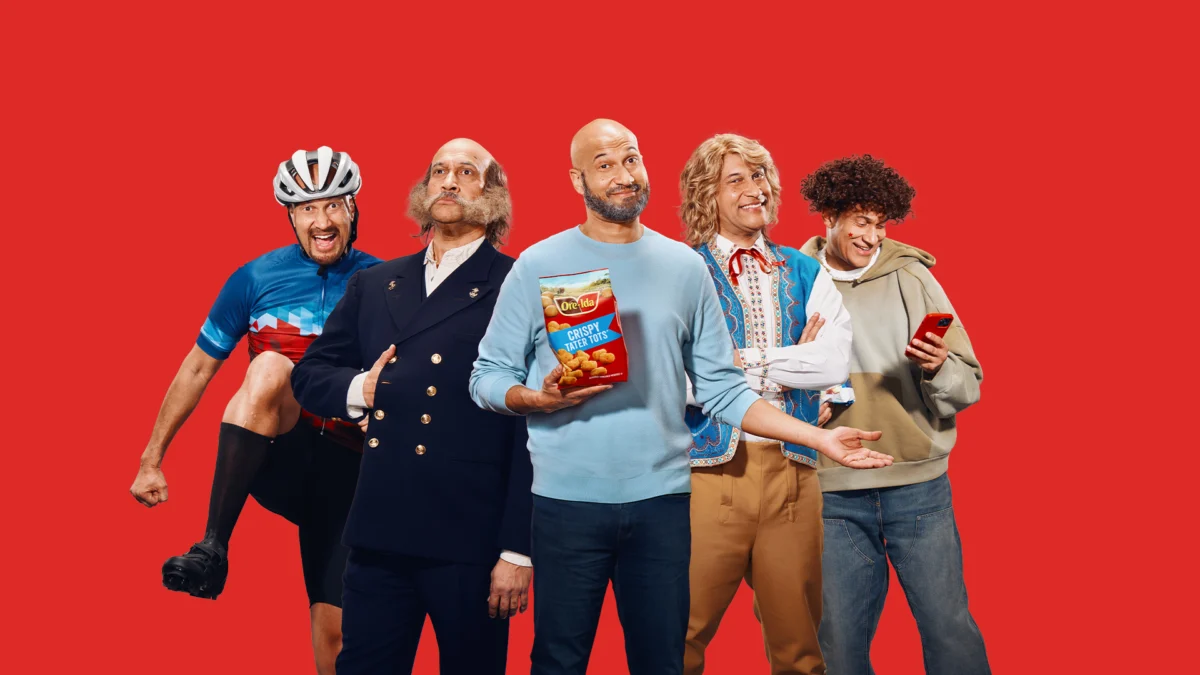
The acclaimed actor and comedian, globally recognized for his groundbreaking work on the sketch-comedy sensation “Key & Peele,” has meticulously carved out a niche as a commercial alchemist. His uncanny ability to inhabit a multitude of distinct personas, coupled with his unparalleled comedic timing and improvisational prowess, makes him a coveted asset for brands aiming to cut through the noise. His latest venture sees him starring in a whimsical new campaign for Kraft Heinz’s beloved Ore-Ida tater tots, where he introduces a cast of quirky “imi-taters” – characters who are, much like the inferior frozen potato products they represent, mere imitations of the real deal. This new role further cements Key’s remarkable and growing presence in the advertising world, following a string of high-profile collaborations with industry giants such as Choice Hotels, PepsiCo’s Lay’s potato chips, State Farm (including a memorable appearance during this year’s Super Bowl), and even the corporate consulting firm EY.
Key’s foray into the commercial sphere isn’t merely a sideline; it’s a deliberate and creatively fulfilling extension of his artistic philosophy. He views the commercial landscape not as a lesser art form, but as a potent platform capable of reaching vast audiences with surprising depth. “A commercial can sometimes be more ubiquitous than, maybe, a little indie film, or a TV show that’s on a streamer, among the thousands of TV shows,” Key recently shared in an interview. This insight underscores a fundamental shift in media consumption, where short-form, impactful content often achieves broader penetration than longer-form narratives. For Key, this work is also deeply gratifying on a personal level. “It’s also satisfying, filling, mentally simulating, creative,” he elaborated, dismantling the common misconception that commercial acting is inherently less challenging or rewarding than other forms of performance. He sees commercials as a powerful launchpad, a vehicle that can “put someone out there” in a way that traditional media sometimes struggles to achieve in an increasingly fragmented market.
The Ore-Ida campaign stands as a testament to Key’s extraordinary range. In the spot, he effortlessly morphs into a vibrant assortment of characters, from a gruff, weathered old admiral to a charmingly eccentric Swedish fellow, each embodying the essence of an “imi-tater” with comedic precision. The brilliance of the concept lies in its playful self-awareness, allowing Key to lean into his established strengths as a master of disguise and character voice. The campaign extended beyond the screen, culminating in a memorable live activation at Yankee Stadium, where Key appeared alongside a troupe of real-life “imi-taters” – lookalikes who amplified the campaign’s central message in an immersive, real-world setting. This kind of experiential marketing, blending digital content with tangible public appearances, showcases a sophisticated understanding of modern audience engagement and the power of a charismatic personality to bring a brand to life.
Behind these seamless transformations lies a meticulous creative process. Key revealed that he dedicates ample time to prepare for each distinct character, ensuring that every nuance, every vocal inflection, and every physical mannerism is authentically crafted. Crucially, he credits the collaborative environment on set, particularly the invaluable contribution of his stand-in. This professional dynamic allowed Key to “bounce dialogue off of” another performer, creating a naturalistic rhythm and spontaneity that is palpable in the final product. “They were really ready, rife with energy, and wanted to have fun with me,” he recounted. “That was the biggest thing, to get a nice, organic ping pong between me and the other guy so that it feels so natural when they stitch it all together.” This “ping pong” effect is a hallmark of great improvisational acting, ensuring that even within the tight constraints of a commercial script, the performances feel vibrant and unscripted, connecting with viewers on a more genuine level.
For Key, the transition into commercial acting was not a departure but a natural, almost inevitable, evolution of his life’s work. “I have trafficked in creating characters almost exclusively, for about 16 years of my life,” he stated, reflecting on his extensive background in sketch comedy and improvisational theatre. His career has been defined by a fearless embrace of “big swings in regard to characterization,” a philosophy perfectly aligned with the demands of creating memorable commercial personas. This deep well of experience means that when he steps onto a commercial set, particularly for a project like Ore-Ida, there’s an inherent authenticity to his performance. “I don’t have to fake any kind of energy. I don’t have to fake any kind of enthusiasm,” he asserted, highlighting the genuine connection he forms with the material. This authenticity is vividly illustrated by his personal affinity for the product itself. When offered a spit bucket to dispose of any tater tots he might chew during filming, Key famously declined. “It’s a tater tot, for crying out loud. I’m going to eat every single one of them. I’m gonna find reasons to do extra tasting so I can have more tater tots,” he declared, a testament to his unadulterated enjoyment of the product, which undoubtedly translates into a more convincing and endearing performance that resonates with consumers.
This genuine enthusiasm is not accidental; it’s a deliberate component of Key’s selection process for advertising partnerships. He maintains a rigorous set of criteria when evaluating potential offers, emphasizing a fundamental connection to the product and an intellectual excitement for the creative concept. “There has to be some kind of connection to the product for the most part,” he explained. This ensures that his involvement feels organic and credible, rather than merely transactional, fostering trust with the audience. Beyond product affinity, he seeks out projects where he can genuinely engage with the creative vision. “I always find a connection to the product and then also some excitement about the creative,” he added, underscoring his commitment to contributing meaningfully to the artistic integrity of each campaign, rather than simply lending his celebrity to it.
Despite the often-perceived lighter nature of commercial work, Key approaches each project with the same dedication and intensity he applies to his film and television roles. He openly embraces the unique pressures inherent in creating impactful short-form content. “I like the pressure cooker of ‘what can we do to clarify, clarify, finesse, elucidate focus so that we’re doing the best possible thing?’” he mused. This pursuit of perfection, even within the confines of a 30-second spot, speaks volumes about his professional ethos. As a performer first and foremost, his ultimate goal is to connect with the audience directly. “I’m a performer by trade, more so than even a writer or a creator. So for me, the person I’m thinking about is the viewer sitting in their living room,” he affirmed. His focus remains squarely on delivering an experience that captivates and persuades: “What can I do that will stimulate, titillate, scintillate, get them interested in the product?” This user-centric approach is precisely why his commercial work consistently stands out, making the product memorable.
Key’s involvement in advertising also positions him at the forefront of understanding and adapting to the rapidly evolving media landscape. He keenly observes the paradigm shift towards shorter, more digestible content, a trend exemplified by the meteoric rise of platforms like TikTok and Instagram Reels. In this environment, where consumers are increasingly accustomed to micro-dramas and bite-sized entertainment, commercials are finding new relevance and power. As more programmers and advertisers experiment with novel forms of storytelling, from serialized brand content to interactive digital experiences, the commercial format, in Key’s view, occupies a crucial space. “The commercial lives in one of the neighborhoods of that city,” he noted, referring to the burgeoning metropolis of short-form media. He recognizes that what was once considered mere advertising is now merging seamlessly with “regular, standard entertainment,” indicating a future where the lines between content and commerce continue to blur. For a women-focused news and entertainment website, this insight is particularly pertinent, as female audiences are often early adopters and heavy users of these dynamic social and digital platforms, making Key’s ability to engage within these new parameters an invaluable asset for brands seeking to connect authentically and effectively with a highly engaged demographic.
Keegan-Michael Key’s journey from sketch comedy icon to commercial powerhouse is more than a testament to his individual talent; it’s a masterclass in how an artist can adapt, innovate, and thrive within the ever-changing currents of media. By embracing the unique challenges and opportunities of advertising, he not only elevates the brands he represents but also redefines the very perception of commercial art, proving that even in the briefest of moments, true creativity can leave an indelible mark.