


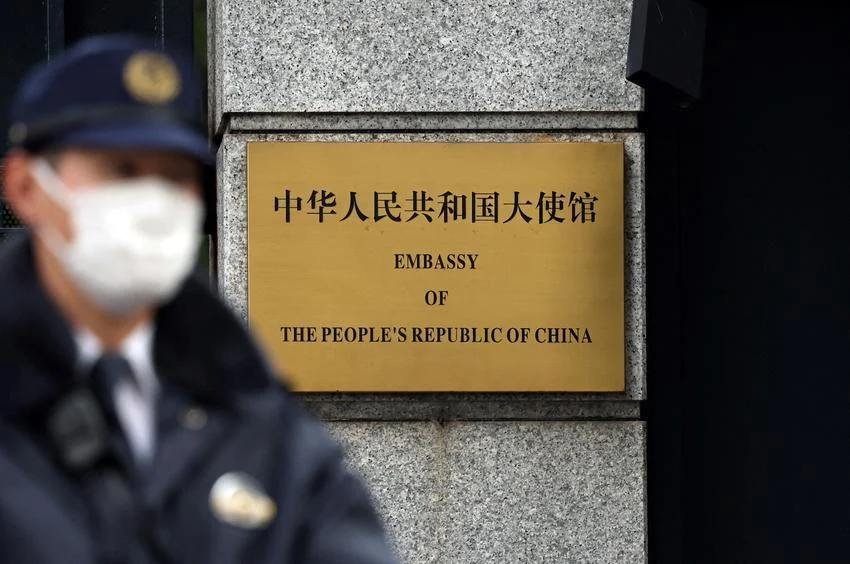
The Chinese Embassy in Japan has formally lodged a complaint, asserting that it has been subjected to a barrage of threatening communications and has expressed significant dissatisfaction with the perceived inadequacy of Japanese authorities’ response. The embassy claims that despite repeated reports to the police, effective measures have not been implemented, fueling a growing sense of unease as bilateral relations between China and Japan experience a marked deterioration.
Shi Yong, the acting Chinese ambassador to Japan, detailed a disturbing incident on March 5th, wherein the embassy received a letter from a group identifying itself as comprised of former police and military personnel. The missive reportedly contained explicit threats of attacks against China’s diplomatic installations within Japan, as well as a chilling vow to “wipe out all Chinese” residing in the country. This alarming communication was promptly reported to the Japanese police.
Speaking via the embassy’s official account on the social media platform X (formerly Twitter), Chinese officials expressed their dismay, criticizing the Japanese police for what they characterized as a failure to treat the matter with the seriousness it warranted. The embassy’s statement alleged a lack of effective implementation of protective steps and a deficiency in establishing the full facts surrounding the threats.
When approached for comment, Japan’s Ministry of Foreign Affairs offered a standard refusal, stating they would not comment on the matter. This reticence from the Japanese side further intensifies the diplomatic standoff and leaves the public without official insight into the government’s perspective on the embassy’s accusations.
The current climate of heightened tensions between China and Japan is not an isolated incident but rather a culmination of recent geopolitical and security concerns. A significant flashpoint emerged in November of the previous year, following a statement made by Japanese Prime Minister Sanae Takaichi. Takaichi suggested that any Chinese military action directed towards the self-ruled island of Taiwan could potentially necessitate a military response from Japan. This assertion was met with swift and strong condemnation from Beijing, which subsequently imposed diplomatic and economic countermeasures against Japan. The implications of such a stance are profound, given Taiwan’s strategic importance and the long-standing “one China” policy that Beijing rigidly enforces.
Adding to the diplomatic friction and security concerns, a separate incident in late March saw a Japanese army officer arrested after he illegally entered the Chinese Embassy compound while in possession of a knife. China lodged a strong protest with the Japanese government regarding this breach of diplomatic immunity and security. In the wake of this trespass, Japanese police reportedly augmented security measures around the Chinese Embassy, a move acknowledged by Shi Yong, though he maintains that the diplomatic mission remains “exposed to threats.”
Further compounding the embassy’s anxieties, a mere week after the incident with the army officer, a bomb threat was received via social media. The individual making the threat reportedly claimed to be a reserve member of Japan’s Self-Defense Forces. This second alarming communication triggered a significant security response, including a two-hour bomb sweep of the embassy premises. Ambassador Shi confirmed the bomb threat and the subsequent search but did not disclose whether any explosive devices were actually found, leaving a degree of uncertainty regarding the immediate danger posed.
While Shi Yong conceded that Japanese police have indeed enhanced security presence around the embassy, he reiterated the diplomatic mission’s ongoing vulnerability. This statement underscores the perceived disconnect between the heightened security measures and the embassy’s assessment of the genuine level of threat they face. The situation highlights the complex interplay of diplomatic protocol, national security concerns, and public safety in a region marked by intricate geopolitical dynamics.
The escalation of threats against a foreign diplomatic mission, coupled with accusations of insufficient protection from the host nation, points to a deepening chasm in Sino-Japanese relations. This incident is not merely a matter of security protocol but a stark illustration of the volatile political climate that currently defines the East Asian geopolitical landscape. The safety of diplomatic personnel and the sanctity of diplomatic missions are cornerstones of international relations, and any perceived lapse in these areas can have far-reaching implications for global stability and inter-state cooperation.
The international community will be closely watching how both governments navigate this delicate situation. The Chinese Embassy’s public denunciation of the Japanese authorities’ response is a significant diplomatic maneuver, signaling the gravity with which Beijing views these threats. The ball is now in Japan’s court to demonstrate its commitment to upholding international diplomatic norms and ensuring the safety of all foreign missions within its territory. The effectiveness of their response will undoubtedly be a key indicator of the future trajectory of Sino-Japanese relations, which are already under considerable strain due to regional security concerns and historical grievances.
The broader context of regional security, particularly concerning Taiwan, cannot be overstated in understanding the current friction. The island’s democratic governance and its proximity to both China and Japan make it a perpetual focal point of geopolitical tension. Any perceived shift in the balance of power or a miscalculation by any of the involved parties could have severe repercussions, not only for the immediate region but for the global economic and security order. The threats directed at the Chinese Embassy, while specific in their targeting, are symptomatic of a wider unease and a heightened state of alert that pervades East Asia.
Furthermore, the involvement of individuals claiming to be former or reserve military and police personnel in issuing threats is particularly concerning. It suggests a potential for these threats to be more than just isolated acts of intimidation, hinting at a possible radicalization or a coordinated effort by disgruntled elements within these former professional ranks. This aspect adds a layer of complexity to the security assessment and underscores the challenge faced by law enforcement agencies in identifying and neutralizing such threats effectively.
The diplomatic channels between Beijing and Tokyo are now tasked with the crucial responsibility of de-escalating tensions and restoring a measure of trust. The accusations leveled by the Chinese Embassy, if substantiated, will require a transparent and robust response from Japan to assuage concerns and reinforce its commitment to diplomatic security. The current situation serves as a potent reminder of the fragility of international relations and the constant need for vigilance in safeguarding diplomatic integrity and promoting peaceful coexistence, especially in a region as strategically vital and economically significant as East Asia.
© Copyright 2026 The Associated Press. All rights reserved. This material may not be published, broadcast, rewritten or redistributed without permission.