



Mexico Asserts Sovereignty Amidst U.S. Military Movements and Heightened Regional Tensions
Mexico’s President Claudia Sheinbaum has moved to allay national concerns following recent U.S. military activities near its borders, a series of events that have amplified anxieties in the wake of the United States’ recent actions in Venezuela. The delicate situation underscores Mexico’s unwavering commitment to its sovereignty while navigating complex security collaborations with its northern neighbor.
The ripple of unease began on Friday when the U.S. Federal Aviation Administration (FAA) issued a notice to U.S. aircraft operators, advising them to “exercise caution” when traversing the eastern Pacific Ocean, a region that encompasses airspace over Mexico, Central America, and portions of South America. The advisory cited “military activities” as the reason for the heightened alert, a vague explanation that quickly fueled speculation and apprehension within Mexico.
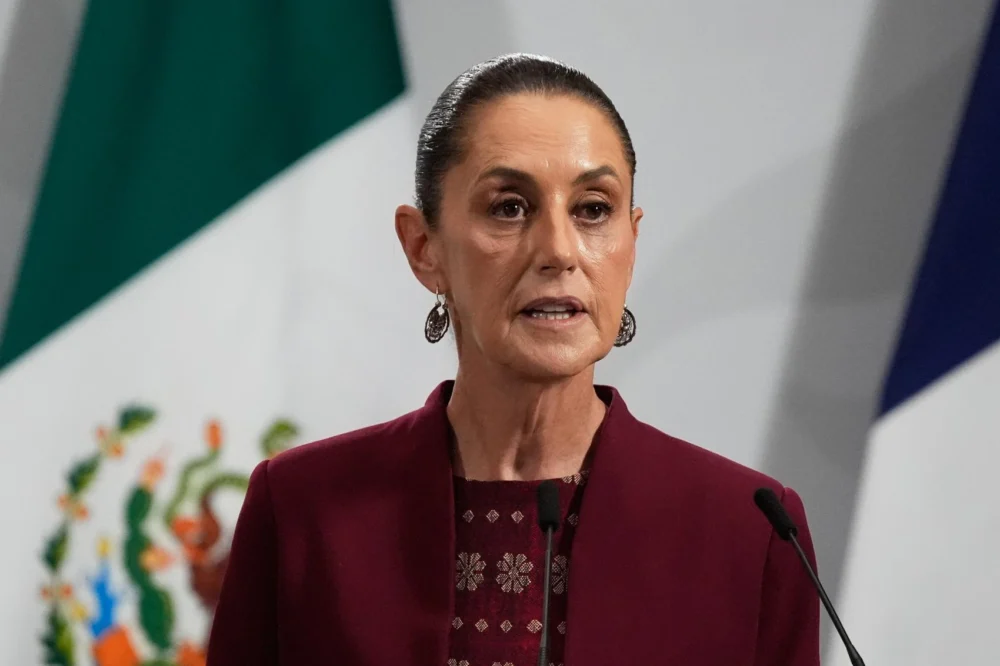
President Sheinbaum addressed the nation on Monday, emphasizing the proactive steps her administration took to ensure Mexico’s territorial integrity. She revealed that her government waited several hours for official, written assurances from the U.S. government confirming that no American military flights would encroach upon Mexican airspace. This delay, she explained, was a deliberate measure to obtain clear confirmation, as Mexico had not received prior notification of any U.S. military operations. The U.S. government subsequently provided precise coordinates of its operational areas, and Mexican authorities issued a formal statement asserting that the FAA advisory held no implications for Mexico’s airspace.
Further fueling public discourse, images of a U.S. military transport aircraft on the tarmac at Toluca’s airport, located approximately 39 miles (63 kilometers) west of Mexico City, began circulating widely on social media platforms. This visual evidence prompted immediate questions and concerns from political figures. Senator Clemente Castañeda, a prominent member of the opposition Citizen Movement party, took to the social platform X (formerly Twitter) to publicly request an explanation from the government. He highlighted the constitutional requirement for the Mexican Senate to approve any deployment of Mexican troops abroad or the presence of foreign troops within Mexican territory, underscoring the seriousness with which such incursions are viewed.
President Sheinbaum characterized the Toluca incident as a “logistical” operation that fell outside the purview of the Senate’s approval. She clarified that the U.S. aircraft had landed, allowing public servants to board and travel to the United States for training. She explicitly stated that the authorization for this operation came directly from Mexico’s Secretary of Defense, indicating a controlled and sanctioned exchange rather than an unauthorized presence. Her security cabinet reinforced this stance on Sunday night via X, posting that such training operations “occur in conformity with established protocols and in adherence to the bilateral collaboration agreements.”
These intertwined events have brought to the forefront the heightened sensitivity surrounding U.S. military actions in the region, a sensitivity exacerbated by the Trump administration’s unilateral move to apprehend Venezuela’s then-President Nicolás Maduro earlier this month. The incident in Venezuela, coupled with the subsequent renewed rhetoric and threats of direct military intervention against drug cartels operating in Mexico, has created a climate of apprehension. Mexico, a nation fiercely protective of its sovereignty, views any perceived encroachment on its territory with extreme caution.
President Sheinbaum and former President Trump have engaged in further dialogue on these critical security matters. Both administrations maintain a public stance of continued collaboration on security issues. However, Mexico consistently emphasizes its non-negotiable stance: it will not tolerate violations of its sovereignty. This delicate balance between cooperation and the absolute defense of national borders is a central theme in the ongoing bilateral discussions.
The commitment to joint efforts against transnational crime remains a cornerstone of the U.S.-Mexico relationship. Security officials from both nations are scheduled to convene again this Friday. According to a joint statement released last Thursday, the objective of these meetings is to “continue delivering tangible actions to strengthen security cooperation and meaningful outcomes to counter cartels, and stop the illicit flow of fentanyl and weapons from crossing our shared border.” This scheduled meeting underscores the ongoing efforts to address shared security challenges through diplomatic channels and coordinated strategies, while simultaneously reinforcing the importance of respecting each nation’s sovereign rights.
The context of these recent events cannot be fully understood without acknowledging the broader geopolitical landscape. The United States, under both Democratic and Republican administrations, has expressed increasing frustration with the persistent threat posed by powerful drug cartels operating from Mexican territory. These cartels are not only responsible for widespread violence within Mexico but are also seen as a significant driver of the ongoing opioid crisis in the United States, fueled by the illicit trafficking of fentanyl. This shared challenge necessitates a robust and cooperative approach, yet the methods employed by the U.S. can, at times, raise concerns for its Mexican partners.
The FAA advisory, while ultimately clarified, served as a stark reminder of the potential for unintended consequences when military activities are not clearly communicated. The sheer volume of air traffic, both civilian and military, in the shared airspace necessitates meticulous coordination. The fact that the U.S. military conducted operations that prompted a broad advisory without prior notification to Mexico highlights a potential gap in communication protocols, even if the subsequent assurances aimed to rectify this oversight.
The incident involving the U.S. military transport plane at Toluca airport, while downplayed by the Mexican government as a routine logistical exchange, resonated deeply with the public and opposition lawmakers. This reaction stems from a historical awareness of U.S. interventions and a deep-seated pride in Mexican independence. The Senate’s role in authorizing foreign military presence is a vital safeguard against potential overreach, and any action that appears to circumvent this process is met with scrutiny. President Sheinbaum’s swift explanation, emphasizing the Secretary of Defense’s authorization and the limited nature of the operation, was crucial in defusing a potentially explosive political situation.
The reference to the “attack on Venezuela” in the initial reporting suggests a heightened awareness within Mexico of U.S. willingness to engage in forceful actions in Latin America. While the specifics of any “attack” remain open to interpretation, the implication is that Mexico is wary of any U.S. military maneuvers that could be perceived as precursors to interventionist policies. This historical and regional context is crucial for understanding why these recent events have generated significant national attention and concern.
The ongoing dialogue between President Sheinbaum and former President Trump, as mentioned, is a critical component of managing this complex relationship. While public statements often emphasize cooperation, the underlying dynamics of power and national interest are always at play. Mexico’s consistent reiteration of its commitment to sovereignty serves as a firm boundary marker in these discussions. It signals that while Mexico is a willing partner in combating shared threats, it will not compromise its fundamental right to self-determination.
The upcoming meeting of security officials is a testament to the persistent efforts to find common ground and implement effective strategies. The focus on “tangible actions” and “meaningful outcomes” suggests a desire to move beyond rhetoric and towards concrete results in the fight against organized crime and the illicit drug trade. The specific mention of countering cartels and stemming the flow of fentanyl and weapons highlights the shared urgency of these issues. However, the success of these collaborative efforts will inevitably depend on the continued mutual respect for each nation’s sovereignty and legal frameworks.
The article’s concluding sentence, which quotes a joint statement from last Thursday, provides a forward-looking perspective. It indicates that despite the recent tensions and heightened sensitivities, both countries are committed to continuing their security cooperation. The emphasis on “strengthening security cooperation” and achieving “meaningful outcomes” suggests a pragmatic approach, acknowledging the challenges while reaffirming the importance of working together. The ultimate goal remains clear: to enhance security along the shared border and to disrupt the operations of criminal organizations that threaten both nations.
In essence, Mexico’s response to these recent U.S. military movements reflects a nation acutely aware of its strategic importance and fiercely protective of its sovereignty. While committed to cooperating on critical security issues, particularly the fight against drug cartels and the illicit drug trade, Mexico has drawn a clear line against any actions that could be perceived as undermining its autonomy. President Sheinbaum’s decisive communication and the proactive engagement with the U.S. government have served to manage immediate concerns, but the underlying need for transparent communication and mutual respect remains paramount in navigating this delicate and vital bilateral relationship.