



In a significant policy shift that has sent ripples through global energy markets and raised questions about its foreign policy coordination, the U.S. Treasury Department announced on Friday an unexpected extension of its temporary sanctions waiver on Russian oil shipments. This move, designed to mitigate potential energy shortages exacerbated by the ongoing conflict in the Middle East, directly contradicts earlier pronouncements from a senior administration official.
The U.S. Treasury’s decision to grant a 30-day “general license” means that American sanctions will not be enforced on Russian crude oil deliveries that were already loaded onto vessels as of Friday. This extension mirrors a similar 30-day waiver issued in March, which covered Russian oil loaded by March 11. The renewed exemption highlights the increasingly complex geopolitical landscape, where the fallout from the war in Iran has inadvertently bolstered Moscow’s capacity to generate revenue from its energy exports. These exports had previously been significantly curtailed following Russia’s full-scale invasion of Ukraine in February 2022.
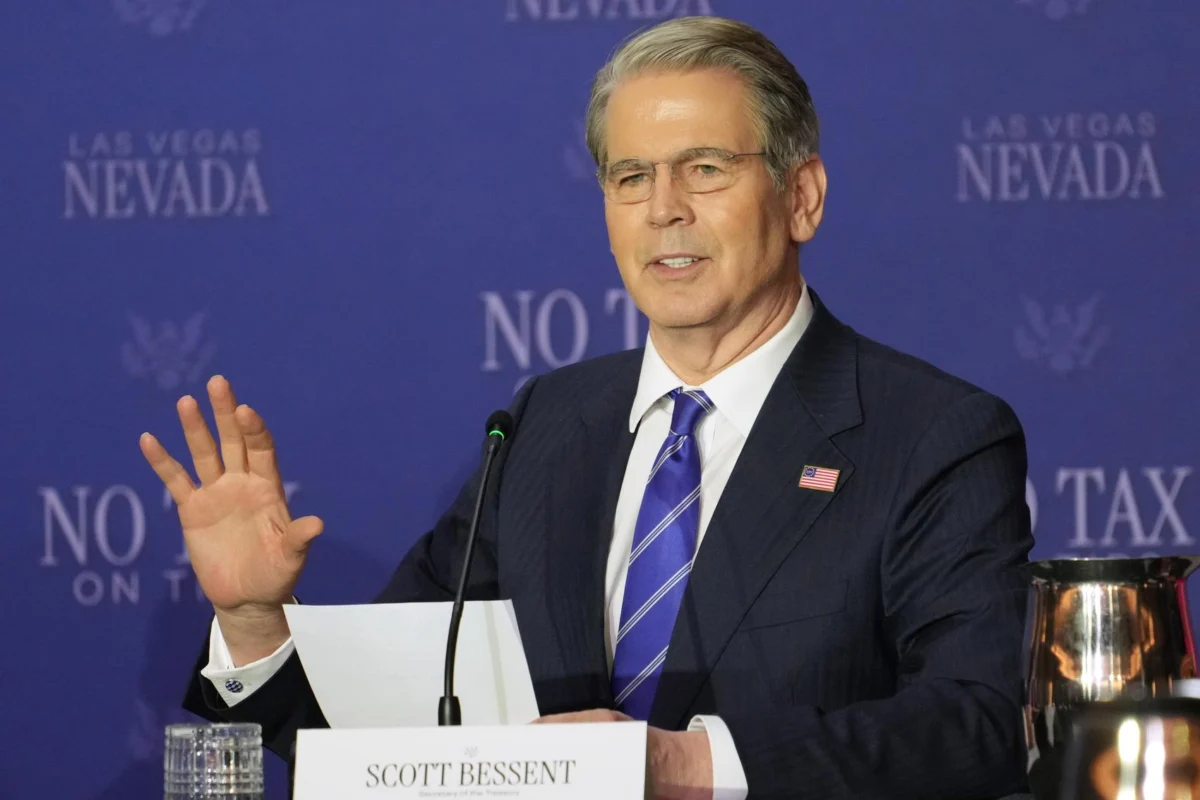
The abrupt reversal follows a firm statement made by Secretary Scott Bessent at the White House just days prior. Speaking on Wednesday, Bessent had emphatically stated the administration’s intention not to renew the sanctions relief. “We will not be renewing the general license on Russian oil, and we will not be renewing the general license on Iranian oil,” he declared. The administration has yet to offer an immediate explanation for this apparent divergence in policy, leaving analysts and market participants scrambling to understand the rationale behind the sudden change of course.
This decision arrives at a critical juncture for the global economy, which is already grappling with inflationary pressures and concerns about energy security. The conflict in the Middle East, which erupted in early October 2023, has introduced a significant degree of uncertainty into oil supply chains. Attacks on shipping in the Red Sea by Houthi rebels, who have declared their solidarity with Palestinian militant groups, have forced many major shipping companies to reroute their vessels around the southern tip of Africa, significantly increasing transit times and costs. This disruption has led to fears of a tightening global oil market, potentially driving up prices and fueling inflation worldwide.
Russia, a major global oil producer, has been under extensive Western sanctions since its invasion of Ukraine. The Group of Seven (G7) nations, along with the European Union and the United States, have implemented a raft of measures aimed at crippling Russia’s economy and limiting its ability to finance the war. These include price caps on Russian oil, aimed at reducing the revenue Moscow can earn while still allowing it to be sold on the global market. However, enforcement of these measures has proven challenging, with reports of a shadow fleet of tankers operating outside of Western oversight and many nations continuing to purchase Russian crude, often at discounted prices.
The Treasury Department’s initial sanctions on Russian oil were intended to punish Moscow for its aggression in Ukraine and to deprive it of a key source of revenue. However, the practicalities of enforcing such broad sanctions, particularly in the face of global energy demand and the complex web of international trade, have always been a significant challenge. The recent disruptions in the Middle East have amplified these challenges, creating a scenario where maintaining a steady flow of oil to global markets has become a paramount concern for many nations, including the United States.
The extension of the general license for Russian oil, therefore, can be interpreted as a pragmatic, albeit politically sensitive, response to the immediate threat of an energy crisis. By allowing for the continued delivery of oil that was already in transit or being loaded, the U.S. Treasury is attempting to prevent a sudden shock to the market that could have far-reaching economic consequences. This decision suggests a prioritization of global energy stability over the immediate tightening of sanctions on Russian energy, at least in the short term.
The contradiction between Secretary Bessent’s earlier statement and the Treasury’s subsequent action raises questions about internal policy coordination within the Biden administration. It is possible that the decision to extend the waiver was made at a higher level, perhaps after the implications of a complete cessation of the license became clearer in light of the escalating Middle East crisis. Alternatively, it could indicate a rapid reassessment of the situation by the Treasury Department itself, driven by intelligence or economic modeling that suggested a more severe impact than initially anticipated.
The implications of this decision are multi-faceted. For Russia, it provides a much-needed reprieve, allowing it to continue earning revenue from its oil exports and potentially offsetting some of the economic pressure from existing sanctions. For global energy markets, it offers a degree of short-term stability, mitigating the immediate risk of price spikes driven by supply disruptions. However, it also complicates the broader international effort to isolate Russia and hold it accountable for its actions in Ukraine.
The decision to extend the waiver on Iranian oil, which Secretary Bessent also mentioned in his earlier statement, adds another layer of complexity. While the article primarily focuses on Russian oil, the parallel mention of Iran suggests that the administration may be facing similar pressures regarding Iranian energy exports, which are also subject to U.S. sanctions. The extent to which Iran’s oil exports contribute to global supply and how they might be impacted by regional conflicts is a crucial factor in the overall energy security calculus.
Market analysts are now closely watching for further clarification from the Treasury Department and the White House. The nature of the explanation, when it comes, will be critical in understanding the administration’s long-term strategy regarding energy sanctions and its approach to managing the interconnected global energy landscape. Will this extension be a temporary measure, or does it signal a more sustained recalibration of U.S. policy in response to evolving geopolitical realities? The next 30 days will likely be a period of intense scrutiny and speculation.
The U.S. has been a leading voice in advocating for strong sanctions against Russia, aiming to isolate it economically and diplomatically. The effectiveness of these sanctions has been a subject of ongoing debate, with some arguing that they have severely hampered the Russian economy, while others point to Russia’s ability to adapt and find alternative markets. The current situation, where the U.S. is seemingly prioritizing energy market stability over a stricter application of sanctions, could be seen by some as a concession that the initial strategy needs adjustment in the face of unforeseen global crises.
Furthermore, the decision could have implications for U.S. relationships with its allies. Many European nations are heavily reliant on energy imports and have been at the forefront of implementing sanctions against Russia. A perceived wavering on sanctions enforcement by the U.S. could create friction and necessitate extensive diplomatic engagement to ensure continued alignment on foreign policy objectives. The coordinated efforts to put pressure on Russia have been a cornerstone of the Western response to the Ukraine invasion, and any deviation from that united front could be significant.
The role of the Treasury Department in implementing and enforcing sanctions is paramount. Its expertise in financial markets and international trade provides a crucial understanding of the potential economic impacts of its decisions. The Treasury’s authority to issue general licenses allows for flexibility in applying sanctions, and this latest extension demonstrates the department’s capacity to adapt its policies in response to rapidly changing global conditions. However, the communication surrounding such a significant policy reversal is critical for maintaining credibility and preventing market volatility.
The narrative surrounding oil prices has been a dominant theme in global economic discussions for years, and the current geopolitical climate has only amplified its importance. The United States, as a major player in global finance and diplomacy, wields considerable influence over these dynamics. The recent actions by the Treasury Department underscore the intricate balancing act required to navigate the complex interplay of sanctions, energy security, and international relations.
The coming weeks will be crucial in observing how the market reacts to this extension and whether further policy adjustments are forthcoming. The administration’s ability to clearly articulate its rationale and demonstrate a coherent strategy will be key to managing expectations and maintaining confidence in its approach to international economic policy. The echoes of Secretary Bessent’s earlier definitive statement will undoubtedly continue to resonate as observers await a fuller picture of the administration’s evolving stance on Russian oil sanctions in the shadow of global conflict.