


Australia has solidified a pivotal defense agreement with Japan, signing contracts this past Saturday to procure the first three advanced Mogami-class frigates. This A$10 billion (approximately $6.5 billion USD) initiative marks a significant enhancement to Australia’s naval capabilities, with the initial vessel slated for delivery within three years. The strategic partnership will see Mitsubishi Heavy Industries construct the first three state-of-the-art frigates in Japan, while Australia is set to manufacture an additional eight units at a shipyard located in Western Australia, fostering domestic industrial growth.
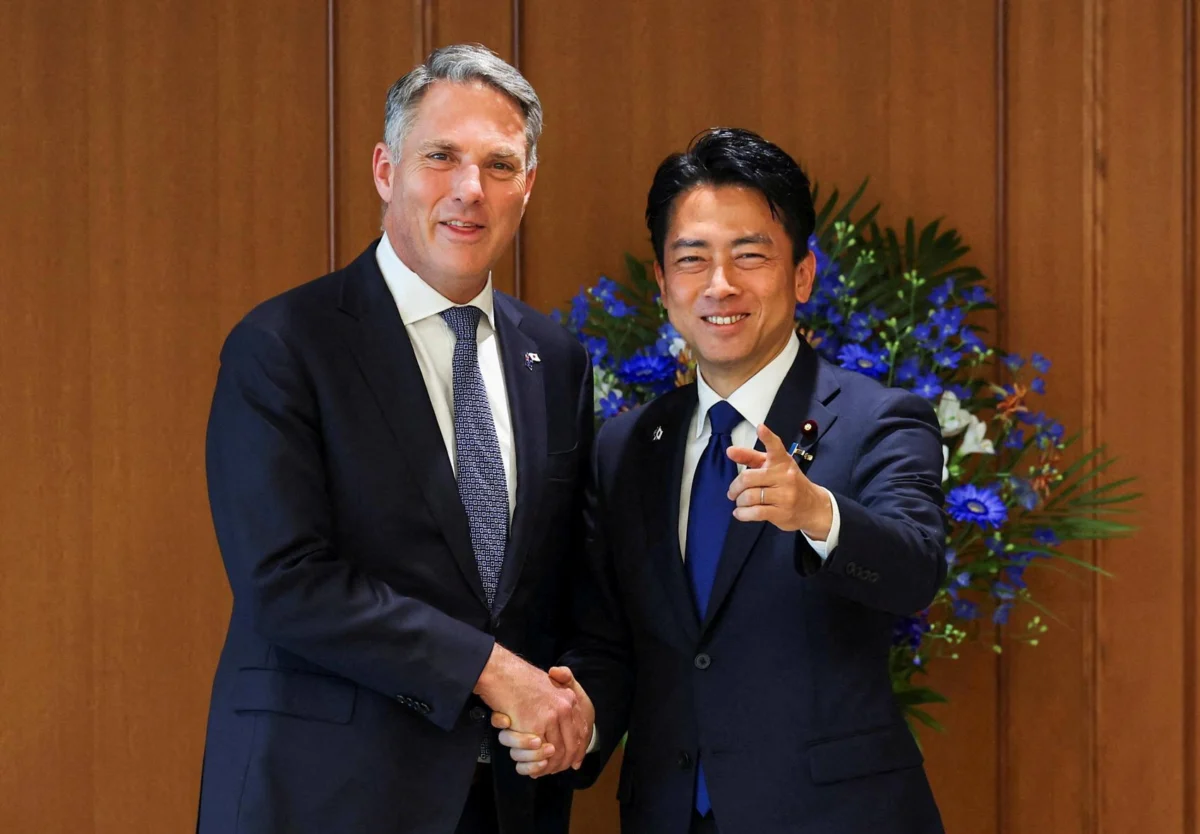
The formal signing ceremony took place aboard the impressive Mogami-class frigate JS Kumano, a proud member of the Japan Maritime Self-Defense Force. The ship was strategically docked off the coast of Melbourne, Australia, for the occasion. Attendees included Japan’s Defense Minister, Shinjiro Koizumi, and his Australian counterpart, Richard Marles, underscoring the bilateral importance of this defense pact. The presence of the JS Kumano was particularly poignant, as the vessel had recently participated in Exercise Kakadu, a significant biennial multinational maritime exercise hosted by Australia, demonstrating the growing interoperability and shared strategic interests between the two nations.
The selection of the Japanese Mogami-class frigate, announced in August of the previous year, represented a significant triumph for Japan’s defense industry, which has been steadily expanding its global reach. This decision saw the Japanese bid triumph over a competing proposal from Germany’s Thyssenkrupp Marine Systems for their MEKO A-200 class frigates. For Japan, this contract offers a substantial boost, particularly after experiencing disappointment in 2016 when a French company secured Australia’s submarine contract. The Mogami-class frigates are designed to be the vanguard of Australia’s next generation of general-purpose frigates, a critical modernization effort to replace the aging ANZAC-class frigates. These current vessels are increasingly deemed vulnerable to the evolving threats posed by modern missile systems and drone technology, necessitating a swift and effective upgrade to Australia’s maritime defense posture.
Minister Marles articulated the profound significance of this acquisition, emphasizing that the introduction of the Japanese frigates represents a monumental stride towards equipping the Royal Australian Navy with a larger, more potent, and technologically advanced surface combat fleet. The projected arrival of the first Mogami-class frigate in Australian waters is anticipated in 2029. Marles further highlighted the unprecedented speed of this procurement, stating to reporters, “The timeframe that we’ve announced is the fastest acquisition of a surface combatant into service in the Royal Australian Navy ever.” This accelerated timeline reflects a national priority to bolster defense capabilities swiftly and efficiently.
The strategic alignment between Australia and Japan extends beyond this singular vessel acquisition. Japan has been actively pursuing an accelerated military buildup and strategically broadening its defense partnerships beyond its primary treaty ally, the United States. In this evolving geopolitical landscape, Japan now regards Australia as a crucial “semi-ally,” a testament to the deepening trust and shared strategic objectives. Minister Marles warmly welcomed Japan’s recent relaxation of export controls on defense equipment and technology, particularly with “trusted partners like Australia.” This move signals a new era of collaborative defense innovation and streamlined access to advanced military capabilities.
Marles further elaborated on the synergistic benefits of this partnership, stating, “Japan is an industrial powerhouse and it offers so much opportunity for Australia and the development of our own defense industry as the Mogami project represents.” This sentiment underscores the dual advantages of the deal: enhancing Australia’s naval strength while simultaneously stimulating the growth and technological advancement of its domestic defense sector through collaboration with a leading global industrial nation. The implications for local job creation, skills development, and the transfer of cutting-edge technologies are substantial.
His Japanese counterpart, Minister Koizumi, echoed this sentiment of elevated bilateral cooperation. He expressed that the integration of Japanese-designed vessels into the Australian Navy signifies, “a major step is finally being taken to elevate our bilateral defense cooperation to a greater height.” This collaboration is situated within a broader context of Australia’s recently announced defense strategy, which commits an additional A$53 billion (approximately $38 million USD) to the defense budget over the next decade. This substantial investment underscores Australia’s commitment to maintaining a robust and modern defense force in an increasingly complex global environment. Koizumi identified a “decisive factor” in Australia’s selection of the Japanese frigate: its remarkably efficient operational requirements. The Mogami-class frigates are designed to be operated by a crew of just 90 personnel, a significant reduction compared to the approximately double crew size required for Australia’s current ANZAC-class frigates. This crew efficiency translates to lower operational costs and a more streamlined deployment capability.
Australia has confirmed that its future Mogami-class frigates will be outfitted with advanced weaponry, including potent surface-to-air and anti-shipping missiles. These versatile platforms will also possess the capability to operate sophisticated combat helicopters, further enhancing their operational flexibility and offensive reach. The crew complement for these advanced vessels in Australian service is expected to be 92 sailors and officers, representing a highly skilled and efficient operational unit. The introduction of these frigates represents not just an upgrade in hardware but a significant leap in Australia’s ability to project power and maintain maritime security in the Indo-Pacific region.
The strategic implications of this deal are far-reaching. The Indo-Pacific region is experiencing a period of heightened geopolitical tension and rapid military modernization. Australia’s investment in these advanced frigates, coupled with its deepening defense ties with Japan, signals a clear commitment to regional stability and a strategic alignment with like-minded democracies. Japan’s willingness to export its cutting-edge defense technology to Australia underscores the strength of their bilateral relationship and their shared vision for a free and open Indo-Pacific. This partnership is not merely about acquiring naval assets; it is about building a resilient and integrated defense ecosystem that can effectively address future security challenges. The Mogami-class frigates, known for their stealth capabilities, advanced sensor systems, and multi-mission versatility, are well-suited to operate in the complex maritime environments of the Indo-Pacific. Their modular design also allows for future upgrades and adaptation to emerging threats, ensuring their relevance for decades to come.
The collaboration extends beyond the direct procurement of vessels. The agreement is expected to foster extensive technology transfer and joint research and development initiatives between Australian and Japanese defense industries. This will not only enhance the capabilities of both navies but also drive innovation and create high-skilled jobs within Australia’s growing defense sector. The emphasis on building eight of the eleven frigates in Western Australia is a deliberate strategy to bolster domestic industrial capacity, create long-term employment opportunities, and position Australia as a more self-reliant defense power. This approach aligns with the broader Australian government’s agenda to strengthen national sovereignty and enhance its ability to contribute to regional security.
The significance of the Mogami-class frigates also lies in their ability to integrate seamlessly with other advanced naval platforms and systems. This interoperability is crucial for effective joint operations with allies and partners. As Australia continues to expand its naval fleet and enhance its defense partnerships, the Mogami-class frigates will serve as a cornerstone of its maritime strategy, contributing to a more secure and stable Indo-Pacific region. The vessels’ advanced combat management systems and sensor suites will allow them to detect and engage a wide range of threats, from submarines and surface vessels to aerial and cyber-based attacks. The ability to conduct complex operations, including anti-submarine warfare, anti-air warfare, and surface warfare, makes them a truly multi-mission asset.
The collaboration with Japan represents a strategic pivot for Australia’s defense procurement, demonstrating a willingness to look beyond traditional suppliers and embrace innovative partnerships. The shared values and strategic interests between Australia and Japan make them natural partners in ensuring regional security. This defense agreement is a tangible manifestation of that partnership, strengthening both nations’ capabilities and their collective ability to respond to evolving security challenges. The success of this initiative could pave the way for further defense cooperation in areas such as cybersecurity, intelligence sharing, and joint research into emerging defense technologies. The long-term vision is to create a robust and integrated defense network that can deter aggression and maintain peace and stability in the Indo-Pacific. The training and operational integration of Australian crews with their Japanese counterparts will also foster a deeper understanding of each other’s capabilities and doctrines, further enhancing interoperability and trust. This holistic approach to defense cooperation underscores the strategic depth of the Australia-Japan relationship.