

It is no exaggeration to assert that the landscape of contemporary pop music owes an immeasurable debt to the artistic vision and innovative spirit of Robyn. Her groundbreaking 2005 self-titled album, swiftly followed by the monumental “Body Talk” in 2010, didn’t merely contribute to a genre; they fundamentally reshaped it, ushering in an era of thoughtful, emotionally resonant electronic pop. This particular vein of music was once, rather dismissively, labeled “intellipop” – a term that now feels anachronistic and condescending, yet starkly illuminates the prevailing low regard for pop as a serious art form just two decades ago. Robyn’s work, however, was instrumental in dismantling these prejudices, elevating pop from perceived “high-calorie junk food” to a respected, innovative medium. It is an undeniable truth that the sonic blueprints for artists spanning the spectrum from Taylor Swift’s anthemic narratives to Charli XCX’s experimental edges and Ariana Grande’s vocal acrobatics, alongside entire subgenres like the frenetic energy of hyper-pop, would be dramatically different without her pioneering influence.
Robyn’s trajectory began in a more conventional pop star mold, with early hits like “Show Me Love” and “Do You Know What It Takes,” co-produced by none other than Swedish hitmaker Max Martin. While these initial offerings were crafted with the same world-beating precision characteristic of her compatriots like Denniz Pop and Martin, Robyn’s artistic evolution soon diverged. Her later work, particularly on “Robyn” and “Body Talk,” began to infuse pop’s melodic sensibility with a sophisticated, often melancholic, low-key vibe drawn from the rich textures of electronic and dance music. This fusion created a soundscape that transcended the typical target demographic of mainstream pop, appealing instead to an audience seeking deeper emotional engagement and sonic complexity – a segment often described as “older and snootier.” Her pivotal decision to sever ties with the major label “hit factories” and embrace full artistic autonomy, taking control of her recording process and launching her own label, further cemented her credibility and endeared her to an “alternative” set, who saw in her a fierce independent spirit charting her own course. This independence wasn’t just a career move; it was a profound artistic statement, allowing her to experiment and refine her unique voice without commercial pressures.
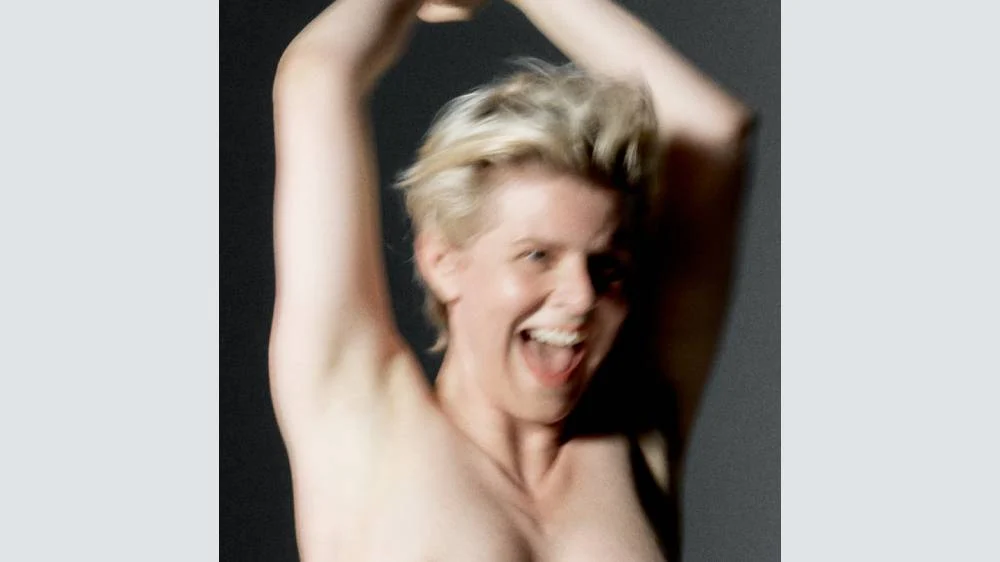
With her position as a pop icon – indeed, almost a goddess – long since consecrated, one might wonder what new frontiers remain for Robyn to conquer as she embarks upon the fourth decade of her illustrious career. The answer, it turns out, is a fearless and deeply personal exploration of self, sexuality, and motherhood. At 46, and two years after navigating the complexities of becoming a single mother, Robyn unveils an image and lyrical content more uninhibited and sexually charged than anything she has presented before. The album cover and promotional photographs for her latest offering, “Sexistential,” boldly feature her naked or topless, a stark visual declaration of vulnerability and defiance. This visual daring is mirrored in the album’s title track, a piece so candid it has been described in press materials as “possibly the world’s first rap about having one-night stands while 10 weeks pregnant after IVF.” This extraordinary lyrical honesty is further punctuated by lines that are at once humorous, poignant, and profoundly empowering: “I’m about to have a kid on my own/ My doctor said, ‘Robyn, who would be your dream donor?’/ ‘Well Adam Driver always did kinda give me a boner,’” and later, with cosmic grandeur, “My body’s a spaceship with the ovaries in hyperdrive/ Got a whole universe that exists between my thighs.” These lyrics are not just provocative; they are a radical reclaiming of the female narrative, shattering taboos around age, single motherhood, and unbridled desire within pop music.
Musically, the title track of “Sexistential” stands as an outlier, its raw, rapped lyrics and hard-hitting beats a departure from the album’s broader sonic tapestry. The rest of the album, while distinct, generally maintains a refined atmospheric quality reminiscent of its critically acclaimed predecessor, 2018’s “Honey.” Yet, to dismiss it as mere repetition would be a disservice. A deeper sonic excavation reveals nuanced progressions and intricate layers that reward repeated listening. Robyn once again collaborates with her longtime creative partner, Klas Åhlund, whose masterful touch is evident throughout. For two tracks, the album also sees a reunion with Max Martin and Oscar Holter, while “Dopamine” features the fresh input of Addison Rae collaborator Elvira Anderfjärd, showcasing Robyn’s knack for blending established genius with emerging talent. The rhythmic architecture of “Sexistential” is particularly noteworthy; the beats are paradoxically both harder and more restrained, creating a propulsive yet controlled energy. The arrangements are meticulously constructed, featuring arpeggiated electronics that shimmer and pulse, over which Robyn’s gorgeously multitracked vocals soar, weaving intricate melodic tapestries that are both ethereal and deeply grounded.
A striking characteristic of “Sexistential” is its pervasive sense of restraint and suspense. Unlike the triumphant, confetti-bomb finales of many of her earlier hits, such as the glorious drum roll that ushers in the final choruses of “Dancing on My Own,” several tracks on this new album deliberately withhold conventional release. The lead single, “Dopamine,” serves as a prime example of this artistic choice. It builds for its first three minutes, riding on a hypnotic electronic kick drum that conjures a feeling of intense anticipation and longing. A sudden, cathartic snare roll then bursts forth, hinting at an imminent climax, only for the song to fade out abruptly after a mere 30 additional seconds. This deliberate truncation conveys a profound sense of desire and anticipation, yet leaves the listener with an almost palpable lack of fulfillment. This artistic choice permeates much of “Sexistential,” suggesting a mature artist who is perhaps weary of the predictable “climax” and resolution. For an album so explicitly steeped in themes of sex and sensuality, this absence of overt musical culmination on certain tracks is a bold statement, inviting contemplation on the nature of desire, longing, and the often-unresolved complexities of human experience. It challenges the listener to find beauty and meaning not just in the explosion, but in the sustained tension and the space between the notes.
This perceived lack of conventional “climax” on some tracks, however, is a minor critique in the grander scheme of “Sexistential.” Beyond its audacious title track, the album is a slow burn, a meticulously crafted work that gradually unfurls its depths. Elements that might initially go unnoticed, such as the freeform, almost improvisational melody of “It Don’t Mean a Thing” and the way it intricately dances over the pulsating electronics, suddenly snap into vivid clarity on the second, fifth, or even tenth listen. This layered approach is a hallmark of Robyn’s artistic process. Given that this is her first full-length album in nearly eight years – a testament to her unhurried and deliberate creative pace – music that reveals new facets with each engagement is not just welcome, but essential. It speaks to an enduring relevance, a commitment to craft that defies industry pressures for constant output, and an artist whose work continues to resonate and evolve, inviting her audience to grow and discover alongside her. “Sexistential” is not just an album; it is an experience, a journey into the mind of an artist who continues to push boundaries, challenge expectations, and redefine what pop music can be, proving that true artistry only deepens with time and fearless self-expression.