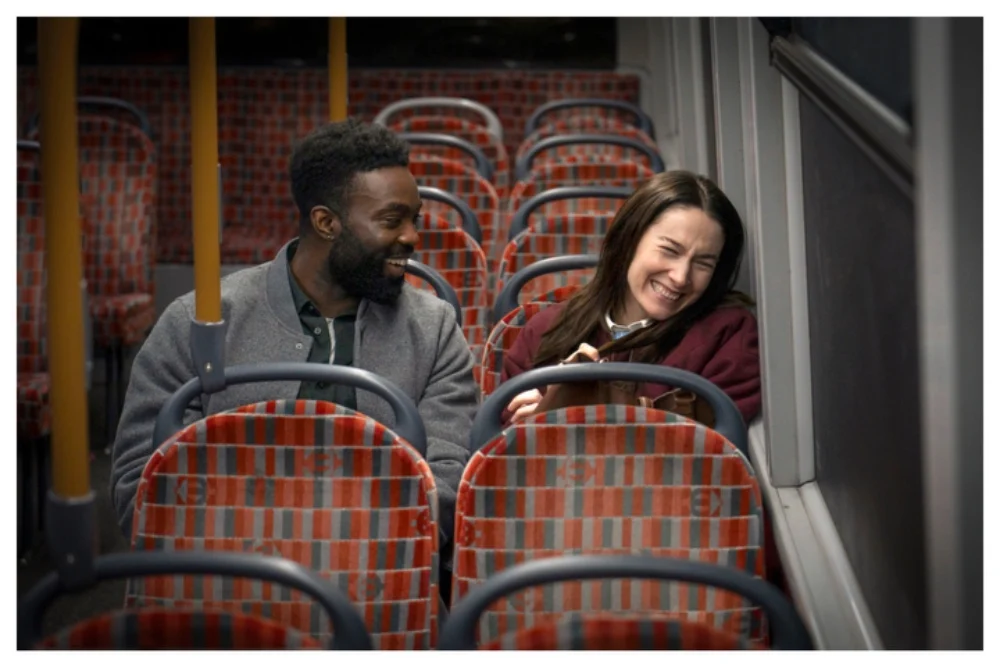
The recent premiere of the BBC series "Babies" at Series Mania marked a poignant moment in television, introducing audiences to a profoundly intimate and often-unaddressed narrative: the devastating heartbreak of pregnancy loss and its ripple effects on a loving couple, their family, and their closest friends. Far from shying away from the raw agony, this series, featuring rising star Paapa Essiedu, boldly embraces what its creator terms "glorious chaos and mess," ultimately affirming that love remains "all that matters."
In a landscape increasingly seeking authenticity and vital storytelling, "Babies" emerges as a crucial intervention. It delves into a deeply personal trauma that, despite its widespread occurrence, often remains shrouded in silence and misunderstanding. Miscarriage, stillbirth, and infant loss are experiences that touch countless lives, yet public discourse frequently falls short in providing adequate space for grief, support, and recognition. Stefan Golaszewski, the visionary creator and director behind the series, articulated his profound motivation ahead of the festival: "I have experienced what’s discussed in the show, but it’s not autobiographical," he shared, clarifying the deeply personal yet universal nature of his inspiration. "It just started to feel, to me, like a story I needed to tell — but tell it with hope. The ultimate aim of the show is to connect with people who have been through that, or even just been through loss. Which is kind of everyone, I suppose. I wanted to make them feel less alone." This mission statement underscores the series’ ambition to serve not just as entertainment, but as a balm for those navigating similar unseen battles, offering a sense of community and shared humanity.
The narrative centers on Lisa, portrayed with breathtaking vulnerability by Siobhán Cullen, known for her roles in "The Dry" and "Obituary," and Stephen, brought to life by the compelling Paapa Essiedu. Their journey through the aftermath of pregnancy loss becomes the crucible in which their relationship is tested. The series masterfully dissects their divergent coping mechanisms: Stephen, determined to maintain a facade of positivity, desperately tries to hold things together, while Lisa, consumed by an internal world of pain, slowly begins to fade away. This contrast forms the emotional core of the drama, illustrating the complex and often isolating ways individuals process grief, even within the closest of bonds.
Paapa Essiedu’s involvement adds another layer of intrigue and prominence to "Babies." Essiedu, a critically acclaimed actor, has been steadily building a formidable career with standout performances in projects like "I May Destroy You" and "Gangs of London," showcasing his range and depth. His recent casting as Severus Snape in the upcoming HBO Max "Harry Potter" adaptation catapulted him into headlines, attracting both fervent excitement and, controversially, a barrage of death threats from a segment of the fandom resistant to reimagining iconic characters. This public scrutiny highlights the unique pressures faced by actors today, yet Essiedu’s commitment to "Babies" demonstrates his artistic integrity and willingness to tackle sensitive, socially resonant material. His portrayal of Stephen promises to be another nuanced performance, further solidifying his reputation as one of his generation’s most compelling talents. Siobhán Cullen, equally adept at conveying profound emotional states, complements Essiedu perfectly, creating a believable and deeply empathetic partnership.
Golaszewski, collaborating closely with Cullen and Essiedu, meticulously crafted a portrayal of a relationship undergoing its most profound challenge. The series employs clever narrative devices, such as a pivotal flashback in Episode 3, to illuminate the foundational dynamics of Lisa and Stephen’s relationship. "With the flashback in Episode 3, for example, I tried to show not just the foundation of their relationship, but also the foundation of their outlooks," Golaszewski explained. "The same outlooks that are causing them trouble in the present are the outlooks that attracted them to each other in the past." This insightful approach reveals how the very qualities that drew them together – Lisa’s fierce emotional honesty and Stephen’s unwavering optimism – now become sources of friction when confronted with overwhelming sorrow. Their individual responses to grief are depicted as deeply ingrained aspects of their personalities, shaped by their upbringing and life experiences. "Lisa goes head first into a rage — Stephen avoids it for as long as he can, until it just becomes unavoidable," Golaszewski elaborated. "These responses to grief are rooted in who they are and how they were brought up." The series thereby offers a sophisticated psychological examination of how personal histories intertwine with shared trauma.
Produced by Snowed-In Productions, Money Men Studios, and All3Media International, which handles sales, "Babies" benefits from a production team committed to Golaszewski’s vision of unvarnished realism. Despite the burgeoning stardom of his lead actors, Golaszewski remained steadfast in his commitment to portraying an authentic, grounded reality. The apartments Lisa and Stephen inhabit are not aspirational, but "lived in," reflecting the everyday struggles of a young couple. Financial worries are a constant undertone, grounding their emotional turmoil in relatable, tangible concerns. Golaszewski consciously aimed to create an emotional connection with viewers by "talk[ing] to the audience truthfully about what it’s like to be them."
His directorial philosophy embraced a concept he calls "un-writing," a process designed to strip away artifice and achieve a "greater sense of throwaway truth about how people speak, what clothes they wear or what their environments are like." This deliberate choice eschews the often-stylized aesthetics of contemporary television in favor of a raw, almost documentary-like feel. "People would ask me: ‘What’s the color palette here?’ We don’t usually color-code our lives!" Golaszewski mused, challenging conventional production design. "Perhaps if Lisa and Stephen were a little older and more middle-class, they might have some interior design aspirations. But they don’t. There’s a kind of glorious chaos and mess that feels like a more truthful representation of the world." This commitment to depicting life’s inherent untidiness makes the characters and their struggles profoundly relatable, fostering a deeper empathy from the audience.
While the initial episodes unflinchingly portray the "bleakest" moments of disappointment and despair, "Babies" is fundamentally a story imbued with hope. The narrative skillfully oscillates between the couple’s joyful beginnings and their present-day struggles, creating a powerful juxtaposition. "You bounce between them first getting together and them in the present day, so you juxtapose the joyful hope of the beginning of love with the first fire they’re stepping through," Golaszewski explained. The series charts Stephen’s journey from a forced positivity that eventually crumbles, showing him "in the pit," and his subsequent struggle to "climb out of it." It is a testament to human resilience, depicting "people who have experienced the first terrible thing to happen to them as a couple, and potentially as individuals, and how they have grown because of it." This arc promises a journey not just through pain, but towards profound personal and relational growth.
When asked about the ultimate message of love he wished to convey, Golaszewski offered a simple, yet profound, answer: "It’s kind of all there is. It’s all that matters." He expanded on this, describing "Babies" as, at its heart, a romance. "Love is what pulls them through. In some ways, this story is just a romance. You could have a romance where two people fall in love, and he moves to China while she lives in L.A. This is a romance where people keep losing babies, and the certainty and thrill of their youth, which they thought would last forever, has disappeared. They have to work out who they are and how to move forward." It’s a powerful redefinition of romance, one that recognizes the arduous labor and unwavering commitment required to sustain connection in the face of unimaginable hardship.
Golaszewski, despite the inherent pain of the subject matter, was determined to provide a "safe experience" for his audience. He recognized the intimate setting in which most viewers would encounter the series – "in the audience’s living room, at the heart of their home environment." This awareness guided his approach, ensuring that even amidst the heartbreak, there was a sense of care and ultimate upliftment. "If I were to present this story in a colder, darker way, I’m not sure what positivity that would bring to people. I want them to feel better about the world after watching it," he affirmed. This dedication to fostering empathy and a sense of healing sets "Babies" apart, transforming a difficult topic into a source of connection and solace.
Crucially, Golaszewski confirmed that "Babies" is a self-contained story, a one-off series that will not extend beyond its initial run. "It’s a one-off," he stressed. This decision, he explained, was a deliberate choice to preserve the "purity of the idea, the concept and the journey you wanted to take." For Golaszewski, the integrity of the narrative dictated a concise, focused exploration. "With this, I feel like the best version of it is just this one journey. It’s about a couple who have grown from people to whom trauma hadn’t happened to people to whom it had. There’s a coming-of-age element to that journey that feels like it only needs six hours." This commitment to a singular, impactful narrative arc ensures that "Babies" will leave a lasting impression, a complete and transformative story of grief, resilience, and the enduring power of love. The series stands as a testament to the fact that even in life’s most profound sorrows, there is space for growth, connection, and a renewed appreciation for the beautiful, messy truth of human experience.