Glamorous Promises, Gritty Reality: The TEDx Beverly Grove Fiasco That Rocked L.A.’s Elite
A recent attempt to convene Los Angeles’s brightest minds and most influential figures under the banner of thought leadership spectacularly imploded, leaving in its wake a swirl of disbelief and widespread chatter among industry insiders and the city’s discerning social set. The event, TEDx Beverly Grove, has swiftly become a cautionary tale of ambition unmoored from execution, a stark reminder that even in a city built on dreams and carefully curated images, reality has a way of asserting itself with undeniable force.
Billed as a “rare L.A. moment when a room full of strangers agrees to do the hardest thing: pay attention. Because attention is where change begins,” TEDx Beverly Grove was slated for March 14. Organizers, operating under the licensed umbrella of TEDx – a grassroots extension of the globally renowned thought leadership platform TED – promised an unparalleled day of intellectual stimulation and networking. The very name TED, synonymous with innovation, inspiration, and groundbreaking ideas, conjures images of packed auditoriums, compelling narratives, and access to the world’s most innovative thinkers. For many, a TEDx event offers a localized, yet equally prestigious, opportunity to engage with these ideals, making the promise of the Beverly Grove iteration particularly alluring.
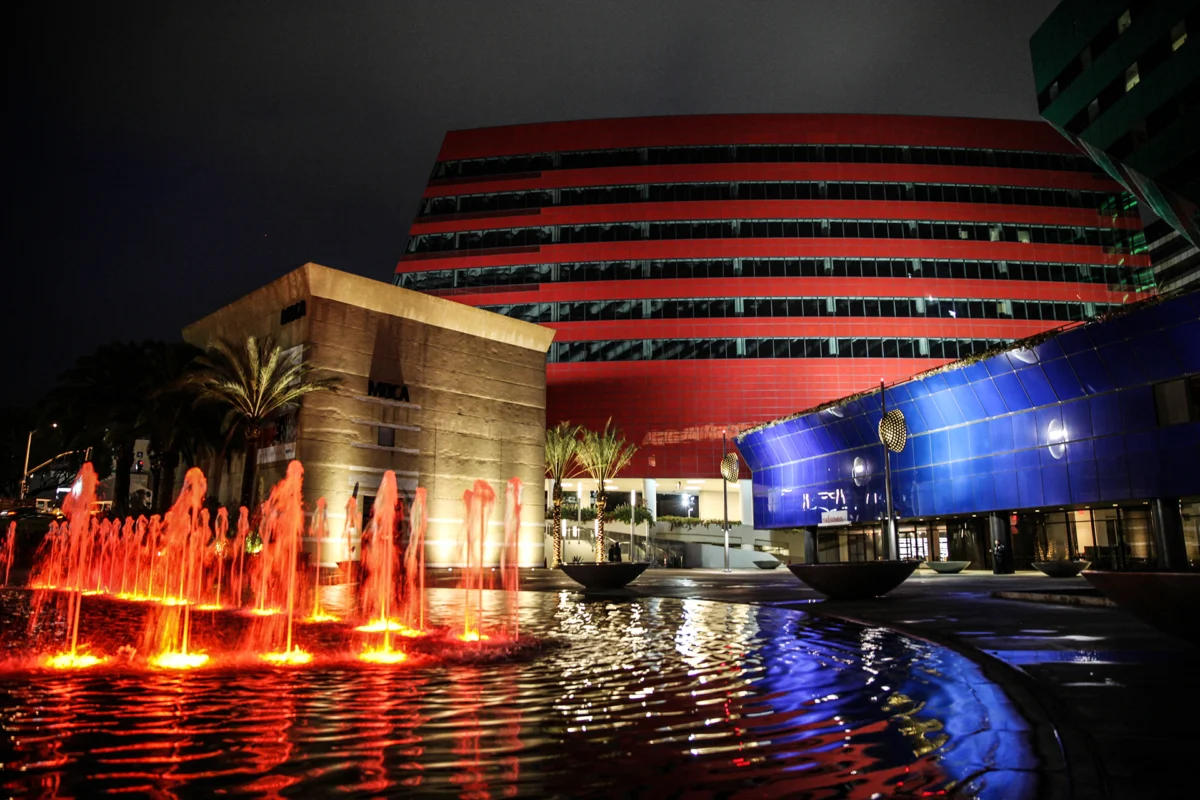
The promotional blitz for TEDx Beverly Grove was nothing short of a masterclass in aspirational marketing, meticulously crafted to captivate the city’s sophisticated audience. Advertisements painted a vivid picture of a high-wattage gathering, set against the iconic backdrop of West Hollywood. Glossy images showcased the city’s architectural marvels and economic engines, from the striking Pacific Design Center to the bustling Beverly Center shopping hub, subtly reinforcing the area’s outsize cultural and financial impact. Attendees, willing to part with $154 per ticket, were promised a day filled with insightful talks, sponsored by reputable entities like Los Angeles Magazine. The roster of featured participants was equally impressive, including formidable names such as real estate mogul Rick Caruso, a ubiquitous figure in L.A.’s development and political landscape, and Michelin-star chef Aitor Zabala, whose culinary artistry has graced some of the city’s most exclusive dining experiences. Further cementing its apparent bona fides, an article highlighting the event’s prestige even appeared in The Hollywood Reporter, adding another layer of credibility to the already dazzling facade.
Yet, as multiple attendees and numerous sources intimately familiar with the situation have now revealed, the meticulously constructed illusion quickly dissolved upon arrival. The chasm between the grand promises and the stark reality of the event was, by all accounts, profound and deeply disappointing.
Instead of the elegant, high-profile setting one might associate with a “Beverly Grove” event touting West Hollywood’s cultural zenith, the actual venue was a nondescript black box theater situated on Santa Monica Boulevard – notably, right beside a 7-Eleven. This immediate contrast, from the soaring architectural grandeur depicted in promotional materials to the utilitarian, almost anonymous location, set an unsettling tone for the day. The culinary experience, too, fell far short of expectations. Rather than a gourmet spread or even a thoughtfully curated meal befitting a high-caliber event, attendees were served boxed lunches catered from Mendocino Farms, a popular grab-and-go café, hardly aligning with the luxurious image conjured by the event’s marketing.
Perhaps the most glaring discrepancy, however, involved the promised star power. Rick Caruso, whose name was prominently featured as a speaker, was conspicuously absent. A spokesperson for Caruso later clarified that the developer had never RSVP’d to speak and had, in fact, repeatedly requested that his image be removed from the TEDx Beverly Grove website. This crucial detail went unheeded for an extended period, with Caruso’s photo finally disappearing online a full ten days after the event had concluded. The implication was clear: a marquee name had been used without proper authorization, lending a false sense of gravitas to the proceedings. Equally telling was the attendance itself. Despite being listed online as “sold out” – a claim that now appears to be an outright fabrication – two witnesses present at the event estimated that the room barely contained 25 individuals, including speakers. Moreover, many of those present were reportedly volunteers, further diminishing the perceived value of the “exclusive” gathering.
The day’s descent into disarray culminated in a truly dramatic, almost cinematic, moment that cemented the event’s calamitous status. Just as Marvin V. Acuna, the TEDx Beverly Grove organizer and a former film producer, was preparing to deliver his opening remarks, he was publicly confronted by a process server. According to two independent sources, Acuna was presented with legal papers right before he was due to take the stage. In a scene that underscored the deep-seated issues plaguing the event, Acuna reportedly refused to physically accept the documents, compelling the process server to drop them unceremoniously on the floor. The shockwaves of this highly public confrontation rippled through the already sparse audience, creating an atmosphere of palpable discomfort and confusion.
The immediate fallout of this incident was swift and telling. Christopher Gialanella, the publisher of Los Angeles Magazine, a key sponsor and partner, was observed making a hasty exit from the event, promotional copies of his monthly publication tucked under his arm. His departure, amidst the unfolding legal drama, spoke volumes about the sudden and irreparable damage to the event’s credibility. When later approached for comment, Gialanella offered a carefully worded statement to Variety: “We regularly attend community events to support former contributors and engage with local leaders. My attendance at TEDx Beverly Grove was in that spirit, to support what was presented as a community-focused gathering. I departed once my scheduled speaking window had passed, as I had a prior commitment.” While professional and diplomatic, his statement subtly distanced himself and his publication from the event’s ultimate unraveling, particularly given the circumstances of his abrupt exit.
In the days and weeks that followed the TEDx Beverly Grove debacle, public attention, particularly within L.A.’s power circles, quickly shifted to Marvin V. Acuna and his complex history. His professional trajectory, once rooted in Hollywood, appeared to have taken a series of increasingly turbulent turns. Acuna’s earlier career as a film producer included credits on notable projects such as Amanda Seyfried’s “Lovelace” and Jenna Elfman’s “Touched,” as well as the Bravo singing competition series “Platinum Hit.” However, his presence in the show business landscape, according to IMDB, seemingly tapered off in the mid-2010s. This pivot away from a relatively public and established career path foreshadowed later, more contentious ventures.
Following his departure from mainstream entertainment, Acuna reportedly ventured into the burgeoning retail food sector, launching a plant-based pizza startup. It was during this period that his legal troubles began to escalate dramatically. According to legal filings reviewed by Variety, Acuna faced allegations of embezzling millions of dollars from investors. Despite his denials of these serious accusations, a judgment was ultimately issued against him, totaling nearly $1 million. Concurrently, Acuna filed for bankruptcy, a clear indicator of significant financial distress. These severe legal and financial entanglements cast a long shadow over his ability to organize a high-profile “thought leadership” event and raised serious questions about the due diligence (or lack thereof) performed by those who partnered with him. His current official website now identifies him as the founder of MoBal, a fitness company ambitiously billed as a “leadership incubator powered by physical mastery,” a venture that, given his past, now invites heightened scrutiny.
The revelations surrounding Acuna’s past have ignited a broader discussion within L.A.’s tight-knit communities. Several individuals within the city’s power circles have openly questioned Acuna’s perceived proximity to the very figures he claimed to have booked for the TEDx event. One source intimately familiar with Rick Caruso, for instance, unequivocally stated that the prominent developer had no personal acquaintance with Acuna. This raises critical questions about the nature of the outreach, the representations made to potential speakers and sponsors, and the fundamental integrity of the event’s planning. Furthermore, the financial arrangements between Acuna and the event’s sponsors remain shrouded in ambiguity; it is unclear what, if any, fees were charged for participation in TEDx Beverly Grove.
Gialanella, while commenting on his attendance, notably refrained from discussing the specific nature of Los Angeles Magazine’s sponsorship, leaving that aspect of the partnership undisclosed. Chef Aitor Zabala, whose name also lent significant prestige to the event, clarified his position through a representative. He stated emphatically that neither he nor his acclaimed restaurant, Somni, had paid for their inclusion in the event. Zabala further emphasized that he was “not aware of the situations” described in the unfolding narrative and that his involvement was strictly “limited to preparing and delivering my talk. It was my first time speaking publicly in the U.S., and I was focused on sharing something personal about my journey.” His statement suggests a genuine, if somewhat naive, engagement with the opportunity to share his story, highlighting how individuals with legitimate professional standing can inadvertently become entangled in events marred by deeper organizational issues. Notably, Acuna himself has remained silent, declining to respond to multiple requests for comment regarding the myriad issues that plagued his event.
The TEDx Beverly Grove saga stands as a stark testament to the perils of prioritizing image over substance, particularly in a city where perception often holds sway. It underscores the critical importance of rigorous vetting, transparency, and integrity in event organization, especially when leveraging a globally respected brand like TEDx. For L.A.’s discerning audience, accustomed to a certain standard of excellence, the event’s spectacular failure serves as a sobering reminder that even the most glittering promises can, and sometimes do, dissolve into an embarrassing and deeply disappointing reality.