



The history of progress is rarely a story of quiet evolution; rather, it is a chronicle of friction, resistance, and hard-won victories. For centuries, the movement for gender equality has been defined by a singular, uncomfortable truth: rights are never simply handed over by those in power. They are seized, defended, and expanded by those who refuse to accept the status quo. Today, as the global community gathers for the Commission on the Status of Women, the message from the highest levels of international diplomacy is clear: gender equality is, and always has been, a question of power.
Across the globe, the landscape for women and girls is shifting beneath a weight of contradictory forces. On one hand, there is the undeniable energy of a new generation of activists, justice seekers, and community leaders who are reshaping the world in real-time. On the other, there is a coordinated and aggressive backlash against the very concept of women’s rights. This pushback is not a random occurrence; it is the predictable reaction of entrenched power structures feeling their grip begin to loosen. As the world navigates a period defined by climate chaos, widening economic inequality, and the rapid upheaval of the digital age, the struggle for justice has become the central frontline for the future of humanity.
The Structural Gap in Global Justice
We live in the 21st century, an era of unprecedented technological and social connectivity, yet for millions of women, the basic promise of justice remains an elusive dream. The statistics are a sobering reminder of how far the world has to go. Currently, women hold only 64 percent of the legal rights enjoyed by men globally. This is not a series of unfortunate accidents or cultural oversights; it is a structural gap designed to limit opportunity and maintain traditional hierarchies.
When legal protections are eroded, it is women who suffer first. Today, we are witnessing a world where hard-won rights regarding sexual and reproductive health are being dismantled, and where women human rights defenders are increasingly targeted for their bravery. This erosion of rights is occurring against a backdrop of global instability. In regions engulfed by conflict, women and children are bearing the brunt of displacement and brutality. Perhaps most chilling is the recent data indicating that conflict-related sexual violence has surged by a staggering 87 percent in just two years. The number of women and girls living in close proximity to deadly conflict is at its highest point in decades, highlighting a crisis of protection that the international community has yet to fully address.
Justice as the Engine of Development
The path forward requires a fundamental reimagining of justice, not merely as a legal concept, but as the bedrock of sustainable development. When women are granted the right to inherit property, access fair work, secure legal identity, and own land, the ripple effects transform entire societies. Economic data consistently shows that when women’s rights are protected, poverty rates drop and national productivity rises. Conversely, when justice systems fail women, inequality becomes calcified, and development stalls before it can even begin.
The most extreme example of this systemic failure is currently unfolding in Afghanistan. The systematic erasure of women from public life—including the recent, devastating bans on women entering United Nations compounds—represents a total collapse of justice in practice. This is not just a tragedy for Afghan women; it is a catastrophic blow to the country’s future. To achieve the Sustainable Development Goals, the world must recognize that equal access to justice for everyone, everywhere, is the only way to build a resilient global economy.
Breaking the Cycles of Impunity
In the realms of peace and security, the absence of justice is often a form of violence in itself. For decades, international peace processes have paid lip service to the inclusion of women. However, the reality remains that women are frequently sidelined when it comes to the actual negotiating tables where the fate of nations is decided. This exclusion has a high cost: research shows that peace agreements are significantly more durable and societies heal more deeply when women are meaningful participants in the process.
The current global climate of impunity fuels a cycle of abuse that is difficult to break. When sexual violence is used as a weapon of war and the perpetrators face no consequences, survivors remain unheard and communities fracture. Breaking these cycles requires more than just rhetoric; it requires a commitment to transitional justice and the funding of women peacebuilders who are currently under-recognized and under-threat. Justice must be the guardian of human dignity, confronting the epidemics of domestic abuse, trafficking, and harassment that limit women’s freedom in every corner of the world.
The Digital Frontier and the Shadow of Patriarchy
As we look toward the future, the fight for justice is expanding into the digital realm. Technology, and specifically artificial intelligence, represents one of the most powerful industries on Earth. Yet, the same patriarchal norms that have governed physical societies for centuries are being hardwired into the infrastructure of the future. Silicon Valley and other global tech hubs remain dominated by a male-centric perspective, with women making up only one in four tech workers.
When women are absent from the design of digital systems, the vacuum is often filled by bias. We see this in algorithms that reinforce racial and gender discrimination, and in online platforms that serve as megaphones for misogyny. Artificial intelligence, if left unchecked, risks reinforcing existing inequalities rather than correcting them. The responsibility lies with technology companies to diversify their workforces and with governments to ensure that the digital future is safe, inclusive, and just. Expanding opportunities for girls in science, technology, engineering, and mathematics (STEM) is no longer just an educational goal—it is a human rights imperative.
Climate Justice is Gender Justice
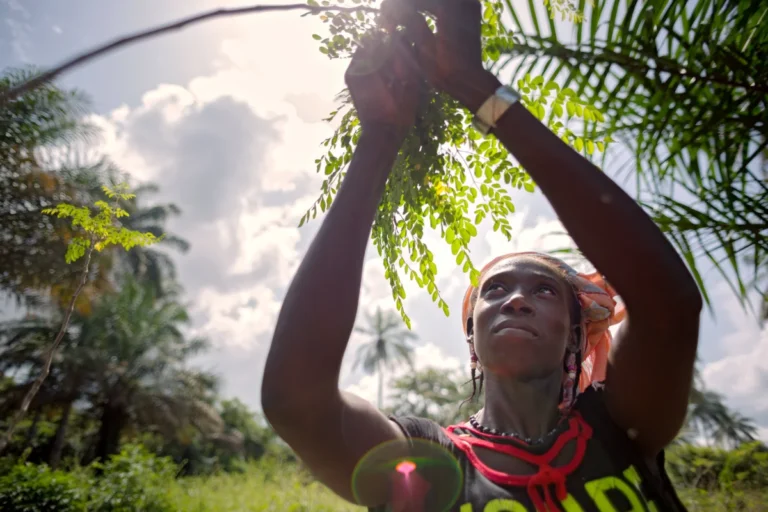
Parallel to the digital revolution is the escalating climate crisis, where the intersection of gender and justice is equally critical. Women and girls, particularly those in rural and marginalized communities, are the most vulnerable to climate devastation. When laws deny women equal rights to resources like land and water, or exclude them from environmental decision-making, the resilience of the entire community collapses.
However, the inverse is also true: when women lead climate action, the results are more effective and more just. Women are often the primary managers of natural resources in their communities and possess unique knowledge essential for adaptation strategies. Safeguarding ecosystems and shaping climate policy through a gender-sensitive lens is the only way to ensure a livable planet for future generations.
A Legacy of Parity within the United Nations
While the global outlook remains challenging, there are internal victories that offer a blueprint for change. Within the United Nations itself, a significant transformation has taken place. For the first time in the organization’s nearly 80-year history, gender parity has been achieved among senior leadership. This milestone was reached two years ahead of schedule, proving that change is possible when there is a dedicated political will.
This achievement was not the result of lowering standards, but of expanding the search for talent and recognizing merit wherever it exists. By merging the strengths of entities like UN Women and the UN Population Fund, the organization is aiming for a more unified and impactful approach to supporting women and girls worldwide. The goal is to move beyond the halls of diplomacy and create concrete changes in the lives of individuals on the ground.
A Final Call to Action
As the current leadership of the United Nations prepares for a transition in the coming years, the message to the Commission on the Status of Women is one of enduring solidarity. The struggle for equality is not a finite project; it is a continuous movement that requires the voices and leadership of women and girls from every walk of life. It also requires men and boys to step up as allies, recognizing that a more equal world is a more prosperous and peaceful world for everyone.
From the rubble of earthquake zones to the frontlines of protests, the resilience of women continues to reshape the global narrative. They are demanding accountability in the face of impunity and building movements that refuse to be silenced. The fight for justice, dignity, and equality is the defining challenge of our age. It is a struggle that will continue in parliaments, in rural villages, and in the digital clouds, driven by the unwavering belief that a better world is not just possible—it is inevitable if we have the courage to win it.