


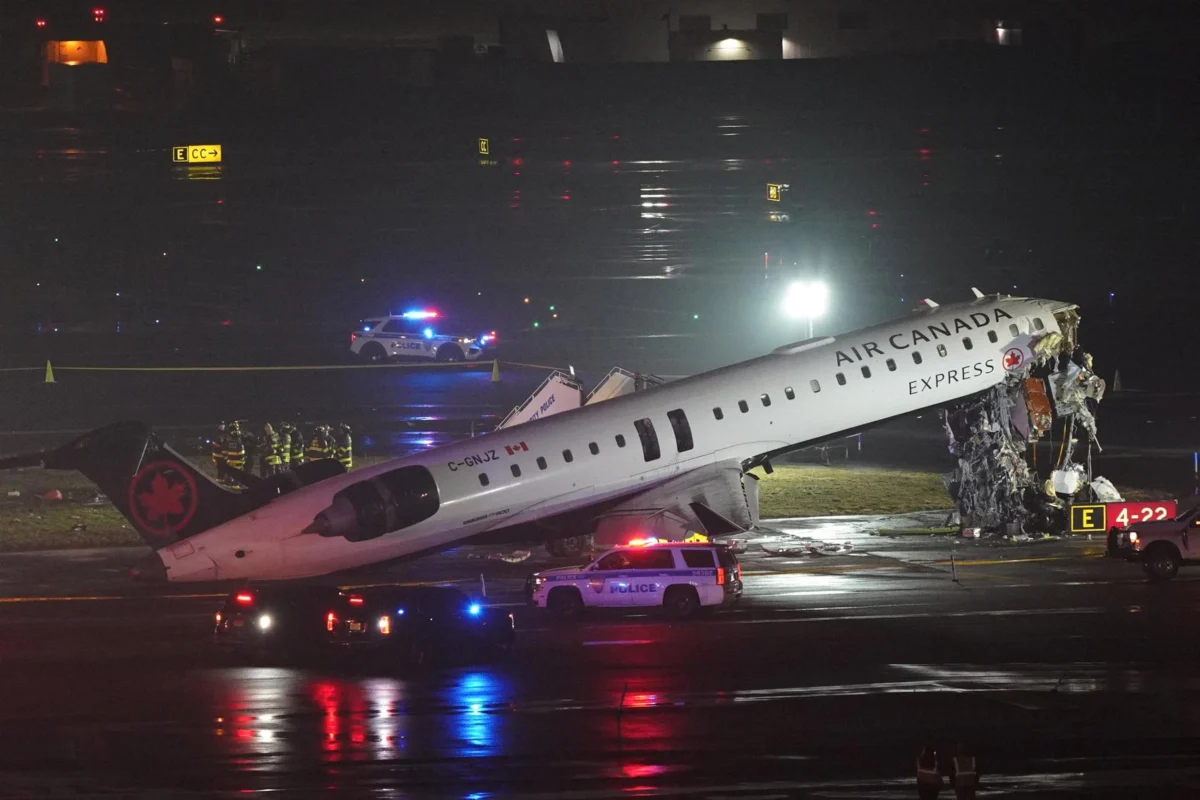
A catastrophic collision occurred late Sunday at New York’s LaGuardia Airport when an Air Canada Express jet, en route from Montreal, impacted a fire truck during its landing sequence. The devastating incident resulted in the tragic loss of both pilots aboard the aircraft, left dozens injured, and necessitated the immediate closure of the busy airport. This alarming event is poised to intensify the ongoing national conversation surrounding aviation safety, particularly in the wake of a series of recent high-profile aviation lapses.
The aircraft involved was an Air Canada Express CRJ-900, operated by Jazz Aviation, a regional partner of Air Canada. Onboard were 72 passengers and four crew members. According to Kathryn Garcia, the executive director of the Port Authority of New York and New Jersey, the injured toll reached 41 individuals. Of those, 32 have since been released from medical care, while nine remain hospitalized, battling what are described as “serious injuries.” The injured comprise a mix of passengers, flight crew, and crucially, the two firefighters who were aboard the fire truck. The firefighters sustained non-life-threatening injuries and are currently receiving hospital treatment.
The fire truck, authorities revealed, had been dispatched to respond to a separate incident involving a United Airlines aircraft. This United flight had reportedly declared an emergency due to an unusual odor detected within the cabin. Preliminary information from air traffic control (ATC) audio, captured by LiveATC.net, suggests that controllers had already alerted the United flight crew to the presence of fire trucks already on the scene due to the odor issue. Moments later, the audio indicates that a fire truck was granted clearance to cross Runway 4, the very same runway where the fatal collision ultimately took place, via taxiway ‘Delta.’ The timeline of events then took a terrifying turn. Within moments, the ATC audio captures a controller’s frantic and urgent commands: “Stop, stop, stop, truck 1 stop, truck 1, stop.” Despite these desperate warnings, the aircraft made contact with the fire vehicle. Flight tracking data from Flightradar24, which logged its last data point at 11:37 p.m., indicates the aircraft struck the fire truck at a speed of approximately 24 miles per hour (39 kph). Photographs captured in the aftermath of the accident vividly depicted the severe damage sustained by the aircraft’s nose, which was left tilted upwards, a stark testament to the force of the impact.
In the immediate aftermath, Air Canada deferred comment to Jazz Aviation, stating they were aware of the incident. Jazz Aviation issued an initial statement acknowledging the collision and pledged to release further details as they became available. The gravity of the situation was underscored by the swift response of aviation authorities. The U.S. National Transportation Safety Board (NTSB) announced the deployment of a specialized team of technical experts to lead the investigation into the root causes of the accident. Concurrently, the U.S. Federal Aviation Administration (FAA) confirmed that LaGuardia Airport would remain shut down until at least 2 p.m. ET on Monday, a decision that would inevitably trigger widespread travel disruptions.
The closure of one of the nation’s most vital transportation hubs is expected to exacerbate the existing travel chaos, which has already been significantly impacted by the ongoing, weeks-long partial government shutdown. The shutdown has led to a noticeable increase in absences among essential transportation security personnel, resulting in lengthy queues and frustrating delays for passengers at major airports across the United States. New York City’s emergency notification system issued advisories warning residents and travelers of potential flight cancellations, extensive road closures around the airport, significant traffic delays, and the presence of numerous emergency response vehicles and personnel in the vicinity. According to flight tracking website FlightAware, approximately 537 flights had already been canceled at LaGuardia by Monday morning. LaGuardia Airport, a critical gateway for the New York metropolitan area, handles over 30 million passengers annually, serving a diverse array of major U.S. airlines.
This tragic incident occurs against a backdrop of increasing concerns regarding runway safety. Data released by the FAA reveals a notable uptick in runway incursions. In January of the current year, there were 97 such incidents, a stark increase compared to the 133 incidents recorded during the same period in the previous year. The legislative landscape is also reflecting these growing anxieties. Just last month, a bipartisan group of U.S. House lawmakers put forth proposed legislation aimed at addressing 50 critical aviation safety recommendations. These recommendations stem from a year-long investigation into a devastating collision in January 2025, which involved an American Airlines regional jet and a U.S. Army Black Hawk helicopter, resulting in the deaths of 67 individuals. Furthermore, the past year has been marked by other aviation tragedies, including the crash of a UPS cargo plane shortly after takeoff in Louisville, Kentucky, which claimed the lives of seven people and injured 11 others on the ground.
The collision at LaGuardia raises critical questions about the coordination between air traffic control and ground operations, particularly when emergency vehicles are involved. While the investigation is in its nascent stages, the sequence of events, as suggested by the ATC audio, points towards a potential breakdown in communication or a misjudgment in the timing of the fire truck’s runway crossing. The proximity of the United Airlines aircraft, which had declared an emergency, to the runway operations, adds another layer of complexity to the inquiry. Aviation safety protocols are meticulously designed to prevent such catastrophic encounters, and any deviation from these established procedures will be a primary focus for investigators. The NTSB, known for its thorough and impartial investigations, will undoubtedly scrutinize every aspect of the incident, from the actions of the air traffic controllers to the procedures followed by the fire department and the flight crew of the Air Canada Express jet. The findings of this investigation will be crucial in determining the specific factors that led to this tragedy and in informing future safety enhancements within the aviation industry.
The impact of this incident extends beyond the immediate casualties and airport closure. It serves as a potent reminder of the inherent risks involved in air travel, even in highly regulated environments. The flying public, already sensitive to recent aviation incidents, will undoubtedly be looking for swift and decisive action from regulatory bodies and airlines to ensure that such a devastating event does not recur. The airline industry, a vital engine of the global economy and a cornerstone of modern travel, operates under a constant imperative to maintain the highest standards of safety. This latest tragedy underscores the relentless nature of this pursuit and the profound consequences when safety measures falter. The coming days and weeks will be critical as investigators work to piece together the events of that fateful night, offering clarity to the victims’ families and a path forward for reinforcing the safety net that protects millions of air travelers every day.
The interconnectedness of air travel means that disruptions at a major hub like LaGuardia have ripple effects across the entire network. The economic implications of such closures are substantial, impacting not only airlines but also associated businesses, including airport services, concessions, and ground transportation providers. For passengers, the inconvenience and potential financial losses associated with canceled or delayed flights can be significant. This incident, occurring during a period of heightened travel stress due to the government shutdown, amplifies these challenges. The ongoing debate about the funding and staffing of critical government agencies like the FAA and the Transportation Security Administration (TSA) is likely to gain renewed urgency in the wake of this event. Ensuring that these agencies are adequately resourced and staffed is paramount to maintaining the smooth and safe operation of the nation’s air traffic system.
The proactive stance of the NTSB and the FAA in deploying investigative teams underscores the seriousness with which this incident is being treated. The lessons learned from past aviation accidents have consistently driven improvements in technology, training, and operational procedures. This collision, while deeply tragic, will undoubtedly contribute to that ongoing evolution. The focus will not only be on the immediate circumstances of the crash but also on systemic issues that may have played a role. This could include an examination of runway safety management systems, communication protocols between air traffic control and ground vehicles, and the training and oversight of personnel involved in airport operations. The goal is not merely to assign blame but to identify vulnerabilities and implement robust solutions that enhance safety for all involved in the complex ecosystem of air travel.
The international nature of air travel also means that this incident will be closely watched by aviation authorities and airlines worldwide. Best practices and lessons learned from investigations in one country are often adopted globally. The commitment to continuous improvement in aviation safety is a shared responsibility, and the findings from the LaGuardia investigation will likely resonate far beyond the borders of the United States. The industry’s resilience has been tested many times before, and its ability to learn from adversity and emerge stronger is a testament to the dedication of countless individuals working tirelessly to ensure the safety of the skies.
© Thomson Reuters 2026.