The Unstreamable Success: Johnny Blue Skies’ ‘Mutiny After Midnight’ Conquers Billboard 200 with Physical-Only Release
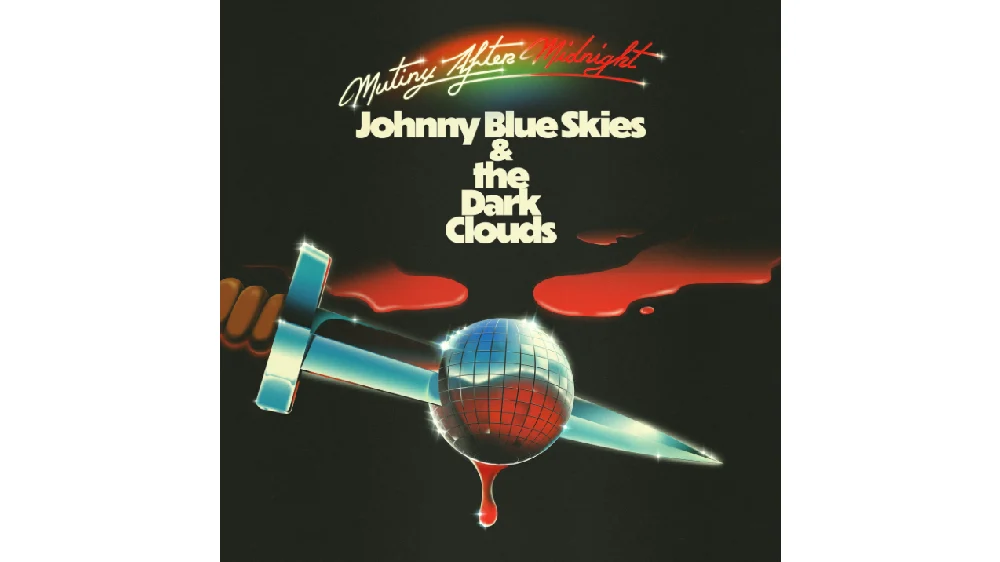
In a music landscape increasingly dominated by digital streams and instant access, Sturgill Simpson, under his vibrant new alter ego Johnny Blue Skies, has orchestrated a remarkable chart coup. His latest album, “Mutiny After Midnight,” attributed to Johnny Blue Skies & the Dark Clouds, has defied conventional wisdom by achieving a stunning No. 3 debut on the prestigious Billboard 200, all without a single stream. Released exclusively in physical formats—vinyl, compact discs, and even cassettes—the album amassed an impressive 59,000 equivalent units, every single one derived from pure, old-school sales. This audacious move marks not just a personal best for Simpson/Blue Skies but also a significant moment in contemporary music history, proving that in an age of ephemeral digital consumption, the tangible can still triumph.
The decision to withhold “Mutiny After Midnight” from streaming platforms, a strategy that might appear counterintuitive in 2026, proved to be a masterstroke in cultivating anticipation and drawing immense attention to the project. In an era where music is often treated as a disposable commodity, readily available at the click of a button, Blue Skies’ deliberate restriction created an air of exclusivity and urgency. Fans eager to experience the new sound had no choice but to invest in a physical copy, transforming the act of listening into a more intentional and valued experience. This calculated risk not only generated significant buzz but also translated into the artist’s most successful debut week to date, under any name and across all prior releases and format combinations. It’s a testament to the power of artistic conviction and a deeply loyal fanbase.
Johnny Blue Skies’ “Mutiny After Midnight” landed just behind two other titans of the music world on the Billboard 200. Holding strong at the No. 1 spot for a second consecutive week was Harry Styles’ “Kiss All the Time. Disco, Occasionally,” which garnered 99,000 units. Close behind, climbing one position to No. 2, was Morgan Wallen’s “I’m the Problem,” with 74,000 units. The fact that a physical-only release could penetrate such a competitive top tier, outperforming numerous albums available across all digital and physical channels, speaks volumes about its unique appeal and the dedication of its audience.
Billboard’s official report highlighted the extraordinary nature of this achievement, noting that “Mutiny After Midnight” is the first physical-release-only album to break into the top 10 in nearly three years. The last time such a feat occurred was with a limited-edition Record Store Day vinyl exclusive from Taylor Swift, “Folklore,” which famously sold through its entire pressing of 75,000 copies on its initial day of release. However, if one were to exclude these highly specialized RSD LP exclusives, the timeline stretches back even further to 2017, when Garth Brooks released an archival five-CD boxed set. The truly remarkable aspect of Blue Skies’ success lies in its being an album of entirely new material—a distinction that Billboard itself acknowledged would require “serious memory-stretching” to pinpoint the last occurrence. This firmly places “Mutiny After Midnight” in a category of its own, challenging industry norms and reigniting discussions about the value of physical media in a digital age.
The strategic release plan for “Mutiny After Midnight” was meticulously crafted to cater to a diverse range of collectors and fans. The album was made available in several variants, ensuring ample opportunity for purchase while maintaining a sense of specialness. These included a widely available standard black vinyl LP and CD, an indie-exclusive red vinyl variant, and five additional vinyl editions along with a cassette exclusive to the artist’s official webstore. While this array of options provided fans with choices, the variations were subtly distinct, likely not prompting the intense multi-copy collecting frenzy often seen among the fan bases of pop superstars. Instead, it offered meaningful choices that deepened the connection between the artist and his audience, allowing fans to select the format that resonated most with their personal preference for tangibility.
Beyond the format strategy, Sturgill Simpson, as Johnny Blue Skies, executed a masterful self-marketing campaign, positioning “Mutiny After Midnight” as a significant departure and a distinct entity within his celebrated catalog. He boldly characterized the album as “a dance record… centered firmly on groove… each song was written in the moment, on-the-spot.” Furthermore, Blue Skies promised that the songs would either directly address or provide a much-needed distraction from the pervasive anxieties of the contemporary world. This candid and unconventional description, particularly coming from an artist primarily known for his alternative country roots, could have been perceived as a deterrent for some longtime fans. Yet, the chart performance unequivocally demonstrates that any such dissuasion failed to materialize. Instead, Simpson’s dedicated following embraced this new sonic adventure, proving their willingness to follow him into uncharted musical territory, whether it be topical disco or any other genre he chooses to explore.
The album’s journey to success was also subtly aided by a strategic “leak” weeks prior to its official release. Simpson/Blue Skies briefly made the album available on YouTube, a move that, despite his general reluctance to embrace streaming, served to amplify curiosity and generate early buzz. This temporary digital preview allowed fans a taste of the “Mutiny After Midnight” sound, enabling them to form initial impressions and spread the word. The overwhelming sales results suggest that this fleeting exposure was highly effective, with positive word-of-mouth proving to be as potent a force as critical reviews in driving demand. It allowed the music to speak for itself, creating a groundswell of anticipation that translated directly into physical sales upon release.
In a promising development for fans who might eventually wish for digital convenience, Johnny Blue Skies has indicated that “Mutiny After Midnight” will, at some point, be released to streaming applications. This suggests that the initial physical-only strategy was not a permanent rejection of digital platforms but rather a deliberate statement and an experiment to demonstrate the enduring desire for tangible music. By proving that audiences are willing to actively seek out and purchase music, even in formats that require a slightly greater effort to obtain or play, Blue Skies has made a powerful point about the value of artistic presentation and the enduring connection between music and its physical embodiment.
Meanwhile, Harry Styles’ reign at the top of the Billboard 200, while secure for a second week, showed signs of the natural post-debut decline. “Kiss All the Time. Disco, Occasionally” saw its unit count tumble by 77% to 99,000. The steepest drop was observed in pure album sales, which plummeted by 92%, indicating that the majority of his devoted fanbase had already secured their coveted vinyl copies in the album’s blockbuster opening week. Streaming activity, though less dramatically affected, was still down by 47%, registering a still impressive 75 million on-demand official streams for Styles in its second week. This pattern is typical for major pop releases, where initial physical sales surge is followed by sustained streaming engagement.
Landing just one spot behind Johnny Blue Skies, at No. 4, was P1Harmony’s “Unique,” accumulating 58,000 equivalent album units. A significant 56,000 of these units came from album sales, a figure bolstered by an extensive offering of 24 CD variants and five vinyl variants. In stark contrast to their robust physical sales, the album’s streaming numbers were relatively negligible, with only 2.22 million on-demand streams reported. This performance underscores a growing trend, particularly within the K-pop genre, where highly engaged fanbases eagerly collect multiple physical editions, often driven by exclusive content, photobooks, and collectibles, demonstrating a powerful alternative pathway to chart success that prioritizes physical ownership.
The remainder of the Billboard 200’s top 10 showcased a vibrant mix of genres and artists. Bad Bunny’s “DeBÁ TiRAR MÁS FOToS” secured the No. 5 spot with 57,000 units, continuing its strong run. Don Toliver’s “Octane” held at No. 6, followed by Olivia Dean’s “The Art of Loving” at No. 7. Bruno Mars’ “The Romantic” charted at No. 8, while Tate McRae’s “So Close to What” experienced an impressive 11-point jump to No. 9, attributed to the release of a deluxe edition that revitalized interest and sales. Rounding out the top 10 was “KPop Demon Hunters,” enjoying a modest 9% surge in popularity following its notable appearance and recognition at the recent Oscars ceremony.
Despite Harry Styles’ current hold on the No. 1 position, his reign is widely anticipated to be short-lived. Industry analysts and chart prognosticators are projecting that the upcoming week will see a monumental shift at the top, driven by the highly anticipated comeback album from global K-pop sensation BTS. Following a spectacular opening day on Spotify and immense fan engagement across all platforms, the group’s first new album since 2020 is widely expected to achieve the year’s best opening figures to date, setting a new benchmark for chart dominance and once again illustrating the immense power of dedicated fanbases in shaping the music industry’s competitive landscape.