


**”Live from London: SNL U.K. Debuts with Sharp Satire on Starmer, Trump, and the Art of Dodging Global Conflict”**
The highly anticipated launch of “Saturday Night Live U.K.” marked a significant moment in British television, bringing a beloved American comedic institution across the Atlantic. True to its roots, the premiere episode wasted no time in diving headfirst into the political landscape, opting for the quintessential “cold open” format that has long defined its U.S. counterpart. This inaugural sketch immediately set a precedent, featuring a satirical portrayal of U.K. Prime Minister Keir Starmer grappling with the unenviable task of informing U.S. President Donald Trump that Britain would not be joining a potential war in Iran. The choice of subject matter immediately signaled the show’s intent to engage with current geopolitical tensions through the lens of sharp, topical humor.
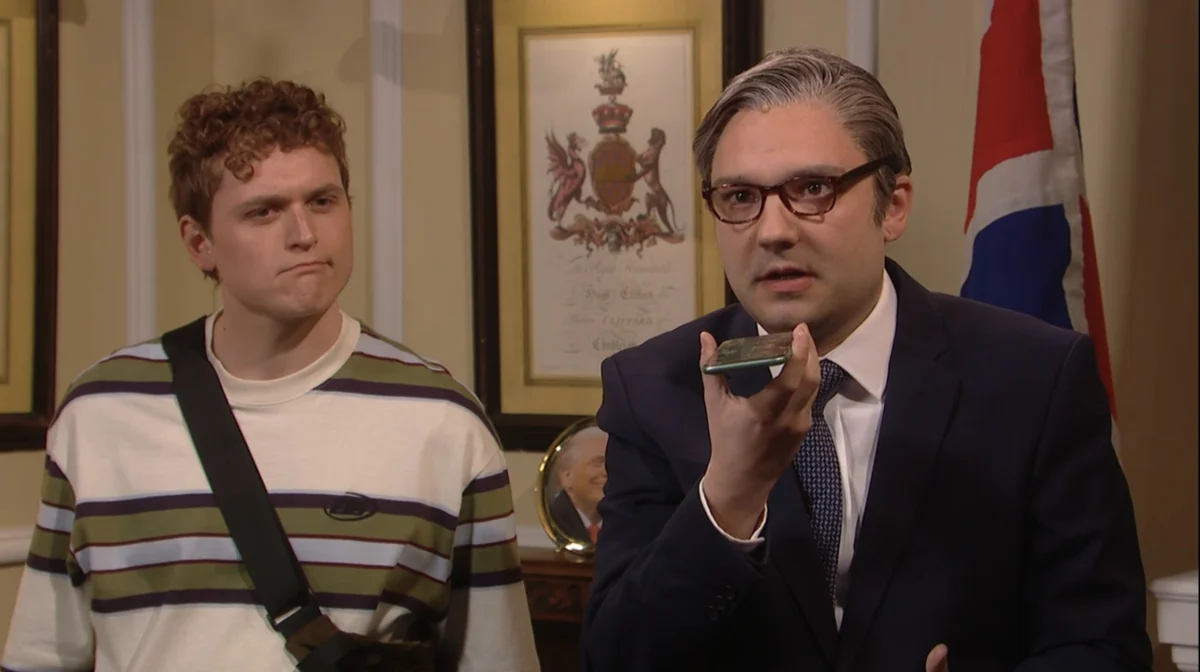
The sketch opened with a meticulously disguised George Fouracres embodying Keir Starmer, capturing the Labour leader’s often-perceived cautious demeanor with remarkable accuracy. Seated at his desk, a framed photograph of Donald Trump looming large behind him — a visual gag underscoring the formidable presence of the U.S. president — Fouracres’ Starmer was a picture of nervous anticipation. As a dial tone rang, the anxiety was palpable. “Oh, golly! What if Donald shouts at me? What do I say?” he fretted, turning to his trusted adviser, played by Hammed Animashaun. The adviser, a voice of reassuring, if somewhat conventional, counsel, offered a simple directive: “Just be yourself, prime minister! Yourself is who everyone likes.” This initial exchange deftly established Starmer’s perceived public image as a politician striving for broad appeal, even in moments of high international tension.
The comedic tension escalated as Trump, unseen but powerfully conveyed, answered the phone with an abrupt, declarative “Hello!” The immediate, almost instinctive reaction from Fouracres’ Starmer was to hang up, a moment of pure, relatable panic that resonated with anyone who has ever faced an intimidating conversation. His subsequent lament — “Oh, sod that scary, scary wonderful president. Why is he so blubber difficult to talk to?” — perfectly encapsulated the complex mix of fear, frustration, and perhaps a touch of unwilling admiration that some in the U.K. political establishment might harbor towards the often-unpredictable American leader. The use of distinctly British colloquialisms like “sod” and “blubber difficult” further grounded the satire in its U.K. context, adding an authentic layer to the humor.
The sketch then leaned into a particularly insightful and humorous analogy, portraying Starmer’s relationship with Trump as akin to a toxic romantic entanglement. “I just want to keep him happy. You don’t understand him like I do. I can change him!” Starmer pleaded with his adviser, a line that drew laughter for its uncanny resemblance to classic romantic drama tropes. This analogy served as a brilliant satirical tool, highlighting the perceived imbalance of power and the complex, often fraught, dynamics within the “special relationship” between the U.K. and U.S. It underscored the idea of a junior partner constantly striving for approval from a dominant, unpredictable force, an observation that resonates with many interpretations of U.K. foreign policy.
Adding another layer to the generational and communicative satire, the meeting was abruptly interrupted by Starmer’s new Gen Z adviser, portrayed with vibrant energy by Jack Shep. This character, a stark contrast to Animashaun’s more traditional counsel, immediately injected a contemporary, youth-centric perspective into the staid political environment. The Gen Z adviser’s casual address, calling the Prime Minister “Starmzy” — a playful nod to U.K. grime artist Stormzy — instantly highlighted the generational divide. His self-introduction, declaring himself “an expert in messy drama, I’ve been in three throuples and I’m currently gay,” was a masterstroke of comedic writing, perfectly capturing the confident, unfiltered, and sometimes TMI-prone communication style associated with younger generations. More importantly, it subtly critiqued the perceived performative authenticity and identity politics that sometimes permeate modern discourse, suggesting that even these traits could be weaponized for political strategy.
The Gen Z adviser’s solution to Starmer’s dilemma was quintessentially modern: instead of a direct, confrontational phone call, Starmer should send a voice note. This suggestion brilliantly satirized the shift in communication preferences, especially among younger demographics, who often favor asynchronous, less intense forms of interaction. Fouracres’ Starmer, desperate and perhaps slightly bewildered, readily agreed, uttering a line that encapsulated his perceived political character: “I’ll try anything, I’ll do anything. Except take a stand.” This punchline landed with particular force, resonating with a public that often views politicians as prioritizing expediency and avoiding firm positions on contentious issues. It perfectly encapsulated the satirical core of the sketch – a leader willing to try any performative gesture as long as it doesn’t involve genuine conviction or a potentially unpopular stance.
The voice note itself was a comedic tour de force, a delicate dance between attempting to soften the blow and inadvertently highlighting the absurdity of the situation. Fouracres, with a perpetually worried expression, began, “Hi, Donald. I’m afraid I can’t go to war with you, but that doesn’t mean that we can’t be chums.” The phrase “chums” itself, a charmingly British and slightly anachronistic term, underscored the cultural clash and the awkwardness of the message. Starmer then embarked on a desperate attempt to invoke shared history and cultural touchstones, a comedic laundry list of Anglo-American cooperation and pop culture references. “America and Britain have a long, proud tradition of cooperation and nothing can take that away. Remember the good times. Remember D-Day? Remember Live Aid? Remember Iraq? The first week and none of the rest. Remember Helen Baxterdale on ‘Friends’? Remember Hugh Laurie on ‘Friends’? Remember the episode of ‘Friends’ where they all came to London?” The deliberate inclusion of “Iraq? The first week and none of the rest” was a particularly biting piece of political commentary, acknowledging past military interventions while sidestepping their controversial aftermath. The escalating “Friends” references, culminating in multiple mentions of British actors who appeared on the show and the famous London episode, perfectly captured the desperation to find any common ground, however trivial, in the face of serious disagreement. It also played on the universal recognition of “Friends” as a cultural touchstone, highlighting how deeply American pop culture has permeated British consciousness.
The climax of the voice note saw Starmer invoke arguably one of the most iconic romantic relationship tropes in television history: “But most importantly, remember the one where Ross and Rachel were on a break? I think that’s perhaps what we need. Not forever, just until you’ve got all this war out of your system. We want different things. I know how badly you want to start World War III, and that’s great. You absolutely do that but we can’t be part of it. You can, however, use the naval bases whenever you want.” This analogy was a stroke of genius, reducing complex geopolitical maneuvering to a relatable romantic spat, while simultaneously revealing the U.K.’s strategic limitations and lingering subservience. The permission to “use the naval bases whenever you want” was the ultimate punchline, exposing the uncomfortable reality that even when declining to participate in a war, the U.K.’s strategic assets remain at the disposal of its powerful ally. It highlighted the transactional nature of the “special relationship” and the U.K.’s enduring, albeit reluctant, commitment to U.S. interests.
Following this elaborate, yet ultimately non-committal, voice note, Starmer’s traditional adviser offered a backhanded compliment that perfectly captured the public’s often-low expectations of political leadership. “Good work, sir. You did the bare minimum, and that’s all people expect from you.” This line, delivered with a straight face, resonated deeply with a cynical public weary of political grandstanding and empty promises. It underscored the sketch’s broader commentary on the perceived mediocrity and lack of genuine courage in contemporary politics, suggesting that simply avoiding outright disaster is often deemed a success.
The sketch concluded with a brilliant piece of meta-humor, a sly wink at the very existence of “SNL U.K.” Fouracres, still in character as Starmer, delivered a line that simultaneously celebrated and critiqued the cultural exchange: “It just goes to show, while we may not agree with everything America does, we can still be civil and embrace their wonderful, unproblematic culture.” The ironic use of “unproblematic” in reference to American culture, particularly given the political context and the show’s origins, was a clever and self-aware jab that delighted the audience. It acknowledged the complexities of adopting a foreign format while also highlighting the inherent humor in navigating cultural differences.
Finally, Fouracres, Animashaun, and Shep gathered together, embodying the collective spirit of the new show, to deliver the iconic closing line with a distinctly British twist: “Live from London, it’s Saturday night!” This moment cemented the show’s arrival, signaling a new chapter for British comedy and its engagement with the political zeitgeist. The decision to open with such a strong, relevant political cold open underscored the show’s ambition to emulate the best of its American predecessor while carving out its own unique British identity. It demonstrated a willingness to tackle controversial figures and complex geopolitical issues with wit and insight, setting a high bar for future episodes and solidifying its place in the landscape of British satirical television. The premiere not only entertained but also provoked thought, offering a humorous yet pointed commentary on the state of U.K. politics, international relations, and the ever-evolving nature of public discourse.