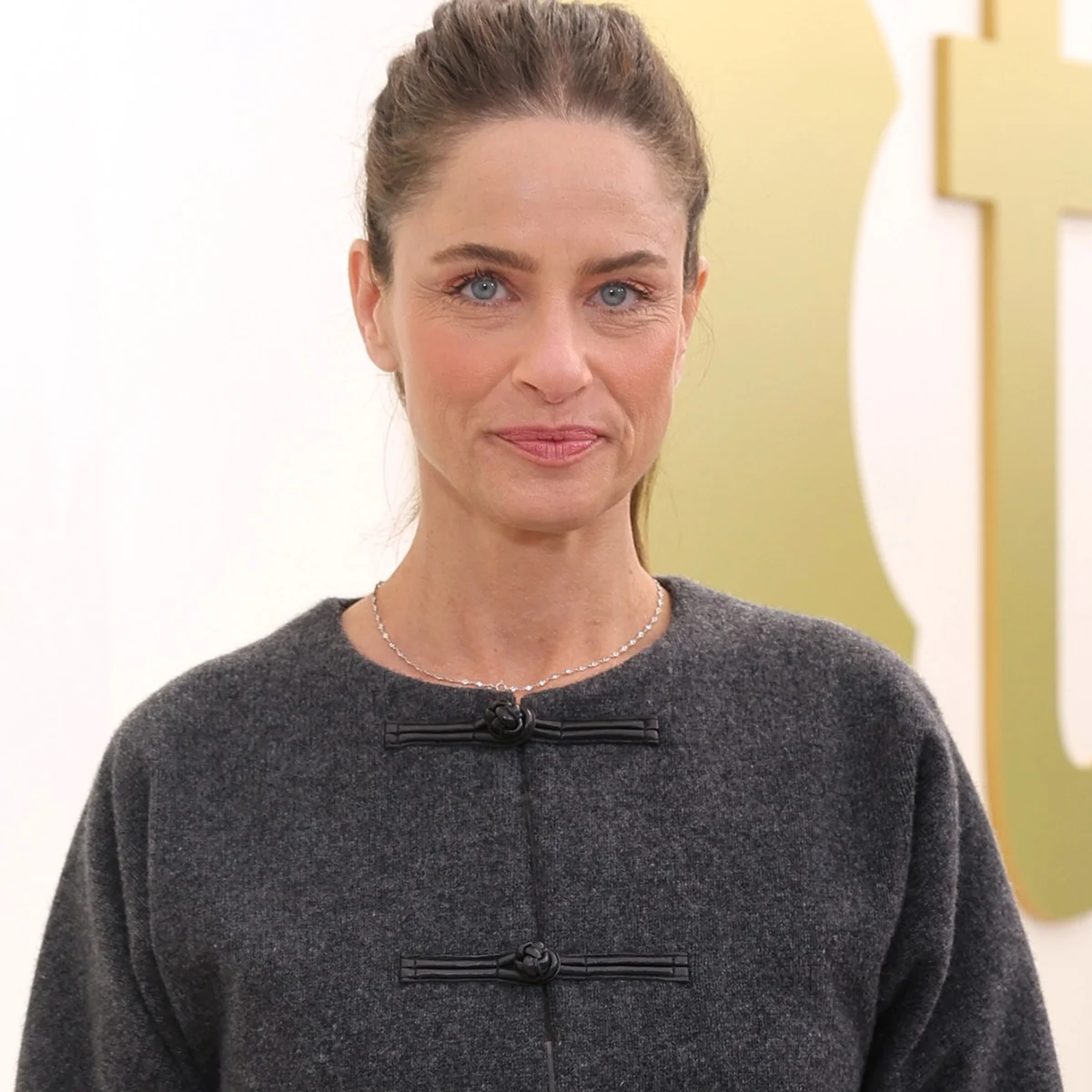
For many women, the balancing act of midlife involves a delicate choreography between career, raising children, and caring for aging parents. But for actress Amanda Peet, that balance was shattered by a series of events so overwhelming they seemed scripted for a high-stakes drama. In a deeply personal and vulnerable essay published in The New Yorker on March 21, the 54-year-old star of "Something’s Gotta Give" and "Your Friends and Neighbors" opened up about a period of her life she describes as her "season of Ativan"—a time when she faced a breast cancer diagnosis while simultaneously navigating the final days of both of her parents.
Peet’s health journey did not begin with a sudden shock, but rather with years of vigilant monitoring. Like many women, she had been told for years that she had "dense" and "busy" breasts. In the world of oncology, these terms are far from complimentary; they are a clinical warning that a patient requires heightened surveillance because dense tissue can mask the presence of tumors on standard mammograms. Peet had been dutifully seeing a breast surgeon every six months for checkups, a routine that likely saved her life.
The turning point came in late August during a routine scan. An ultrasound revealed something unusual, prompting her doctor to perform a biopsy. The results confirmed the presence of a tumor. While it initially appeared small, the uncertainty of the situation required an MRI to determine the full extent of the disease. It is a moment of paralyzing fear that millions of women face annually, yet for Peet, the terror of her own diagnosis was compounded by a collapsing family infrastructure.
As she was plotting her medical strategy, Peet’s parents—who had been long divorced and lived on opposite coasts—both entered a period of rapid decline. In a cruel twist of timing, both were in hospice care at the same time. While her mother’s health had been failing since June, it was her father’s sudden deterioration that caught the family off guard. Peet recounts the frantic attempt to reach him in New York, a race against time that she ultimately lost. She arrived just after he had taken his last breath, though she was able to see him one final time before his body was removed from his apartment.
Returning to Los Angeles to face her own health crisis, Peet was met with a rare moment of medical relief. Her cancer was identified as hormone-receptor-positive and HER2-negative. In the complex lexicon of breast cancer, this was a favorable profile, suggesting the cancer would be responsive to hormone therapy and was less aggressive than other types. Peet admitted to feeling "happier than I’d been pre-diagnosis" upon hearing the news, a testament to the strange perspective shift that occurs when a patient prepares for the worst and receives a manageable reality. Although a follow-up MRI revealed a second mass in the same breast, it was eventually determined to be benign. This meant Peet could avoid the grueling path of chemotherapy and the physical toll of a double mastectomy.
However, the emotional toll remained. Peet’s essay concludes with a poignant, bittersweet farewell to her mother, who was battling the final stages of Parkinson’s disease. In a moment of raw intimacy, Peet describes climbing onto her mother’s hospital bed to lock eyes with her, providing a silent, steady comfort as the morphine took hold. This intersection of personal illness and parental loss highlights a growing reality for the "sandwich generation," where the roles of patient and caregiver often blur into one exhausting experience.
Peet’s transparency adds her voice to a growing chorus of public figures who have used their platforms to demystify the cancer experience. Her story is a reminder that even amidst the glamour of Hollywood, health crises are the great equalizers, requiring immense resilience and the support of a community.
The journey of survivorship is one shared by many in the entertainment industry, each bringing a unique perspective to the battle. Recently, Colin Egglesfield, known for his work on "All My Children," shared his own harrowing experience. In early 2025, Egglesfield was diagnosed with prostate cancer—his third separate cancer diagnosis throughout his life. By February 2025, he was able to announce he was cancer-free following successful surgery, using the opportunity to inspire others. "Remember, you’re not defined by any of your challenges," he wrote to his followers, emphasizing that while scars and anxiety are part of the journey, they do not dictate one’s future.
For others, the diagnosis brings a more permanent shift in perspective. Gerry Turner, the inaugural "Golden Bachelor," revealed in late 2024 that he is living with Waldenström’s macroglobulinemia, a rare type of bone cancer. Because the condition is currently incurable, Turner spoke candidly about how the diagnosis weighs on every decision he makes, describing the news as if "10 tons of concrete" had been dropped on him. His honesty about the initial denial and the eventual acceptance of his "new normal" reflects the psychological weight of a chronic cancer diagnosis.
In contrast, some stars have faced their battles with a sense of "getting it over with" to return to their busy lives. "Vanderpump Rules" star Ariana Madix revealed in 2018 that she had a "lil bit o’cancer" and lymph nodes removed, eventually receiving a clean bill of health. Similarly, "Up All Night" actress Christina Applegate became a prominent advocate for breast cancer awareness after undergoing a double mastectomy. She was eventually declared "100-percent clear," and her journey helped pave the way for more open discussions regarding preventative surgeries.
The range of diagnoses among celebrities also highlights the importance of early detection across all types of cancer. Marcia Cross, the "Desperate Housewives" alumna, broke significant social taboos when she revealed her battle with anal cancer in 2018. By sharing her experience with hair loss and the specifics of her treatment, she sought to strip away the stigma associated with the disease, stating that she felt "liberated" and "completely me" after going public.
Skin cancer, often overlooked but highly prevalent, has seen advocacy from heavy hitters like Hugh Jackman and Gordon Ramsay. Jackman has been treated for basal cell carcinoma multiple times since 2014, frequently posting "sunscreen reminders" to his fans after his biopsies. In August 2025, celebrity chef Gordon Ramsay shared images of stitches stretching from his ear to his jaw following a similar procedure. With his signature wit, he assured fans it wasn’t a face lift, while sternly reminding them to protect their skin.
The narratives of survival extend across the decades. Michael C. Hall utilized a hiatus from his series "Dexter" to undergo treatment for Hodgkin’s lymphoma, while Cobie Smulders battled ovarian cancer at the young age of 25. Smulders eventually went on to welcome two children, proving that a diagnosis doesn’t always mean the end of one’s dreams for a family.
From Sheryl Crow and Kylie Minogue’s public battles with breast cancer in the mid-2000s to Michael Douglas’s triumph over throat cancer and Robert De Niro’s successful fight against prostate cancer, the history of Hollywood is filled with stories of recovery. Each of these individuals, including Amanda Peet, reinforces a central message: that while a cancer diagnosis is a terrifying interruption, it is also a catalyst for profound personal growth and a deeper appreciation for the moments that remain.
Peet’s "season of Ativan" may have been defined by the shadows of hospice and the clinical coldness of biopsy rooms, but through her writing, she has transformed that pain into a bridge for others. By sharing the messy, overlapping realities of grief and illness, she provides a roadmap for navigating life’s most difficult chapters with grace, humor, and an unwavering commitment to health.