


Jon Stewart Wades Into High Art vs. Pop Culture Debate, Defending Ballet and Opera Against Chalamet’s Viral Critique
March 18, 2026

Jon Stewart brings his signature satirical lens to the ongoing cultural conversation surrounding the performing arts.
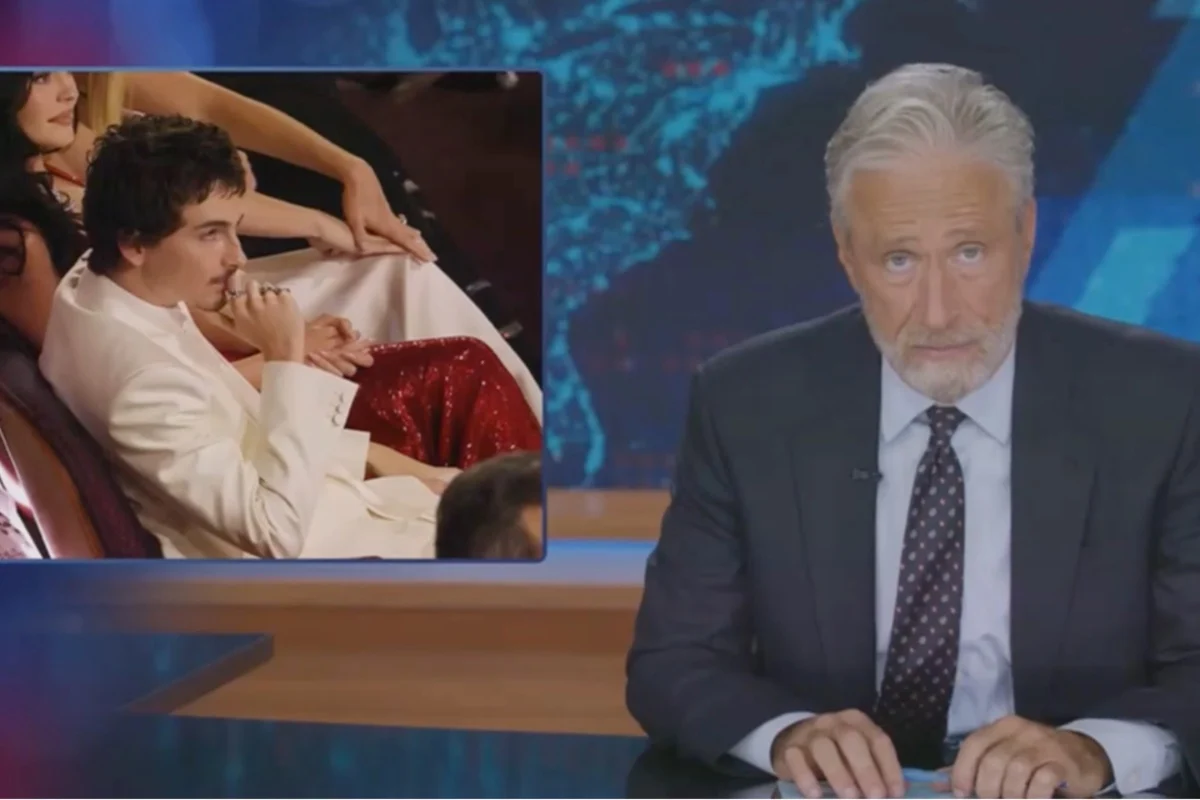
In a week marked by fervent cultural debate, Jon Stewart, back at the helm of “The Daily Show,” offered his incisive commentary on a recent viral moment involving actor Timothée Chalamet. The acclaimed young star’s remarks about the perceived relevance of ballet and opera sparked a significant backlash across the performing arts community and social media, prompting Stewart to apply his unique blend of satire and social critique to the unfolding controversy.
Stewart’s Sharp Satire on the “Culture War”
Stewart, renowned for his ability to distill complex issues into biting humor, opened Monday’s episode by feigning a solemn address on a global conflict. “As you are well aware, a terrible war has been raging for two weeks now,” he began, momentarily misleading viewers to believe he was referring to the often-discussed Iran war. This classic Stewart misdirection served to immediately highlight the disproportionate attention and emotional investment that cultural skirmishes can sometimes command, even against the backdrop of more conventionally grave geopolitical events. He swiftly pivoted, revealing the true subject of his focus: the fervent dispute ignited by Chalamet’s comments.
“As you are well aware, a terrible war has been raging for two weeks now,” Stewart quipped, his tone a perfect blend of mock gravitas and underlying sarcasm. He then delivered the punchline, revealing the true “war”: “But as of last night, it is clear that opera and ballet have defeated Timothée Chalamet. No contest! A knockout! Even before they brought out prima ballerina Misty Copeland in the middle of the ‘Sinners’ performance.”

Stewart’s comedic framing painted the cultural clash as a definitive victory for the classical arts, culminating in a metaphorical “knockout.” He vividly described the dramatic entrance of prima ballerina Misty Copeland, whose recent high-profile performances and public statements had positioned her as a leading voice in the defense of ballet. The reference to her appearance “in the middle of the ‘Sinners’ performance” humorously alluded to her powerful presence at the recent Academy Awards, where she delivered a captivating dance during a musical number.
Continuing his satirical dissection, Stewart emphasized the decisive nature of this “victory.” “Right in front of him! Boom!” he exclaimed, underscoring the perceived finality of the arts community’s response. He then playfully suggested a shift in online allegiance, a subtle jab at the often-ephemeral nature of social media activism: “Can’t wait to switch out my Ukrainian flag [Facebook] profile picture for the playbill to ‘Die Fledermaus.’” This line not only poked fun at the performative aspects of online advocacy but also brilliantly juxtaposed a serious global crisis with a celebrated operetta, further amplifying the humorous absurdity of the cultural “war.” By invoking “Die Fledermaus,” a beloved and enduring work of operetta, Stewart subtly reaffirmed the lasting power and cultural significance of the very art forms Chalamet had questioned.
Misty Copeland’s Poignant Defense of Enduring Arts
Amidst the swirling controversy, one of the most eloquent and authoritative voices to emerge was that of Misty Copeland. A groundbreaking principal dancer with the American Ballet Theatre, Copeland is not merely a celebrated artist but also a powerful advocate for the arts, recognized globally for her talent, grace, and commitment to expanding access and understanding of ballet. Her public engagements, including a recent high-profile press tour (likely for a project referenced humorously as “Marty Supreme” in Stewart’s segment), have provided her with a significant platform to champion the performing arts.

Copeland’s visibility was further amplified by her stunning performance at Sunday’s Academy Awards, where she captivated audiences with an ensemble dance during the rendition of the original track “I Lied to You.” This moment on a global stage, showcasing the raw power and beauty of ballet, served as a potent, albeit indirect, rebuttal to Chalamet’s earlier comments, demonstrating the living, breathing relevance of her art form to millions.
Her direct response to Chalamet’s assertion was delivered with a blend of historical perspective and professional insight, circulating widely in a clip shared across social media. Copeland challenged the notion that ballet and opera were fading into obscurity, offering a robust defense rooted in their foundational contributions to the broader artistic landscape.
In a widely shared clip, Copeland powerfully countered Chalamet’s assertion, stating, “There’s a reason that the opera and ballet have been around for over 400 years.” She continued, emphasizing their foundational role: “[Chalamet] wouldn’t be an actor and have the opportunities he has as a movie star if it weren’t for opera and ballet and their relevance in that medium. So all of these mediums have a space and we shouldn’t be comparing them.”

Copeland’s argument was multifaceted: first, she highlighted the incredible historical resilience of ballet and opera, noting their sustained presence for over four centuries—a testament to their enduring appeal and adaptability. Second, she drew a crucial connection between these classical art forms and contemporary entertainment, asserting that the very craft and opportunities enjoyed by actors like Chalamet are, in many ways, indebted to the rich traditions and narrative structures pioneered in opera and ballet. Her point underscored the interconnectedness of all artistic mediums, suggesting that popular culture often draws from the wellspring of classical arts. Finally, and perhaps most importantly, Copeland advocated for a cessation of comparisons, asserting that each art form possesses its own unique value and “space” within the cultural ecosystem. Her measured yet firm response served as a powerful reminder of the dignity and intrinsic worth of ballet and opera, delivered by an artist whose career embodies their continued vitality.
Beyond the Headlines: A Deeper Look at Cultural Dialogue
The exchange between Chalamet, the online community, Misty Copeland, and Jon Stewart transcends a simple celebrity gaffe. It taps into a deeper, ongoing cultural conversation about the perceived divide between “high art” and popular entertainment, the challenges of audience engagement in a fragmented media landscape, and the crucial role of all artistic expressions in enriching human experience. While Chalamet’s comments were perhaps a hyperbolic attempt to champion the theatrical experience, they inadvertently sparked a vital dialogue about the value and relevance of arts that, for many, represent the pinnacle of human creativity and discipline.
The swift and passionate defense from the ballet and opera communities, spearheaded by figures like Misty Copeland, showcased the deep commitment and pride felt by those dedicated to these forms. It highlighted that far from being niche or irrelevant, these arts continue to thrive, innovate, and inspire, attracting diverse audiences globally and serving as training grounds for countless artists across various disciplines. Stewart’s satirical intervention, while humorous, served to validate the earnestness of this defense, bringing the conversation to an even broader audience and, in his characteristic style, exposing the inherent humor and occasional absurdity in cultural pronouncements.

Ultimately, this episode serves as a powerful reminder that all art forms, whether ancient or modern, popular or avant-garde, contribute uniquely to the tapestry of human culture. They are not in competition but rather exist in a symbiotic relationship, constantly influencing and enriching one another. The vibrant debate ignited by Chalamet’s remarks, thoughtfully countered by Copeland, and deftly dissected by Stewart, underscores the enduring power of art to provoke, inspire, and unite, ensuring that conversations about its future remain as dynamic and captivating as the performances themselves.





The Spark: Timothée Chalamet’s Controversial Remarks
The genesis of this spirited debate traces back to a “CNN & Variety Town Hall Event” where Timothée Chalamet, one of Hollywood’s most prominent young talents and a genuine Gen Z icon, was discussing the future of cinematic experiences. Known for his roles in critically acclaimed films like *Dune* and *Wonka*, Chalamet’s words carry significant weight within popular culture. It was during this discussion, focused on the evolving landscape of theatrical moviegoing, that he articulated a concern that swiftly escalated into a widespread controversy.
Chalamet articulated his concern that theatrical moviegoing shouldn’t “end up like the ballet or opera,” where, in his view, artists feel compelled to “keep this thing alive” even though “no one cares” about it anymore.
These remarks, intended perhaps as a provocative analogy to emphasize the vitality he wished for cinema, struck a raw nerve within the performing arts world. The implication that ballet and opera were antiquated, struggling to survive, and lacked public interest was met with immediate and widespread indignation. Social media platforms quickly became a battleground, with artists, patrons, and cultural institutions passionately defending the enduring relevance and profound impact of these centuries-old art forms. The backlash was particularly fierce from within the opera and ballet communities, who saw Chalamet’s statement as a dismissive oversimplification of their rich histories, vibrant contemporary scenes, and dedicated global audiences. Critics argued that such comments from a figure of Chalamet’s stature risked undermining public perception and potentially affecting support for these vital cultural pillars.