

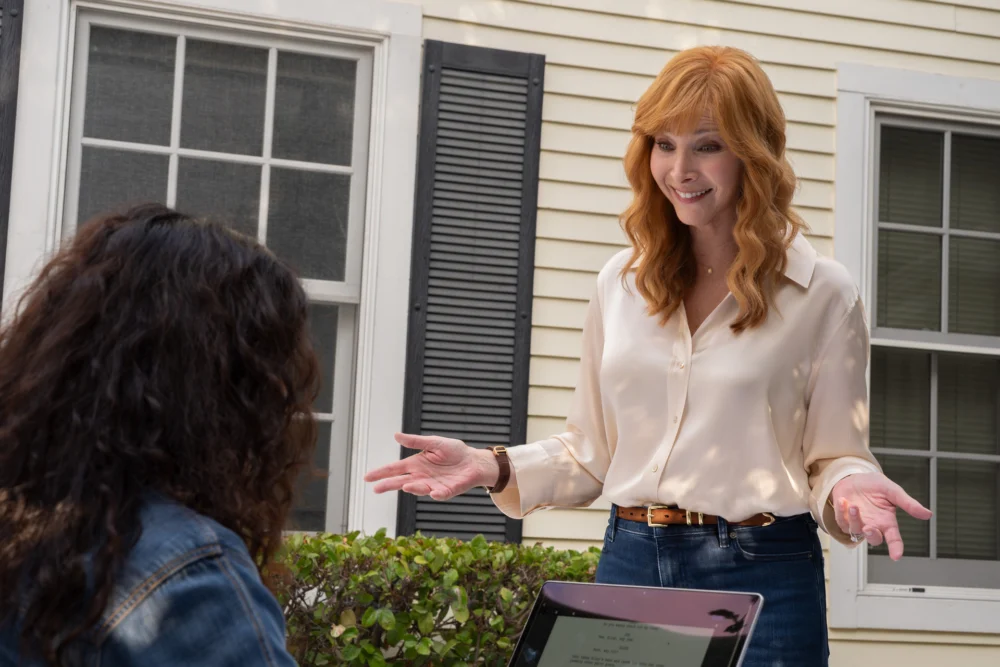
The lights dimmed at the Paramount Theatre during SXSW on a recent Sunday, heralding a moment long-awaited by legions of devoted fans: the premiere of the third and final season of HBO’s critically revered, excruciatingly hilarious, and profoundly poignant series, "The Comeback." The palpable buzz in the room erupted into cheers and applause as the opening credits rolled, signaling the triumphant, albeit 11 1/2-year-delayed, return of television’s most enduringly cringeworthy yet endearing character, Valerie Cherish. Co-creators Lisa Kudrow and Michael Patrick King were present to witness the adoring audience’s reaction, which punctuated the two-episode screening with bursts of laughter and emotional applause, a testament to Valerie’s indelible mark on the cultural landscape. The anticipation reached a fever pitch, culminating in the announcement that the final chapter of Valerie’s storied, often calamitous, career will officially debut on HBO on March 22.
More than just a television character, Valerie Cherish has become a cultural touchstone, a mirror reflecting the relentless pursuit of fame, validation, and relevance in an industry that often chews up and spits out its most vulnerable players. Portrayed with unparalleled nuance by Lisa Kudrow, Valerie embodies a specific kind of Hollywood ambition – one steeped in an almost tragic blend of self-delusion, unwavering optimism, and a desperate need to be seen. Her journey, chronicled through the lens of various "reality" productions, has always been a biting commentary on media manipulation and the performative nature of existence. For a show that first dared to satirize reality television at its nascent peak, "The Comeback" now sets its penetrating sights on a new, even more insidious, cultural phenomenon: artificial intelligence.
Season 3 plunges Valerie into the bewildering, rapidly evolving world of AI, positioning her as an unwitting pioneer in an entertainment industry grappling with its own existential future. The narrative cleverly picks up with Valerie attempting to navigate the latest iteration of her media career – podcasting. Her show, "Cherish the Time," is a characteristic Valerie venture, a well-intentioned but often self-serving attempt to connect with an audience after the unceremonious cancellation of her two-season mystery series, "Mrs. Hat." (A show, as the article wryly notes, that aired on Epix, ensuring "no one knew it existed" – a classic Valerie predicament). This latest pivot underscores Valerie’s perennial struggle to remain relevant, constantly adapting to new platforms even as her core persona remains hilariously, heartbreakingly unchanged.
The season opens by rewinding to a pivotal moment in recent entertainment history: the summer 2023 Writers Strike. Here, we find Valerie engaged in a never-launched stint as Roxie Hart in "Chicago," a perfect setting for her theatrical aspirations to collide with the stark realities of labor disputes. The cameo by former SAG-AFTRA president Fran Drescher during this segment serves as a potent reminder of the real-world stakes that inform Valerie’s fictional struggles, rooting the satire in a tangible, recent past. Following this glimpse into Valerie’s recent past, the story jumps forward three years, catapulting her directly into the AI maelstrom. She is offered a starring role in what is pitched as the very first show ever to be written by artificial intelligence, a premise ripe for "The Comeback’s" signature brand of cringe comedy and incisive social commentary. This new role forces Valerie, and by extension the audience, to confront the implications of creativity without human input, authenticity in an age of algorithms, and the ultimate value of the artist in a technologically advanced world.
Valerie’s enduring saga wouldn’t be complete without her familiar, often exasperated, support system. The series sees the welcome return of beloved cast members who serve as both her anchors and her foils. Dan Bucatinsky reprises his role as Billy Stanton, Valerie’s long-suffering yet fiercely loyal producing partner, whose attempts to guide Valerie’s career often devolve into managing her chaos. Laura Silverman returns as Jane Benson, the stoic and perpetually bemused producer of Valerie’s on-again, off-again reality show, whose dry wit and deadpan observations provide a grounding counterpoint to Valerie’s histrionics. And, of course, Damian Young is back as Mark Berman, Valerie’s loving, ever-frustrated husband, whose profound patience and occasional outbursts perfectly encapsulate the strain of living with Valerie Cherish. Their collective presence underscores the deep-seated relationships that form the chaotic yet oddly stable ecosystem of Valerie’s life, a crucial element that has always added heart to the show’s sharp satire.
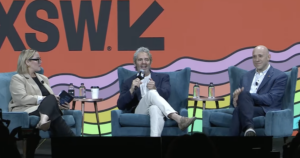
During the post-screening Q&A, Michael Patrick King shed light on the genesis of this unexpected third season. He revealed that he and Lisa Kudrow would, over the years, often meet for lunch and muse about "what Valerie was up to." This casual curiosity, however, transformed into a concrete vision only when the dual strikes of 2023 forced the entertainment industry to confront the profound and existential threat posed by artificial intelligence. "Once we came up with the idea of Valerie and AI, it felt like the same energy as Valerie and reality TV 20 years ago," King articulated, drawing a powerful parallel between the show’s original groundbreaking premise and its latest iteration. For Kudrow, this new thematic direction was the undeniable catalyst. "And once that happened, Lisa was like, ‘That’s it,’" King recalled, emphasizing the immediate and profound resonance the AI concept held for the actress embodying Valerie.
Kudrow’s connection to Valerie Cherish runs deeper than mere performance. When the moderator inquired about how quickly she could slip back into the role, Kudrow offered a telling response that underscored the character’s enduring presence within her. "She’s never gone," Kudrow confessed, adding with a hint of Valerie’s signature inflection, "I have to stop myself from actually saying to people, ‘Didja? Aw.’" This candid admission speaks volumes about the immersive nature of Kudrow’s portrayal, blurring the lines between actress and character, and highlighting the deep psychological understanding she brings to Valerie’s unique blend of insecurity and bravado.
The creative team acknowledged the inherent challenges in tackling a topic as fluid and rapidly developing as AI. King admitted that when they first began writing, there was a concern about needing to craft a definitive "grand conclusion." However, they soon realized that their true "job is to report right now what’s happening." This journalistic approach allows "The Comeback" to function as a timely cultural barometer, mirroring the anxieties and uncertainties pervading the real-world entertainment industry. Kudrow expanded on this broader societal commentary, observing, "Everybody is panicked and desperate. And everybody is curating their own reality show, and posting it on the worldwide platform." This insight brilliantly connects the show’s original critique of reality television and self-curation to the current digital age, where everyone is, in essence, their own Valerie Cherish.
The urgency of this theme was not lost on HBO. King recounted pitching the concept to Casey Bloys, HBO’s chairman, who was coincidentally the original executive on "The Comeback" when it first premiered. Bloys, recognizing the immediate cultural relevance and satirical potential, greenlit the third season "right away," emphasizing the need to get the show on air "immediately before any of the studios admit they are using AI." This swift approval from a network known for its discerning taste underscores the perceived timeliness and critical importance of "The Comeback’s" return, positioning it as a vital, prescient commentary on an industry in flux.
Filming for the season took place in Los Angeles over the summer, a reunion that proved to be both nostalgic and deeply emotional for the cast. Dan Bucatinsky fondly recalled the moment he first saw Lisa Kudrow in Valerie’s iconic wig, a simple yet powerful image that immediately transported him back. "Hi, old friend," he thought, a sentiment likely shared by countless fans. Laura Silverman, reflecting on the experience, expressed a desire to "soak it all in one last time," recognizing the bittersweet nature of this final chapter. She enthusiastically declared that she "had the best time of my entire life," encapsulating the joy and camaraderie that often characterize the set of "The Comeback."
This season also introduces a new, significant presence to Valerie’s entourage: Jack O’Brien, the esteemed three-time Tony Award-winning director of Broadway hits like "Hairspray" and "The Coast of Utopia." O’Brien steps into the role of Tommy, an octogenarian former TV hair stylist whom Valerie serendipitously encounters in the Season 3 premiere. Tommy quickly becomes an integral part of Valerie’s inner circle, a new loyal companion who fills a profound void left by a beloved character.
The discussion inevitably turned to the absence of the "beloved Mickey," referring to Robert Michael Morris, who so memorably portrayed Mickey Deane, Valerie’s devoted hair stylist, loyal companion, and ever-present cheerleader. Morris passed away in 2017, leaving an irreplaceable space in Valerie’s world and in the hearts of fans. King shared a poignant anecdote about casting Morris, explaining that Morris had been an acting teacher, and King himself was once one of his students. As O’Brien eloquently put it, Morris then "became an integral part of this knitting of these talented people," underscoring the deep personal and professional connections that defined the show’s original ensemble. Valerie, in her perpetual quest for validation and affirmation, always needs a "Mickey" in her corner, and Tommy now steps into that essential, if challenging, role.
O’Brien, a seasoned veteran of the stage and screen, embraced the opportunity with a philosophy that mirrors Valerie’s own relentless pursuit of experience. "I’m at the stage in my life when I just want to say yes to everything," he declared, embodying a spirit of openness and enthusiasm that resonates with the show’s underlying themes of seizing opportunities, regardless of how unconventional they might seem.
"The Comeback" has always been a show ahead of its time, a series that defied easy categorization and challenged conventional notions of success. It first debuted on HBO in the summer of 2005, a period when reality television was exploding in popularity. Despite garnering critical acclaim and Emmy nominations for Kudrow’s performance, King’s direction, and casting, the show was controversially canceled after just one season. This abrupt ending was a shock to its creators, who had assumed HBO would grant it another chance. Over the ensuing nine years, however, "The Comeback" steadily ascended to cult-classic status, its prescient satire of reality TV, aging in Hollywood, and the performative self resonating deeply with a growing audience. Recognizing its newfound cultural cachet, HBO did indeed give it another chance, reviving "The Comeback" for a second season in 2014, which ran for eight universally praised episodes, often hailed as "perfect."
After another decade-plus hiatus, the announcement last June that HBO would bring "The Comeback" back for a third – and definitively final – season was met with overwhelming excitement. This latest revival not only offers a chance to revisit one of television’s most unique and complex characters but also provides a timely platform to dissect the most pressing technological and ethical questions facing the entertainment industry today. Valerie Cherish, in her relentless pursuit of a "comeback," inadvertently becomes a vessel through which we can explore our own anxieties about authenticity, creativity, and human value in an increasingly algorithm-driven world. As the final curtain prepares to fall on Valerie’s odyssey, "The Comeback" stands poised to deliver a fittingly uncomfortable, undeniably hilarious, and deeply resonant conclusion, cementing its legacy as a masterclass in meta-commentary and cringe comedy with a profound heart.