



As the global film community prepares for the 98th Academy Awards on March 15, 2026, the air inside the Dolby Theatre at Ovation Hollywood is expected to be thick with anticipation. With the legendary Conan O’Brien taking the helm as host, the evening promises a blend of high-stakes drama and the sharp-witted humor for which he is known. For the stars of the year’s most buzzed-about projects—ranging from the high-energy cast of KPop Demon Hunters to the seasoned veterans of prestige dramas—the walk toward that golden statuette represents the pinnacle of a career. However, behind the scenes of the glitz and glamour, a complex framework of regulations and newly implemented mandates is reshaping how the world’s most prestigious awards show operates.
Perhaps the most significant shift for the 2026 season concerns the very foundation of the Academy: the voting process. In a move that many industry insiders found surprisingly overdue, the Academy of Motion Picture Arts and Sciences announced a mandatory viewing requirement for its voting members. This rule, which was officially approved in April 2025, dictates that members must verify they have watched every nominated film in a category before they are permitted to cast a vote. In previous years, the industry operated largely on an honor system, which led to perennial rumors of voters selecting winners based on name recognition or studio buzz rather than the merit of the work itself.
Under the new guidelines, the digital screening portal used by the Academy will now track viewing progress. For a member to unlock their final ballot in any of the 24 competitive categories, they must engage with the screeners provided. For example, if a voter wishes to support Leonardo DiCaprio for his turn in One Battle After Another or Michael B. Jordan for his performance in Sinners, they cannot simply skip to the Best Actor category. They are now required to view the entire slate of nominees to ensure a level playing field. This means if a member intends to vote for Emma Stone in Bugonia for Best Actress, they must also commit time to Jessie Buckley’s performance in Hamnet, Rose Byrne in If I Had Legs, I’d Kick You, Kate Hudson in Song Sung Blue, and Renate Reinsve in Sentimental Value.
The rule has sparked a divided reaction within the hallowed halls of Hollywood. On social media, the change was celebrated by cinephiles and critics alike, with many noting that it finally forces the industry to treat every nominee with equal respect. However, not everyone is following the spirit of the law. While the digital portal tracks views, there is a "check-box" loophole that allows members to attest they have seen a film through other means, such as at a film festival, a theatrical release, or a private premiere. This has led to some admitting they have bypassed the system. One anonymous filmmaker, in a candid email to Deadline, expressed frustration with the requirement, stating they had not seen even half of the nominees and felt their time was too valuable to spend on films they knew they would never support. In contrast, stars like Kirsten Dunst have long championed the responsibility of membership, previously telling Variety that she makes it a point to see everything because she takes her role in the Academy seriously.
Beyond the voting booths, the Academy is also navigating the rapidly evolving landscape of technology. As generative AI becomes a more prominent fixture in post-production, the Board of Governors issued a clarifying statement regarding its use. The official stance is that AI tools are considered neutral—they neither help nor hinder a film’s chances at a nomination. This was particularly relevant for the 2025 winner The Brutalist, which utilized digital tools to refine the Hungarian accents of Adrien Brody and Felicity Jones. While the Academy embraces these modern mechanisms as creative aids, they remain firm on the necessity of human authorship. The Directing and Writing branches, in particular, will continue to evaluate films based on the degree to which a human creator remains the heart of the artistic vision.
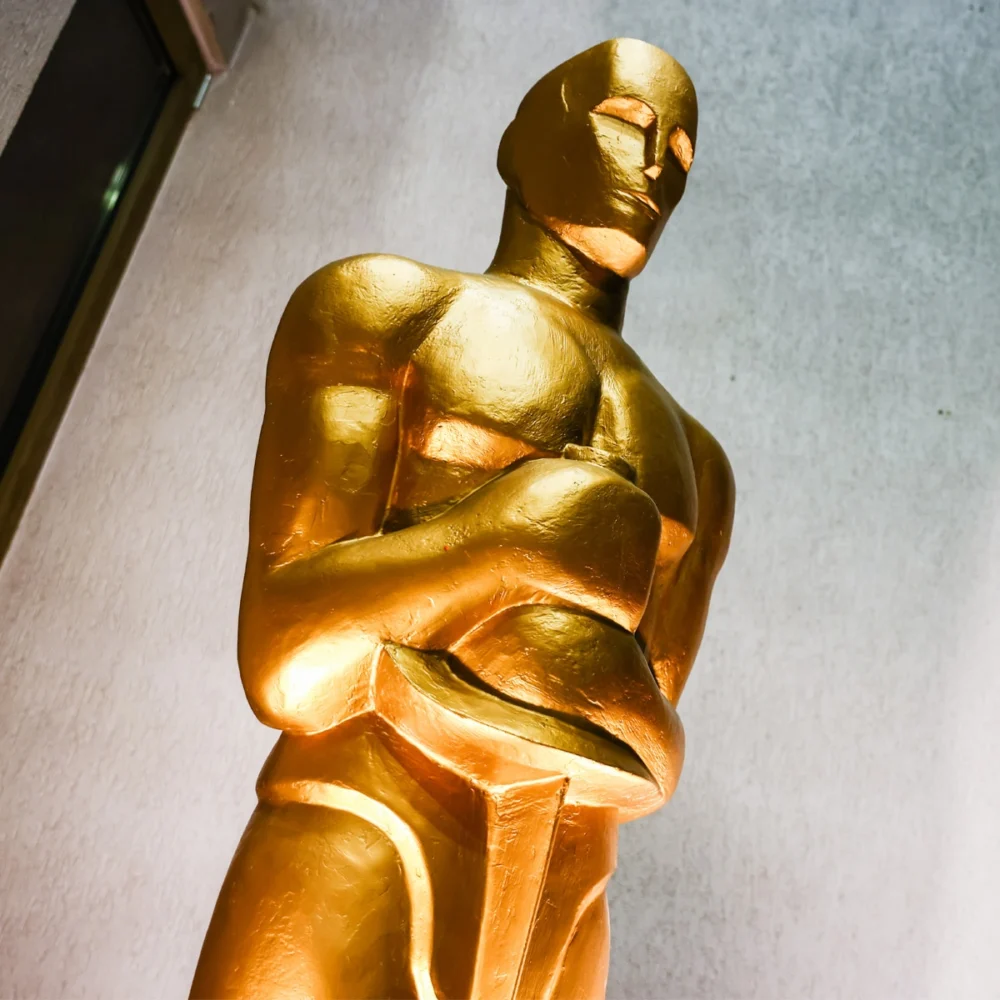
The 98th Oscars will also see the return of several eccentric traditions regarding the physical Oscar statuette itself. Conan O’Brien, in his preparation for the hosting gig, revealed some of the more "mind-blowing" restrictions placed on the eight-and-a-half-pound trophy. During an episode of his podcast, Conan Needs a Friend, O’Brien shared that his creative pitches involving the statuette were frequently met with a polite but firm "no." One such idea involved dressing the trophy in clothing for a comedy bit, which was rejected because "Oscar is always naked." Another proposal to have the trophy lying horizontally on a couch was also shot down. According to Academy officials, the statuette must never be portrayed in a horizontal position, a rule O’Brien jokingly compared to the reverence shown to a religious icon.
The statuette’s prestige is further protected by a strict legal agreement that has been in place since 1951. Despite being plated in 24-karat gold, the trophy is technically worth only a nominal amount to the winner if they ever try to part with it. To prevent the commercialization of the award, all winners—and their heirs—must agree that if they wish to sell the trophy, they must first offer to sell it back to the Academy for the symbolic price of $1. This ensures that the Oscar remains a mark of achievement rather than a commodity to be traded on the open market.
Timing is another area where the Academy maintains a tight grip, specifically regarding the infamous acceptance speeches. While the official rule limits speeches to 45 seconds to keep the three-and-a-half-hour telecast on track, history is full of rebels. The limit was originally introduced after Greer Garson’s 1943 speech lasted over five minutes. Over the decades, stars have challenged the "wrap-up" music, most notably Julia Roberts in 2001, who famously told the conductor to sit down because she might never be on that stage again. More recently, Adrien Brody set a new unofficial record during the 2025 ceremony, speaking for five minutes and 40 seconds after winning his second trophy, proving that in the heat of the moment, the 45-second clock is often ignored.
The logistical precision of the night extends to the audience members as well. For the high-profile guests seated in the Dolby Theatre, the ceremony can be a grueling endurance test. Producers are obsessed with the visual of a full house, meaning that if a celebrity leaves their seat to use the restroom, a "seat filler" immediately takes their place. The rules for re-entry are absolute: guests can only return to their seats during commercial breaks. This led to a viral moment for Emma Stone during the 2024 ceremony, where she was caught on camera in the lobby, visibly distressed as she watched her colleagues from Poor Things accept awards on a monitor because she couldn’t get back inside in time. Fortunately, she managed to return to her seat before her own category was announced, avoiding the irony of missing her own Best Actress moment.
Finally, the 2026 Oscars will continue to evolve the traditional Hollywood dress code. While the event was once a "white tie" affair—the most formal of all dress standards—it transitioned to "black tie" in 1969 under the direction of choreographer Gower Champion. Today, while the red carpet remains a showcase for luxury houses like Louis Vuitton and Saint Laurent, there is an increasing emphasis on the Academy’s "Sustainability Style Guide." Attendees are now encouraged to ditch the "wear-it-once" culture in favor of vintage pieces, recycled materials, or borrowed couture. This shift reflects a broader movement within the industry to align the glamour of the evening with a more conscious approach to environmental impact.
As March 15 approaches, these rules serve as a reminder that the Academy Awards are more than just a party; they are a carefully choreographed production designed to preserve the history of cinema while adapting to its future. Whether it is the mandate to actually watch the films or the refusal to let a trophy wear a suit, the 98th Oscars will be defined by the tension between the rigid traditions of the past and the shifting demands of a modern industry. For the winners who eventually walk onto that stage, the 45-second clock will be the last thing on their minds as they hold a "naked" golden man that, for all its rules, remains the ultimate symbol of cinematic excellence.