


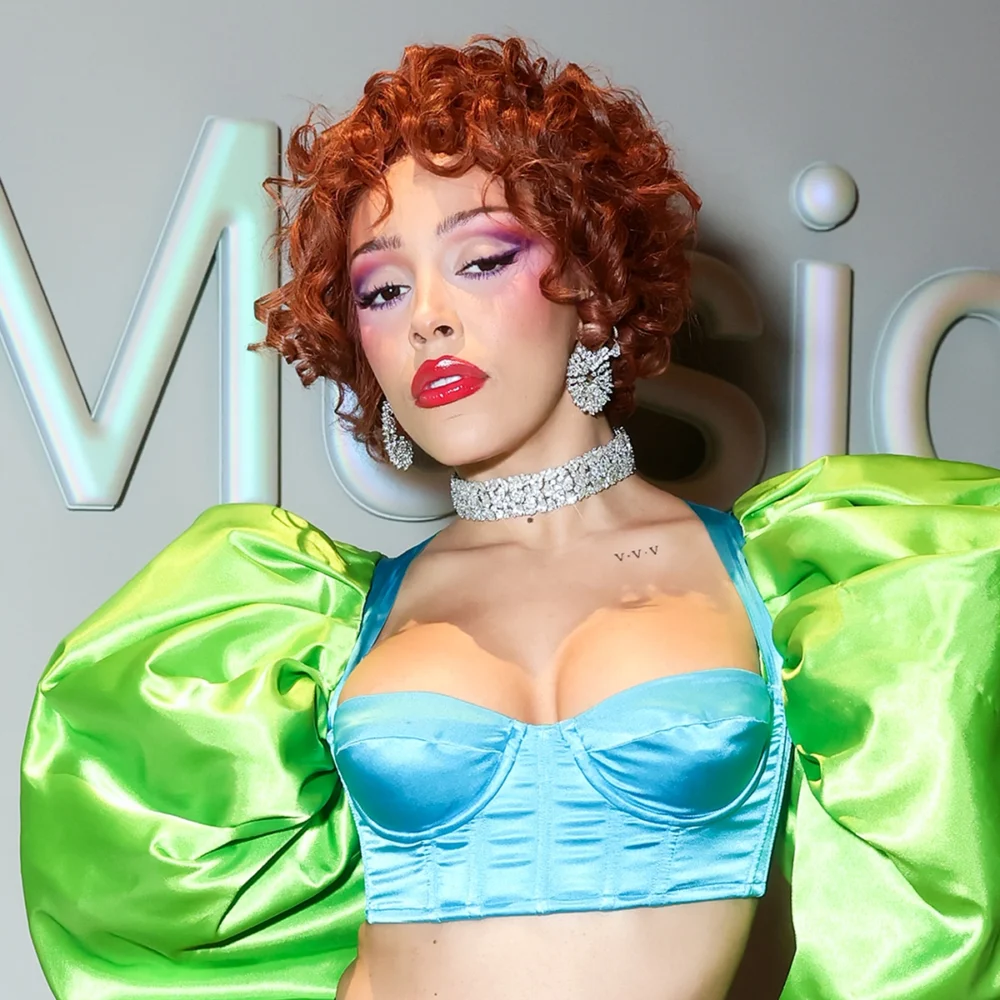
In an industry where the pressure to project a flawless image is relentless, Amala Dlamini, known globally as the chart-topping rapper Doja Cat, has shattered the fourth wall of celebrity artifice. In a series of recent, deeply personal disclosures on TikTok, the "Paint the Town" artist revealed that she has been navigating the complexities of Borderline Personality Disorder (BPD). Describing the condition as "agonizing," Dlamini’s transparency offers a rare glimpse into the internal world of a performer who, by her own admission, has spent most of her life wearing a mask of contentment to satisfy public expectations.
Borderline Personality Disorder is a mental health condition frequently misunderstood by the general public. It is primarily characterized by intense emotional instability, impulsiveness, and a distorted self-image. For Dlamini, the diagnosis is not a recent development but a lifelong shadow. In a video posted on March 13, she admitted to her followers that she has likely been struggling with the disorder "forever," though it is only now that she is speaking about it with such raw clarity. She confessed that from a very young age, she mastered the art of performative happiness—pretending to enjoy things she didn’t and hiding her true aversions—simply to maintain the appearance that she was "OK." This lifelong effort to conform eventually took its toll, leading her to the realization that she could no longer suppress the reality of her mental state.
Dlamini’s journey toward wellness has not been an overnight transformation. She emphasized that she has been in therapy for several years, describing a rigorous eight-year process of treatment, healing, and "curing." While she remains proud of her progress, she was quick to note that the path is non-linear and that she still makes mistakes. Her willingness to frame mental health as a long-term commitment rather than a quick fix provides a grounded perspective for her millions of fans, many of whom navigate similar struggles in silence.
The rapper’s disclosure was framed within a larger defense of her peer, Chappell Roan (born Kayleigh Amstutz), who has recently faced public scrutiny for her vocal boundaries regarding fan interactions and paparazzi. While Dlamini clarified that she was not diagnosing Roan with BPD, she expressed a profound resonance with the "Good Luck, Babe!" singer’s visible discomfort in high-pressure environments like the red carpet. Dlamini praised Roan’s ability to be "uncomfortable comfortably," protecting her boundaries even when it results in a perceived "attitude." For Dlamini, seeing another woman in the industry refuse to lie to herself or the public is a source of inspiration. She noted that Roan isn’t hurting anyone by calling out disrespectful behavior; she is simply refusing to participate in the charade of perpetual gratitude that is often demanded of female stars.
This period of self-reflection for Dlamini has also extended to her physical health. Just days before her BPD revelation, she shared an "epiphany" regarding her 2023 liposuction procedure. She now believes she may be suffering from lipedema, a chronic condition characterized by a painful buildup of adipose tissue, typically in the legs and lower body. The condition runs in her family, yet for years, she dismissed the symptoms as mere cellulite. She recalled a painful memory of being mocked online, with critics comparing her legs to the character Squidward from SpongeBob SquarePants after he overindulged in Krabby Patties. At the time, she had no idea that the "ass and ankle and calves" she was building up were symptomatic of a medical condition that had gone undiagnosed by the professionals around her.
Dlamini is far from alone in her decision to use her platform for mental health advocacy. She joins a growing "club" of high-profile figures who are dismantling the stigma surrounding psychiatric diagnoses and emotional struggles. In his October 2025 memoir, Episodes: The Diary of a Recovering Mad Man, rapper Gucci Mane (Radric Davis) detailed his experience with schizophrenia and bipolar disorder. A severe mental health episode in 2020 served as a wake-up call for the artist, who realized that he needed to hold himself accountable for the sake of his wife, Keyshia Ka’Oir, and their children, Ice and Iceland. His commitment to therapy and medication underscores a shift in hip-hop culture toward prioritizing longevity and family over a "tough" persona.
The narrative of the "child star" often carries hidden scars, a reality Penn Badgley addressed in April 2025. The Gossip Girl alum spoke candidly about suffering from body dysmorphia during his youth. He described a period of deep isolation where he felt a desperate need for a different body, believing that his value was tied entirely to his "conventional beauty." Badgley credited his spiritual practice with allowing him to survive the disillusionment of the industry and emerge with a transformed sense of self. Similarly, Scrubs actress Eliza Coupe has been vocal about her "drug of choice" being food. She described a turbulent history with over-exercising and bulimia, eventually finding a path to healing through yoga, breathing, and a sugar-free lifestyle, which she famously called "the best Ritalin you could give anyone."
The spectrum of celebrity mental health also encompasses the "silent" battles of depression and anxiety. Candace Cameron Bure has spoken about the difficulty of admitting to depression, even to those she trusts, because of the internal pressure to "be strong." Billie Eilish, meanwhile, advocates for "patience" as the ultimate tool for survival, reminding her fans that even the darkest waves eventually fade if one waits them out. During the height of the pandemic, Katy Perry used her car as a "safe space" to process waves of depression, a sentiment echoed by Kendall Jenner, who has used her platform to normalize the experience of recurring panic attacks, hoping to make others feel less alone in their anxiety.
The conversation is also becoming increasingly inclusive of male perspectives. Dwayne "The Rock" Johnson has consistently reminded his audience that depression "never discriminates" and has urged men, in particular, to stop keeping their struggles inside. Prince Harry, the Duke of Sussex, has been a pivotal figure in this global shift, speaking openly about how therapy helped him process the trauma of his mother’s death. By sharing his journey, he has helped millions realize they are part of a "big club" of people seeking help. Taraji P. Henson has taken this advocacy a step further by founding The Boris Lawrence Henson Foundation, which specifically addresses the mental health needs and therapist representation within the Black community.
As the industry moves into 2025, the depth of these disclosures continues to grow. Lorde recently revealed that her struggles with an eating disorder and debilitating stage fright led her to explore MDMA and psilocybin therapy. This treatment not only helped her reconnect with her music on a visceral level but also led to a more "expansive" understanding of her own gender and femininity after she chose to stop taking birth control. In the country music world, Carly Pearce recently shared that her battle with "crippling" OCD began when she was just six years old, though she was conditioned for a decade to "zip it up and deal with it."
From Kristen Bell’s advocacy for medication and "ten positive things" to Chrissy Teigen’s mission to destigmatize postpartum depression, the message is becoming clearer: secrets make you sick. Lady Gaga, a longtime champion of mental health awareness, summarized this sentiment perfectly when she stated that she truly believes transparency is the key to wellness. Whether it is Selena Gomez discussing the life-changing impact of the right bipolar medication or Ariana Grande crediting therapy with saving her life multiple times, these stars are proving that vulnerability is not a weakness, but a vital component of survival.
Doja Cat’s recent honesty about BPD and lipedema is a significant chapter in this ongoing narrative. By refusing to "pretend" any longer, she is not only healing herself but giving her audience permission to be honest about their own agonizing conditions. In an era of curated perfection, her "uncomfortable comfort" may be the most radical act of her career.