

The tragedy of July 16, 1999, is a date etched into the American consciousness, a moment when the "Camelot" legacy felt as though it had finally, irrevocably shattered. When Ryan Murphy’s FX on Hulu limited series Love Story: John F. Kennedy Jr. & Carolyn Bessette opens, it does not shy away from this inevitable conclusion. By beginning with the couple’s final hours—preparing for the flight to Martha’s Vineyard that would claim their lives and that of Carolyn’s sister, Lauren—the series acknowledges the dark cloud that has always loomed over their romance. However, the nine-episode drama quickly pivots, transporting viewers back to 1992 to explore how an "American Prince" fell for a fiercely private, impossibly chic fashion publicist.
The series, inspired by Elizabeth Beller’s 2024 biography Once Upon a Time: The Captivating Life of Carolyn Bessette-Kennedy, arrived amid a whirlwind of scrutiny. The Kennedy family’s reaction was swift; Jack Schlossberg, JFK Jr.’s nephew, labeled the production a "grotesque" attempt to profit from his family’s grief. Even the fashion world weighed in, with Carolyn’s longtime colorist Brad Johns publicly criticizing the shade of blonde worn by lead actress Sarah Pidgeon, fearing that anything less than Carolyn’s signature "buttery" hue would be an affront to her style legacy. Despite the noise, the show attempts to look beneath the pristine surface of the 1990s Manhattan elite. Because Carolyn never gave a formal interview during her years in the spotlight, she remains a blank canvas upon which the world projected its own narratives. Love Story seeks to fill those gaps, blending documented history with the artistic license necessary to recreate a private world.
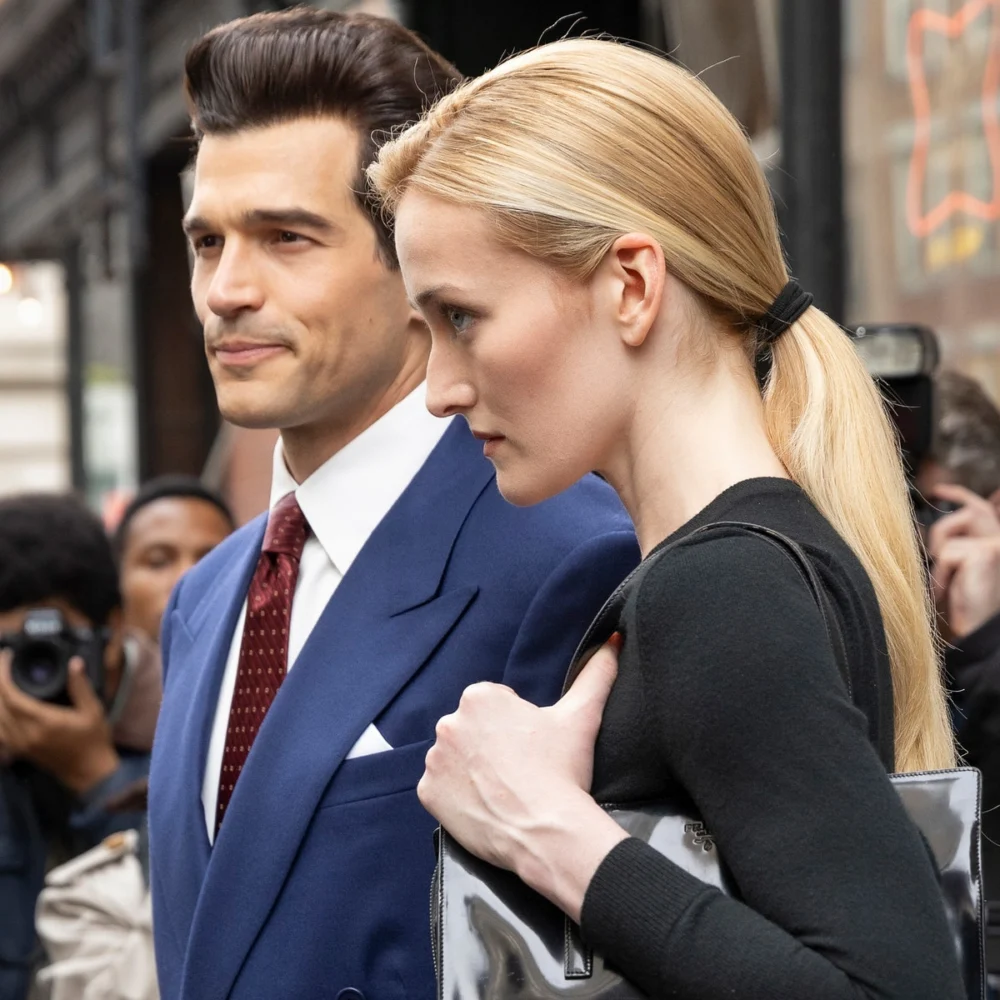
One of the most poignant themes in the series is the claustrophobic nature of the couple’s fame. In the seventh episode, "Obsession," the newlyweds return from their secret honeymoon in Turkey to find a literal wall of photographers outside their Tribeca loft. The show accurately captures the visceral terror of this experience. In reality, the harassment was relentless; photographers would shout insults at Carolyn, hoping to provoke a reaction or a tear for a high-value "money shot." Her friend MJ Bettenhausen noted in Beller’s book that Carolyn had naively hoped the interest would fade once they were married. Instead, the ring only intensified the hunt. John’s attempts to reason with the press—standing on the sidewalk and asking for "all the privacy and room you can" for his wife—actually happened, though the "truce" famously lasted only seconds before the flashbulbs began again.
The series also takes pains to honor Carolyn’s professional life, a facet of her identity often overshadowed by her marriage. Long before she was a Kennedy, she was a powerhouse at Calvin Klein. The show depicts her styling celebrity clients like Annette Bening and championing a young Kate Moss, both of which are rooted in truth. Paul Wilmott, then-VP of PR at Calvin Klein, once told the New York Times that Carolyn sold "millions of dollars of clothes" because of her innate ability to guide high-profile women through the collection. While the show suggests she turned down a job at Ralph Lauren due to paparazzi interference, there is no historical record of this specific interview. However, Ralph Lauren himself was so enamored with her "clean" aesthetic that he reportedly told his designers to keep her in mind during every creative session.
The timeline of John and Carolyn’s meeting is slightly condensed for television. While the series portrays a spark-filled introduction at a gala, the reality was a bit more grounded. They first met in the spring of 1992 during a VIP fitting at Calvin Klein. Their early dating phase was "on-again, off-again," a rhythm the show streamlines to keep the narrative moving. A significant hurdle in their early days was John’s lingering relationship with actress Daryl Hannah. The show introduces Daryl, played by Dree Hemingway, as a kooky, bohemian foil to Carolyn’s structured elegance. A particularly tragic subplot involving Daryl’s dog, Hank, is surprisingly factual. In May 1994, while John was walking the dog in Central Park, Hank slipped his leash and was killed by a car. This happened just as John’s mother, Jacqueline Kennedy Onassis, was in her final days. The real-life tension of John flying to Los Angeles to deliver the dog’s ashes while his mother was dying of cancer added a layer of resentment to the end of his and Daryl’s romance.
Jacqueline Kennedy’s presence, portrayed with a quiet, watchful gravity by Naomi Watts, serves as a bridge between the old world of the Kennedys and the new reality John was trying to build. While Jackie died in 1994, before the couple married, her influence is felt throughout the series. The show suggests Jackie had reservations about John’s choice in women, a sentiment echoed by historians. After her death, John was left to navigate the family’s expectations alone, often turning to his sister, Caroline, played by Grace Gummer. The series explores the rumored friction between Carolyn and Caroline, though it ultimately leans toward a more nuanced interpretation. While they were vastly different women, accounts from friends like Carole Radziwill suggest that the two eventually found a mutual respect, with Carolyn even asking Caroline to be her maid of honor—a gesture the show portrays as a strategic olive branch suggested by John.
The infamous February 1996 fight in Washington Square Park serves as a climax for the couple’s public-facing struggles. Captured by a videographer and sold to the tabloids, the footage of John and Carolyn screaming at one another—and John appearing to pull the engagement ring off her finger—became a defining image of their "volatile" relationship. The series uses this moment to explore their deeper insecurities, though it changes the context. In the show, the fight is about Carolyn’s hesitation to accept his proposal. In reality, they had already been engaged for months. According to John’s assistant, RoseMarie Terenzio, the real argument was sparked by Carolyn’s frustration that John was being "taken advantage of" by friends and the media.
Following that public meltdown, the series introduces a pivotal moment of mentorship from the family matriarch, Ethel Kennedy. Portrayed by Jessica Harper, Ethel summons Carolyn to her Virginia estate to deliver a hard truth: "You’ll never be given the benefit of the doubt again." This scene is based on a real meeting where Ethel reportedly advised Carolyn that the only way to survive the Kennedy machine was to find internal validation. "I am enough," Ethel told her, warning that the men in the family were "hotheads" who should not be allowed to goad her into public outbursts.
The final act of the series focuses on the wedding—a top-secret affair on Cumberland Island, Georgia. The production meticulously recreated the First African Baptist Church and the now-iconic Narciso Rodriguez slip dress. The "dress drama" depicted in the show, involving a last-minute crisis because the gown had no zippers, is a well-documented piece of fashion history. Carolyn had to be practically sewn into the garment, and a scarf was used to protect the silk from her makeup as it was pulled over her head. The show also captures the bittersweet nature of the rehearsal dinner, where Carolyn’s mother, Ann Freeman, gave a speech expressing her fear that her daughter would lose her "center of gravity" within the massive Kennedy orbit.
Ultimately, Love Story attempts to humanize two people who were treated as icons rather than humans. By balancing the "fairytale" elements of their romance with the gritty reality of their struggles, the series offers a meditation on the cost of fame. It portrays John not just as a prince, but as a man burdened by his name, and Carolyn not just as a style icon, but as a woman trying to maintain her soul in a world that wanted to consume her. While the ending remains a tragedy, the series focuses on the vibrant, complicated, and very real life that existed before the cameras stopped flashing.