

From Automotive Innovator to Hollywood Architect: Remembering James G. Robinson, Morgan Creek Entertainment Co-Founder, Dead at 90
Hollywood mourns the passing of James G. Robinson, a formidable figure whose remarkable journey from the automotive industry to the pinnacle of film production left an indelible mark on cinematic history. Robinson, co-founder of the prolific Morgan Creek Entertainment alongside Joe Roth, died on February 15th at the age of 90, as confirmed by a family obituary. His legacy encompasses a diverse slate of films, from cult classics like “True Romance” to blockbuster hits such as “Ace Ventura: Pet Detective,” reflecting a career built on shrewd business acumen and an unwavering passion for compelling storytelling.
Born in Baltimore, James G. Robinson’s early professional life was steeped in the competitive world of automotive businesses, where he honed the financial and strategic skills that would later define his Hollywood career. While the specifics of his automotive ventures remain largely private, it’s understood that he achieved considerable success, establishing a foundation of wealth and business insight that would prove invaluable in the high-stakes realm of film. This unusual trajectory — from cars to cameras — speaks volumes about Robinson’s entrepreneurial spirit and his ability to identify and capitalize on new opportunities, regardless of the industry.
His initial foray into Hollywood was not as a traditional producer but as a crucial provider of bridge financing for independent films. In the often precarious world of film production, bridge financing acts as a lifeline, providing short-term capital to cover immediate expenses until more substantial long-term funding or distribution deals materialize. Robinson’s willingness to step into this role underscored his early understanding of the industry’s financial mechanics and his readiness to take calculated risks on projects he believed in. This period allowed him to observe the industry from a unique vantage point, learning the intricacies of development, production, and distribution before taking the leap into full-fledged producing.
The year 1988 marked a pivotal moment in Robinson’s career and for Hollywood itself, as he joined forces with seasoned industry executive Joe Roth to establish Morgan Creek Entertainment. Roth, known for his keen eye for talent and commercial instincts, had already built a formidable reputation in Hollywood. Their partnership was a dynamic blend: Robinson’s financial savvy and entrepreneurial drive combined with Roth’s deep industry connections and creative vision. Together, they aimed to create an independent studio that could compete with the majors, focusing on a diverse portfolio of films that often defied easy categorization. The late 1980s was a period of flux and opportunity in Hollywood, with independent production houses beginning to carve out significant niches alongside the established studio system. Morgan Creek quickly became a prominent player in this evolving landscape.
Morgan Creek Entertainment quickly made its presence felt with a string of notable productions. Its early successes included the gritty Western “Young Guns” (1988), which garnered a significant following, and David Cronenberg’s chilling psychological thriller “Dead Ringers” (1988), demonstrating the company’s willingness to embrace diverse genres and challenging material. This commitment to variety became a hallmark of Morgan Creek, allowing them to appeal to a broad audience while also supporting distinctive artistic voices.
The 1990s saw Morgan Creek hit its stride, producing some of the decade’s most memorable films. The psychological thriller “Pacific Heights” (1990) showcased their ability to deliver suspenseful, commercially viable fare. Then came the epic historical drama “The Last of the Mohicans” (1992), a critical and commercial triumph that earned an Academy Award and solidified Daniel Day-Lewis’s status as a leading man. This film, with its sweeping landscapes and intense performances, exemplified the grand scale and quality Morgan Creek could achieve.
However, it was the comedic genius unleashed by “Ace Ventura: Pet Detective” (1994) that truly catapulted Morgan Creek into mainstream consciousness. The film not only became a massive box office hit but also launched Jim Carrey into superstardom, establishing a franchise that continued with “Ace Ventura: When Nature Calls” (1995). This success demonstrated Robinson’s and Roth’s ability to spot talent and deliver wildly popular entertainment. Morgan Creek also collaborated with comedy legend Mel Brooks on “Robin Hood: Men in Tights” (1993), a parody that continues to delight fans with its irreverent humor. The company’s filmography during this period reflected a nimble approach, balancing critical acclaim with broad commercial appeal, a testament to Robinson’s multifaceted understanding of the film business.
James G. Robinson was not one to shy away from confrontation when he believed the integrity of a production was at stake. This conviction was famously demonstrated during the tumultuous production of Morgan Creek’s 2006 film “Georgia Rule.” The film, starring Lindsay Lohan, was plagued by reports of the actress’s erratic behavior and frequent absences from set. In an unprecedented move, Robinson sent a scathing letter to Lohan, publicly chastising her conduct. He branded her as “discourteous, irresponsible and unprofessional,” further describing her as a “spoiled child” whose actions had “endangered the quality of this picture.” The letter quickly became a widely reported incident, shining a spotlight on the often-hidden tensions between producers and talent.
This bold intervention was not merely an outburst; it was a calculated move by a producer deeply invested in his projects and unwilling to compromise on professional standards. The financial stakes of a major motion picture are immense, involving millions of dollars and the livelihoods of hundreds of crew members. Lohan’s perceived unreliability threatened not only the film’s budget and schedule but also its artistic coherence. Director Garry Marshall, a veteran known for his ability to handle challenging productions, later confirmed the necessity of Robinson’s stern rebuke, telling *Variety* at the film’s premiere, “We needed that letter to get her back to work.” This incident underscored Robinson’s reputation as a no-nonsense leader, willing to take unpopular but necessary steps to protect his investments and ensure the completion of a project to the highest possible standard. It was a stark reminder that behind the glamour of Hollywood, strict professional discipline is often required to bring a vision to fruition.
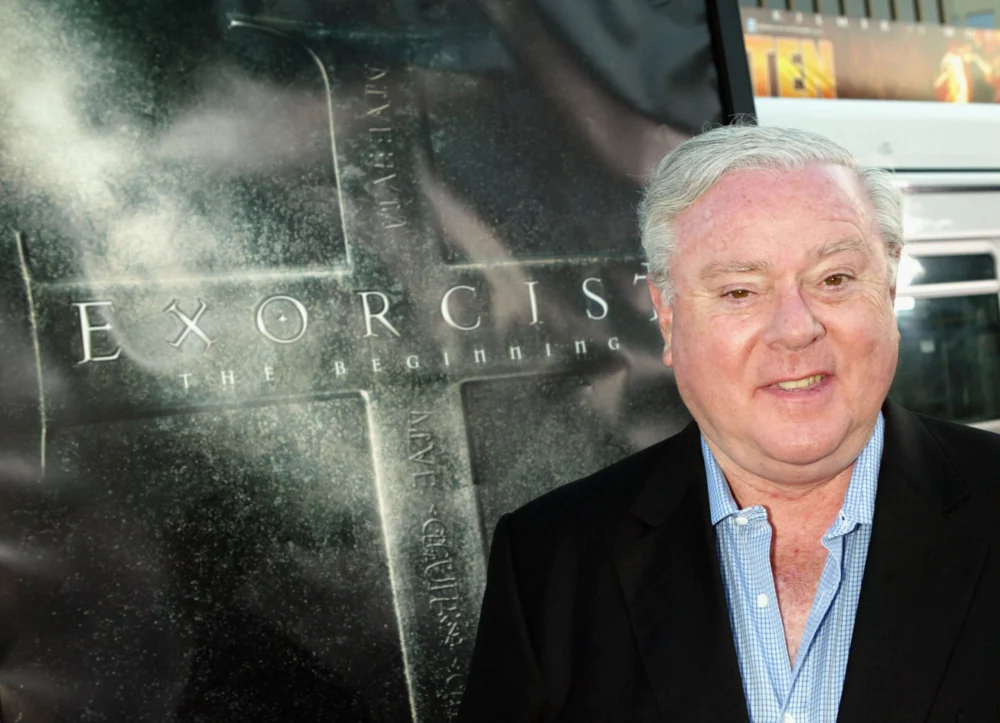
Even in his later years, Robinson remained actively involved in the industry he helped shape. His recent executive producer credits include the 2023 horror film “The Exorcist: Believer,” a continuation of the iconic franchise, and the critically acclaimed “Dead Ringers” TV series, an adaptation of the 1988 film he originally produced. These recent projects illustrate his enduring relevance and his ability to adapt to the evolving landscape of entertainment, embracing both cinematic releases and the burgeoning world of streaming television. This commitment to staying current and creatively engaged, decades after founding Morgan Creek, is a testament to his lifelong passion for storytelling.
Robinson’s producing philosophy was encapsulated in a candid interview with *Variety* in 1997, where he contrasted the comfortable environment of a major studio with the inherent risks and rewards of independent production. “When you’re working at a studio, where it’s nice and comfortable, there’s no pain and in my mind no short gain,” he observed. This statement revealed his preference for the entrepreneurial spirit, where calculated risks lead to greater potential rewards and a deeper sense of accomplishment. He understood that true innovation and significant impact often emerged from challenging the status quo and venturing beyond established safety nets.
He articulated the profound satisfaction he derived from his work, stating, “Bottom line is that the greatest feeling in the world is when you make a movie that you know is good and plays unusually well. That’s an emotional home run.” This sentiment speaks to more than just financial success; it highlights a profound personal connection to the creative process and the desire to produce work that resonates deeply with audiences. For Robinson, the ultimate reward was not merely the box office numbers, but the elusive “emotional home run” – a film that transcends entertainment to touch the hearts and minds of viewers, creating a lasting cultural impact. This pursuit of meaningful storytelling, coupled with a robust business strategy, defined his unique approach to filmmaking.
James G. Robinson’s legacy extends beyond the films he produced; it is also carried forward by his family. His son, David Robinson, currently serves as President of Morgan Creek Entertainment Group, ensuring that the company’s vision and principles continue to guide its future endeavors. This generational continuity is a testament to the strong foundations Robinson built, both professionally and personally.
He is survived by his beloved wife of 61 years, Barbara Lois Robinson, a testament to a lifetime of shared partnership and devotion. Their enduring marriage stands as a personal anchor in a career often characterized by intense public scrutiny and demanding schedules. He is also survived by his five sons: Michael Joseph Robinson (with wife Dawn), James Patrick Robinson, Matthew Brian Robinson (with wife Kim), David Christopher Robinson (with wife Susan), and Thomas Vernon West; and his daughter, Elizabeth Robinson deVilliers (with husband David). His large and loving family is a poignant reminder of the man behind the formidable producer, a testament to a life rich in both professional achievement and personal connection. James G. Robinson’s journey from a successful automotive entrepreneur to a Hollywood luminary who consistently sought and achieved “emotional home runs” leaves an enduring legacy of ambition, resilience, and a profound love for the magic of movies.