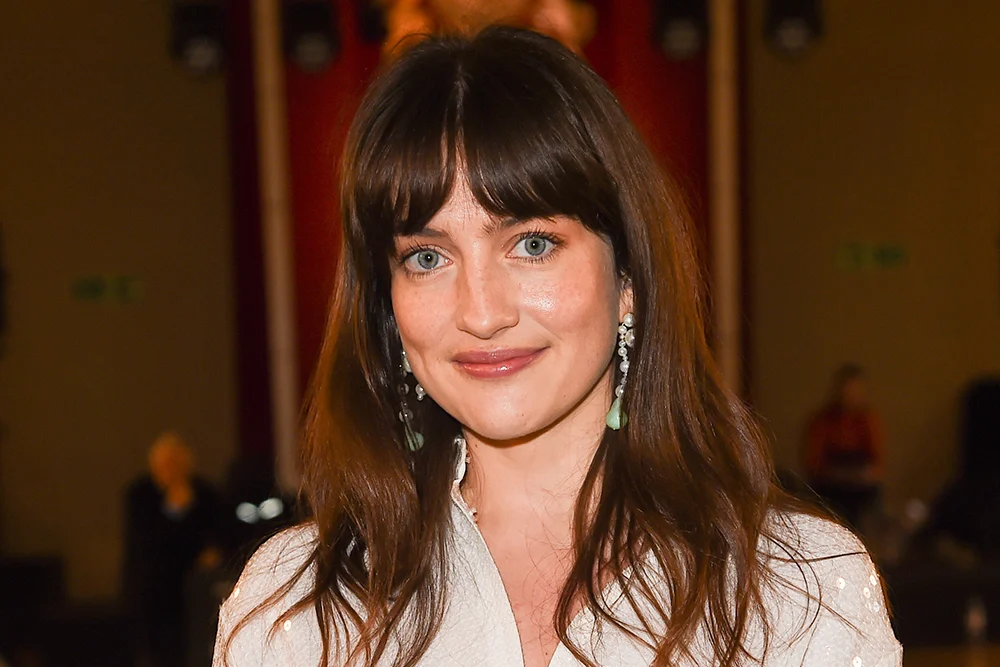
India Mullen, an actress widely recognized for her compelling performances in critically acclaimed series like “Normal People” and the popular Sky comedy “Brassic,” is embarking on a significant new chapter in her creative journey. Stepping decisively behind the camera, Mullen has completed her debut short film, “Lia & Ro,” a poignant exploration of sisterhood, mental health, and the often-unspoken complexities of navigating adulthood’s pivotal milestones. This directorial transition marks an exciting development for Mullen and signals a fresh voice emerging within contemporary Irish cinema, bringing with her a profound understanding of character and narrative honed through years in front of the lens.
The short film promises an intimate and emotionally resonant narrative, anchored by a formidable cast of emerging Irish talent. Maya O’Shea, whose star is rapidly ascending with roles in the highly anticipated “Blade Runner 2099” and the indie gem “Verdigris,” takes on one of the titular roles. Opposite her is Toni O’Rourke, celebrated for her powerful work in “God’s Creatures” and the gritty crime drama “Gangs of London.” Together, O’Shea and O’Rourke portray the sisters Lia and Ro, whose relationship forms the heart of the story. The film meticulously chronicles a single, charged summer afternoon in the scenic coastal town of Bray, Ireland, setting the stage for a day of attempted reconnection and profound introspection.
Mullen’s ambition for “Lia & Ro” extends beyond a compelling story; it’s a deliberate effort to showcase the depth and collaborative spirit of Ireland’s burgeoning film industry. She has assembled an impressive creative and production team, a testament to her vision and the confidence she inspires among seasoned professionals. Benjamin Jacob Smith of RAW Inventive, known for his work on projects such as “Twain,” “A Fox in the Night,” and “The Intimacy Coordinator,” serves as a key producer, collaborating with Finite Films and Worldwhy LLC. The project also benefits from a robust executive production team, including Gabriella Kramer Khan, Amy Gardner for Finite Films & TV, and Jenna Mack for Worldwhy, underscoring the significant backing and strategic support behind Mullen’s debut.
Benjamin Jacob Smith articulated the profound impact of this collaborative ethos, stating, “‘Lia & Ro’ brings together an exceptional Irish creative team, and that level of collaboration inevitably shifts the scale of a project. Our ambition is to combine emerging voices with collaborators whose work has shaped some of Ireland’s most internationally recognised films, contributing to the wave of Irish cinema that has found such a powerful global voice in recent years.” This statement resonates deeply within the context of Irish film, which has indeed seen a remarkable resurgence on the global stage, earning critical acclaim and significant awards for its unique storytelling, rich cultural tapestry, and exceptional talent both in front of and behind the camera. Films like “The Quiet Girl” (for which several “Lia & Ro” crew members are celebrated), “The Banshees of Inisherin,” and works by directors such as Lenny Abrahamson have firmly cemented Ireland’s position as a powerhouse in contemporary cinema, making Mullen’s entry into directing particularly timely and exciting.
The caliber of talent behind the scenes further elevates “Lia & Ro” from a promising debut to a highly anticipated cinematic event. Mullen has drawn on the expertise of some of Ireland’s most respected craftspeople. Multi-award-winning editor Nathan Nugent, whose meticulous work shaped the Oscar-winning drama “Room,” the Oscar-nominated “The Quiet Girl,” and even “Normal People” itself, is entrusted with cutting the film. Nugent’s ability to sculpt narrative and evoke profound emotion through editing will undoubtedly be crucial in bringing “Lia & Ro”‘s delicate themes to life. Complementing the visual narrative is the evocative score provided by composer Stephen Rennicks, another celebrated figure in Irish cinema. Rennicks’s distinctive musical voice has graced films like “Frank,” “The Quiet Girl,” and “Good Luck to You, Leo Grande,” demonstrating a versatility and sensitivity perfectly suited to “Lia & Ro”‘s emotional landscape. Rounding out the core creative team is cinematographer Eoin McLoughlin, recognized for his work on “The Ghost of Richard Harris” and his visually striking contributions to Fontaines D.C.’s music videos. McLoughlin’s keen eye for capturing atmosphere and human emotion will be instrumental in translating the subtle nuances of the film’s narrative onto the screen.
The narrative of “Lia & Ro” unfolds against the deceptively idyllic backdrop of Bray’s sunlit seafront, a setting that provides a striking visual counterpoint to the characters’ internal struggles. The story centers on Ro, who is granted a supervised day trip from a psychiatric hospital to celebrate her sister Lia’s 30th birthday. This seemingly ordinary occasion becomes a crucible for Ro’s journey as she endeavors to reconnect with Lia and the world from which she feels increasingly detached. Amidst the bustling beach crowds, the cheerful cacophony of arcade noise, and the ghosts of shared childhood memories, Ro grapples with the immense challenge of reintegration. The film’s official description highlights its exploration of “themes of sisterhood and recovery, framed through a quietly observational lens,” suggesting a subtle yet powerful approach to its sensitive subject matter.
India Mullen herself offered profound insight into the genesis and thematic core of her directorial vision. She explained, “‘Lia & Ro’ was born out of a conversation about the strange coming-of-age that happens at 30. When you’re launched from the frivolity of your 20s and suddenly everyone’s path feels very separate.” This observation taps into a universal experience for many women, particularly in a society that often presents a narrow, idealized trajectory for early adulthood. Mullen continues, “Some people are buying houses or getting married and others are getting sober or having huge moments of self-reflection. I wanted to explore that emotional gap and how lonely mental health recovery can feel amid societal pressures to ‘progress.’” This candid articulation reveals the film’s profound commitment to authenticity, particularly concerning the often-isolated journey of mental health recovery. The “thirties,” often presented as a decade of established success and stability, can, in reality, be a period of intense divergence, self-questioning, and profound personal change, sometimes accompanied by significant struggles that remain hidden beneath a veneer of societal expectation.
Mullen’s decision to explore these themes is particularly resonant for a women-focused audience. The film not only spotlights the unique bond of sisterhood—a relationship often characterized by deep love, complex dynamics, and unwavering support—but also bravely confronts the societal pressures placed upon women as they approach and enter their thirties. The expectation to achieve certain milestones, whether professional, relational, or familial, can exacerbate feelings of inadequacy or isolation for those whose paths deviate from the perceived norm. By centering Ro’s journey of recovery and Lia’s experience of navigating a sister’s mental health challenges, Mullen’s film promises to offer a nuanced portrayal of resilience, empathy, and the quiet courage required to forge one’s own path, particularly when grappling with mental well-being.
The choice of Bray as a backdrop is also significant. A popular seaside town known for its Victorian promenade and vibrant atmosphere, Bray offers a visual metaphor for the film’s central tension: the contrast between an outwardly cheerful, bustling world and the inner turmoil experienced by its characters. The sunlit seafront, while beautiful, can also feel overwhelming and isolating when one is struggling, highlighting Ro’s feeling of being “removed” from the world. This thoughtful use of location, combined with the film’s dedication to an “observational lens,” suggests a storytelling style that invites viewers to intimately connect with the characters’ experiences, fostering understanding and empathy rather than melodrama.
India Mullen’s transition from an acclaimed actress to a director is part of a broader, encouraging trend within the entertainment industry, where more women are taking creative control behind the camera. This shift not only diversifies storytelling but also brings unique perspectives and narratives to the forefront, often shedding light on experiences that have been historically underrepresented. With “Lia & Ro,” Mullen is not just making a debut; she is contributing to this vital movement, using her platform to tell a story that is deeply personal, universally relatable, and acutely relevant in today’s conversations around mental health and societal expectations. The film, currently in post-production, is poised to be a significant and moving addition to the landscape of contemporary Irish cinema, eagerly awaited by audiences keen to witness Mullen’s vision unfold.