

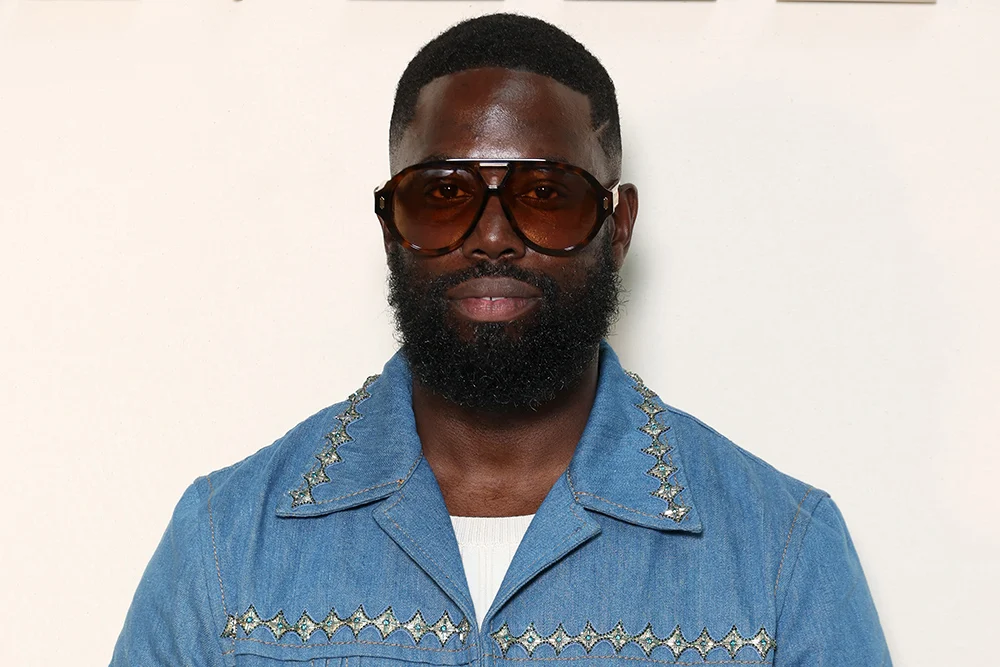
The acclaimed British rapper Justin Clarke-Samuel, widely known by his stage name Ghetts, has been handed a 12-year prison sentence following his involvement in a fatal hit-and-run incident that claimed the life of 20-year-old Nepalese student Yubin Tamang in London. The ruling, delivered at the Old Bailey on Tuesday, marks a devastating turn for the artist, whose recent foray into acting with the Netflix series “Supacell” had hinted at an expanding career beyond music. In addition to the significant jail term, Clarke-Samuel has also been disqualified from driving for a period of 17 years, a testament to the severity of the reckless actions that led to this profound tragedy.
The harrowing details of the incident, which unfolded in October, paint a grim picture of impaired judgment and disregard for public safety. Prosecutor Philip McGhee outlined in court that on the night of the crash, Ghetts had been consuming alcohol, with subsequent tests revealing his blood alcohol level to be 1.5 times over the legal limit. Clarke-Samuel himself admitted to having consumed three glasses of brandy during a meal at a restaurant prior to getting behind the wheel. This decision set in motion a chain of events that would irrevocably alter multiple lives. Yubin Tamang, a young man with a future full of promise, was simply crossing a street in northeast London when he was struck by Ghetts’ vehicle, which was travelling at an alarming 60 mph in a clearly marked 30 mph zone. The impact was catastrophic, and Tamang tragically succumbed to his injuries two days later in the hospital. Adding to the horror, Clarke-Samuel did not stop at the scene, fleeing the devastating aftermath he had created.
The investigation into the fatal collision quickly gathered pace, spearheaded by forensic evidence left at the scene. Police discovered a damaged mirror fragment on the road, a crucial piece of the puzzle that allowed them to trace its unique serial number back to Clarke-Samuel’s vehicle. Faced with irrefutable evidence, Ghetts eventually admitted to driving recklessly. His confession revealed a deeply disturbing pattern of dangerous behavior preceding the crash, including failing to stop at no less than six red traffic lights. In an attempt to mitigate his actions, Clarke-Samuel claimed he was being followed, a desperate assertion for which no corroborating evidence was ever found. This defense was ultimately dismissed by the court, leaving no doubt about the culpability of his actions.
The court proceedings brought to light not only the technical details of the crime but also the immense human cost. The victim, Yubin Tamang, was a Nepalese student who had journeyed to London with aspirations and dreams, a common narrative for many young people seeking education and opportunity abroad. His life, vibrant and full of potential, was cut short in the most abrupt and senseless manner. His family, left to grapple with an unimaginable loss, conveyed their profound grief and anger in a heart-wrenching statement read aloud. “We speak today with hearts broken beyond repair,” the statement began, echoing the universal pain of parental loss. “Our only child, a precious soul, has been taken from us far too soon. Justin Clarke-Samuel has stolen our son’s future and ours with it… we can never forgive him for what he has done.” The raw emotion in their words underscored the irreversible damage inflicted, a wound that time may never fully heal.
For many, Ghetts was a symbol of resilience and artistic integrity within the British grime and rap scene. Born Justin Clarke-Samuel in Plaistow, East London, he rose to prominence with his intricate lyricism, potent storytelling, and distinctive flow. His career spanned over two decades, earning him critical acclaim and a dedicated fanbase. Albums like “Conflict of Interest” showcased his depth and versatility, securing his place as a respected voice in UK music. His recent venture into acting, with a role in the Netflix superhero drama “Supacell,” suggested an artist successfully broadening his creative horizons, poised for a new chapter of influence and visibility. This tragic incident, however, has cast a long, dark shadow over his achievements, transforming his public narrative from one of artistic triumph to profound personal failing and criminal accountability. The contrast between his celebrated public persona and the grim reality of his actions on that October night is stark and deeply unsettling.
The legal framework surrounding “causing death by dangerous driving” in the UK is stringent, reflecting society’s condemnation of actions that put lives at extreme risk. While Clarke-Samuel pleaded guilty to “causing death by reckless driving,” this effectively falls under the umbrella of dangerous driving, which involves driving that falls far below the standard expected of a competent and careful driver, and which it would be obvious to a competent and careful driver that driving in that way would be dangerous. The judge, in determining the 12-year sentence, would have considered numerous aggravating factors. These included the consumption of alcohol, the excessive speed in a residential area, the blatant disregard for multiple traffic signals, and critically, the decision to flee the scene of the accident. Each of these elements amplified the severity of the offense, leaving the court with little alternative but to impose a substantial custodial sentence. The 17-year driving disqualification further underscores the court’s intent to remove him from the roads for an extended period, reflecting the danger he posed to others.
The act of a hit-and-run, in particular, carries a heavy moral and legal weight. Beyond the immediate physical harm caused, the failure to stop at the scene demonstrates a profound lack of empathy and responsibility. While the immediate aftermath of a collision can induce panic, the legal and ethical expectation is for drivers to remain, assess the situation, and render aid if possible. Clarke-Samuel’s decision to leave Yubin Tamang injured on the street, vulnerable and alone, undoubtedly factored heavily into the judge’s sentencing considerations. It speaks to a deep failure of character in a moment of crisis, amplifying the tragedy from a mere accident to a criminal act of abandonment.
In a moment that offered a glimpse into his personal torment, Ghetts’ lawyer read aloud an apology from the rapper to Yubin Tamang’s family. The statement conveyed “extreme regret, shame and remorse,” acknowledging the immense pain he had inflicted. “This may be the only chance that I get to apologize,” the rapper’s words continued, expressing a deep understanding of the gravity of his situation and the likelihood of future opportunities for direct communication being limited. He maintained, “It was truly an unintentional act on my part and I am so sincerely sorry for the suffering and emotional distress that I have caused.” While the apology, delivered through a legal representative, may offer little solace to a grieving family, it highlights the heavy burden of guilt that Clarke-Samuel now carries, a stark contrast to the defiant and confident persona often portrayed in his music.
This case serves as a stark reminder of the devastating consequences of impaired and reckless driving. It transcends the celebrity status of the accused, focusing instead on the universal imperative of responsible conduct behind the wheel. The tragedy of Yubin Tamang’s untimely death underscores the fragility of life and the ripple effect that a single reckless decision can have on countless individuals. For Ghetts, a career built on lyrical prowess and cultural impact now faces an indefinite hiatus, overshadowed by a criminal conviction that will forever define a significant chapter of his life. The justice system, in its pronouncements, aims to hold individuals accountable, deter future offenses, and provide a measure of solace to victims and their families. While no sentence can ever truly restore what has been lost, the 12-year imprisonment of Justin Clarke-Samuel sends a clear message about the profound societal cost of dangerous driving, a message that reverberates far beyond the confines of the courtroom and into the hearts of those who mourn a life extinguished far too soon.