


As the world’s gaze shifts toward Brazil for the upcoming COP30, the conversation surrounding the climate crisis is undergoing a fundamental shift. No longer viewed simply through the lens of carbon emissions and rising sea levels, the emergency is increasingly recognized as a profound crisis of human rights and social equity. At the heart of this realization is a stark truth: climate change is not gender-neutral. It is a crisis that preys upon existing vulnerabilities, and for women and girls globally, the stakes have never been higher. From the loss of traditional livelihoods to the increased risk of gender-based violence in the wake of natural disasters, the feminine experience of climate change is one of disproportionate burden—and, potentially, of unparalleled leadership.
The gathering of world leaders in Brazil represents more than just another round of diplomatic negotiations; it is a critical deadline for the adoption of a new, transformative Gender Action Plan (GAP). This document is not merely a bureaucratic requirement; it is a blueprint for ensuring that the global response to the environmental collapse does not leave half the population behind. As Mary Robinson, the former UN High Commissioner for Human Rights, famously observed: “Climate change is a manmade problem that requires a feminist solution.” This sentiment captures the essence of the challenge facing COP30. To solve a crisis born of systemic imbalances, the solution must be inherently systemic and inclusive.
The UNFCCC Gender Action Plan (GAP) functions as the essential “user manual” for integrating gender perspectives into every facet of international climate policy. While the first iteration of the GAP was adopted in 2017, the world has changed significantly since then. The climate crisis has accelerated, and the socio-economic gaps between genders have, in many regions, widened. Under the framework of the Enhanced Lima Work Programme on Gender, Parties to the United Nations Framework Convention on Climate Change are now tasked with delivering a second, more robust revision. This updated GAP will dictate the direction of global climate action for the next decade. If it is ambitious, it could center gender equality as a pillar of survival; if it is weak, it risks relegating women’s rights to the margins of the environmental movement.
To understand why a strong GAP is non-negotiable, one must look at the concept of gender-responsive climate action. This approach moves beyond the superficial inclusion of women in meetings and instead demands that climate policies are built from the ground up to address gender-specific needs. In practice, this means ensuring that climate finance is accessible to women-led grassroots organizations, that green technology is designed with women’s labor in mind, and that adaptation strategies account for the specific health and safety risks women face during displacements. Currently, UN Women and its global partners are advocating for every outcome of COP30—from finance to technological transfer—to be scrutinized through this gender-responsive lens.
The urgency is underscored by the current global political climate. We are witnessing a troubling paradox: as the physical impacts of climate change intensify, so too does a political backlash against women’s rights in many corners of the globe. Recent reports indicate that one in four countries has seen a regression in protections for women’s empowerment over the last year. This regressive trend threatens to undermine the very progress needed to build climate resilience. When women are denied the right to own land, access education, or participate in local governance, the community’s collective ability to adapt to a changing environment is crippled.
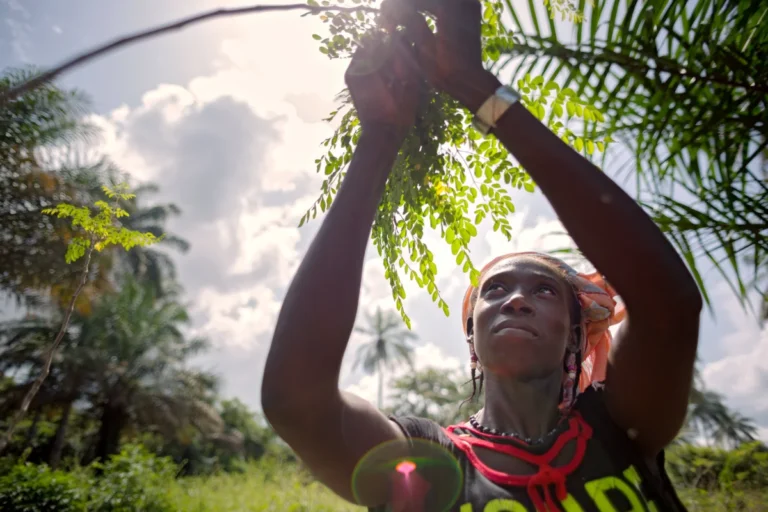
The practical impact of these policies can be seen in communities like the Northeast Women Farmers Group in Dominica. After the catastrophic devastation of Hurricane Maria in 2018, it was these women who took the lead in reviving local agriculture, proving that women are not just victims of climate change, but primary agents of recovery. Similarly, in Haiti, female students have been at the forefront of massive reforestation efforts, reclaiming depleted pine forests to protect their future. These are the voices that a strong Gender Action Plan must amplify.
To meet the gravity of the moment, UN Women has identified several non-negotiable characteristics for the new GAP. First, it must be ambitious and transformative, moving beyond “business as usual” to challenge the root causes of inequality. Second, it must be adequately resourced. A plan without dedicated funding is little more than a list of empty promises. Leaders at COP30 must ensure that climate finance—which is already a contentious topic—includes specific allocations for gender-related initiatives. Third, the plan must be inclusive, specifically accounting for the needs of Indigenous women, rural workers, and youth, who often face intersecting forms of discrimination.
Accountability is also a central theme of the negotiations. To assist in this, UN Women has introduced the Gender Equality and Climate Policy Scorecard. This monitoring tool allows for a rigorous assessment of how national climate policies are actually performing on the ground. By tracking issues such as unpaid care work, maternal health, and gender-based violence in the context of climate disasters, the scorecard provides a data-driven dashboard that holds governments accountable to their international commitments. It transforms vague rhetoric into measurable progress, ensuring that “gender-responsive” becomes a standard of practice rather than a buzzword.
What is at stake if the world leaders at COP30 fail to deliver? The risks are not just theoretical. A weak or absent Gender Action Plan is not a neutral outcome; it is a choice to allow existing inequalities to deepen. Without a clear strategy, climate finance will continue to bypass women-led initiatives, and adaptation projects will continue to overlook the specific vulnerabilities of female-headed households. For Indigenous and rural women, who are often the stewards of the world’s biodiversity, a lack of institutional support can mean the difference between community survival and forced migration.
Parties at COP30 must avoid the temptation to treat the GAP as a “check-the-box” exercise. A document filled with vague language and no clear timelines for implementation will fail the millions of women and girls currently living on the frontlines of the crisis. The adoption of a bold, inclusive GAP is, at its core, a matter of climate justice. It recognizes that those who have contributed the least to global emissions—and who have the fewest resources to protect themselves—must be the primary beneficiaries of global climate solutions.
As the negotiations in Brazil unfold, the message from civil society and UN Women is clear: enough with the promises; it is time for action. The climate crisis is an accelerant of inequality, but it also provides a unique opportunity to rebuild our global systems in a way that is fairer and more resilient. Women and girls are not waiting for permission to lead; they are already doing the work in their fields, their schools, and their communities. What they require from COP30 is a global framework that supports, funds, and protects their right to a sustainable future. The solutions to the climate crisis are available, but they will only be effective if they are feminist. At COP30, the world has a chance to prove that it is finally listening.