

Chaos Erupts in Minneapolis as Federal Agents Fatally Shoot Protester Amidst Escalating Immigration Crackdown
Minneapolis is once again reeling from a fatal confrontation between federal immigration agents and local protesters, this time involving the shooting death of Alex Pretti, a 37-year-old demonstrator. The incident, captured on multiple videos that have since gone viral, has ignited a fiery debate between state and federal authorities, highlighting a stark division in the interpretation of the deadly encounter. While Democratic leaders in Minnesota decry the actions of what they call “untrained federal officers overreacting,” the Trump administration maintains that Pretti provoked the violence by violently resisting arrest and presenting a deadly threat.
This marks the second such fatal shooting involving federal immigration authorities in Minneapolis within a month. The previous incident, on January 7th, resulted in the death of Renee Good and was similarly documented by video footage, leading to a parallel rift among political figures. The escalating tension underscores the volatile atmosphere surrounding the administration’s aggressive immigration enforcement, particularly under the banner of “Operation Metro Surge,” a sweeping crackdown described by Minneapolis Mayor Jacob Frey as an “invasion” of his city and its neighboring St. Paul.
The latest shooting occurred around 9 a.m. on Saturday, following a roughly 30-second struggle. According to federal authorities, the Border Patrol agent opened fire “defensively” after Pretti allegedly produced a semi-automatic handgun and engaged in a “violent” resistance against officers. However, eyewitness accounts and video evidence paint a more complex and contested picture.
Minneapolis Mayor Jacob Frey, who stated he has reviewed one of the graphic videos, described witnessing “more than six masked agents pummeling one of our constituents, shooting him to death.” His assertion directly contradicts the narrative presented by federal officials, who have framed the shooting as a necessary act of self-defense.
Department of Homeland Security Secretary Kristi Noem echoed the administration’s stance, alleging that Pretti attacked the officers. Customs and Border Patrol Commander Gregory Bovino further intensified the rhetoric, claiming Pretti intended to inflict “maximum damage and massacre law enforcement.” In a pointed social media post on X, President Donald Trump’s deputy chief of staff, Stephen Miller, labeled Pretti a “would-be assassin,” amplifying the administration’s portrayal of the deceased as a dangerous aggressor.
The incident unfolded as federal officers were reportedly pursuing an individual in the country illegally, who was wanted for domestic assault, according to Commander Bovino. Protesters, a regular presence during such federal operations, had gathered to disrupt the enforcement action. Their efforts included sounding high-pitched whistles, honking horns, and shouting at the agents, creating a chaotic and noisy environment.
Alex Pretti was among these protesters. One video, obtained by The Associated Press, shows Pretti standing in the street, holding up his phone. He is seen face-to-face with an officer in a tactical vest, who places a hand on Pretti and pushes him towards the sidewalk. While Pretti appears to be speaking to the officer, the content of his words remains unclear from the footage.
The video continues to show protesters moving in and out of the street as officers attempt to direct them away. One protester is seen being placed in handcuffs, and some officers are visibly carrying pepper spray canisters. The scene is one of escalating tension and attempts at crowd control.
Pretti re-engages with the scene when an officer, clad in tactical gear, shoves another protester. This protester, identified in the video as wearing a skirt over black tights and holding a water bottle, reaches out towards Pretti. The same officer then forcefully shoves Pretti in the chest, causing both Pretti and the other protester to stumble backward.
A subsequent video captures Pretti moving towards another protester who has fallen after being shoved by the same officer. Pretti positions himself between the fallen protester and the officer, extending his arms towards the officer. The officer responds by deploying pepper spray. Pretti raises his hand and turns his face away. The officer then grabs Pretti’s hand, attempting to bring it behind his back, deploys pepper spray again, and pushes Pretti away.
Within seconds, a significant number of federal officers – at least half a dozen – surround Pretti. He is wrestled to the ground and struck multiple times as officers attempt to restrain his arms. Pretti struggles against their efforts.
Video footage then depicts an officer hovering over the scuffle, with his right hand on Pretti’s back. This officer appears to back away from the group, drawing what looks to be a firearm in his right hand just before the first shot is fired. Amidst the commotion, a voice is heard shouting “gun, gun,” though it remains ambiguous whether this refers to the weapon federal authorities claim Pretti possessed.
The first shot rings out. Crucially, the videos do not definitively show who fired the initial shot. However, in one particular video, mere seconds before the first shot, an officer is seen reaching for his belt and appearing to draw his weapon. This same officer is later observed with a gun pointed at Pretti’s back as three more shots are fired. Pretti slumps to the ground. The videos show officers retreating, some with their weapons drawn, and further shots are heard.
The Department of Homeland Security stated that Pretti was shot after he “approached” Border Patrol officers while in possession of a 9 mm semi-automatic handgun. Officials have not clarified whether Pretti, who reportedly held a license to carry a concealed weapon, brandished the firearm or kept it concealed. An agency statement asserted that officers fired “defensive shots” after Pretti “violently resisted” their attempts to disarm him.
Minnesota Governor Tim Walz expressed profound dismay at the administration’s characterization of the events. “I’ve seen the videos, from several angles, and it’s sickening,” he stated, directly challenging the federal narrative.
President Donald Trump responded vehemently on social media, launching sharp criticisms against both Governor Walz and Mayor Frey. Trump shared images of the handgun that immigration officials claimed was recovered from Pretti, questioning, “What is that all about? Where are the local Police? Why weren’t they allowed to protect ICE Officers?” His remarks signaled a continued escalation of the political friction surrounding federal immigration enforcement operations.
The broader context of “Operation Metro Surge” is critical to understanding the volatile environment. This large-scale immigration crackdown, deployed by the Trump administration, has been met with significant local opposition. The operation aims to identify and apprehend individuals in the country illegally, particularly those with criminal records or who are deemed a threat to public safety. However, critics argue that the aggressive tactics employed by federal agents, often operating in unmarked vehicles and without clear identification, have created fear and distrust within immigrant communities and have led to increased confrontations with concerned citizens and protest groups.
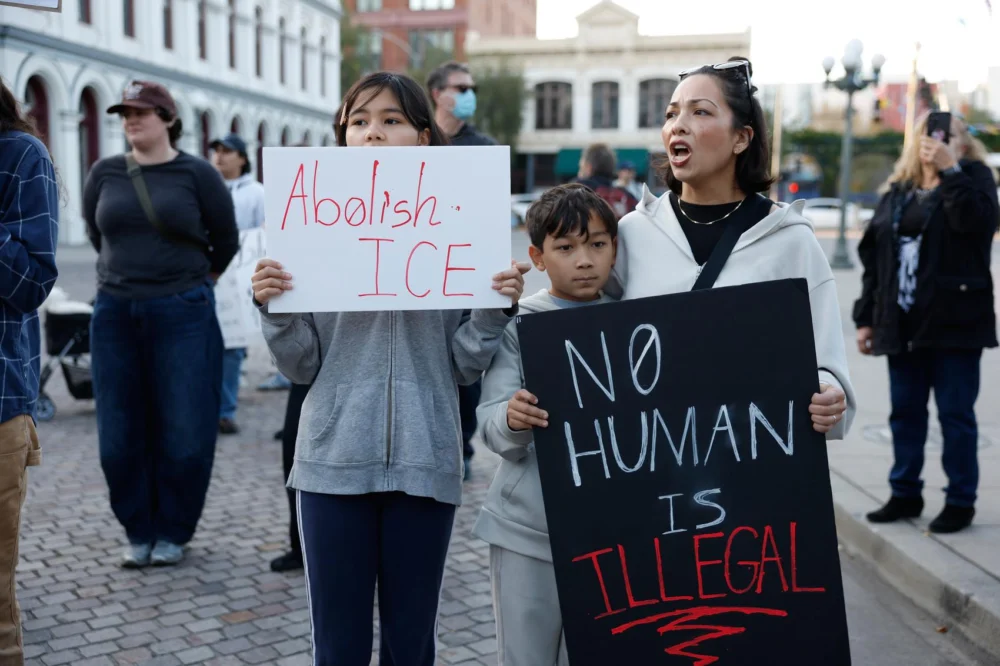
The presence of protesters attempting to document and disrupt federal operations is a recurring theme. Activists argue that such interventions are necessary to hold federal agents accountable and to protect vulnerable populations from what they perceive as unjust and overly aggressive enforcement. The use of noise-making devices like whistles and horns is a common tactic to alert the community and to disrupt the operations, often drawing the attention of bystanders and escalating the potential for direct interaction with law enforcement.
The claim by federal authorities that Pretti was armed and resisted arrest has been met with skepticism by those who have viewed the videos and are familiar with the local protest scene. While Pretti may have been licensed to carry a firearm, the critical question remains whether he posed an imminent threat that warranted the use of deadly force. The videos do not provide a clear depiction of Pretti brandishing his weapon or making overtly aggressive movements towards the officers before the scuffle escalated. Instead, the footage suggests a chaotic confrontation where physical altercations and the deployment of pepper spray preceded the gunfire.
The incident raises serious questions about the training and de-escalation protocols of federal immigration agents operating in urban environments. Critics point to the increasing number of confrontations and use-of-force incidents as evidence that these agents may not be adequately prepared for the complexities of policing in civilian settings, especially when faced with organized protest groups. The reliance on paramilitary tactics and the perceived lack of transparency in their operations have fueled concerns about excessive force and potential civil rights violations.
The Minneapolis Police Department, whose relationship with federal immigration agencies has often been strained, has stated that they are cooperating with the ongoing investigation into the shooting. However, the differing accounts and the political rhetoric surrounding the incident suggest that a swift and universally accepted resolution may be unlikely. The involvement of multiple federal agencies, including Customs and Border Protection and the Department of Homeland Security, further complicates the investigative process and the assignment of accountability.
The narrative presented by the Trump administration, which often emphasizes the dangers posed by undocumented immigrants and the need for robust border security, has found a local manifestation in Minneapolis. The administration’s consistent framing of immigration enforcement as a battle against criminals and threats to national security likely influences the public perception of these operations, even when they occur far from the border. The events in Minneapolis serve as a stark example of how national immigration policy can have profound and often tragic consequences at the local level.
The families of both Alex Pretti and Renee Good, as well as other individuals who have been impacted by federal immigration enforcement actions in the city, are likely to seek justice and accountability. The legal and political ramifications of these shootings could be significant, potentially leading to further investigations, lawsuits, and a renewed push for reforms in federal immigration enforcement practices. The ongoing scrutiny of the videos and the competing narratives will continue to shape public discourse and the demand for clarity and truth in the aftermath of these tragic events.
© Copyright 2026 The Associated Press. All rights reserved. This material may not be published, broadcast, rewritten or redistributed without permission.