


Tokyo Residents Unite Against Xenophobia as Election Nears
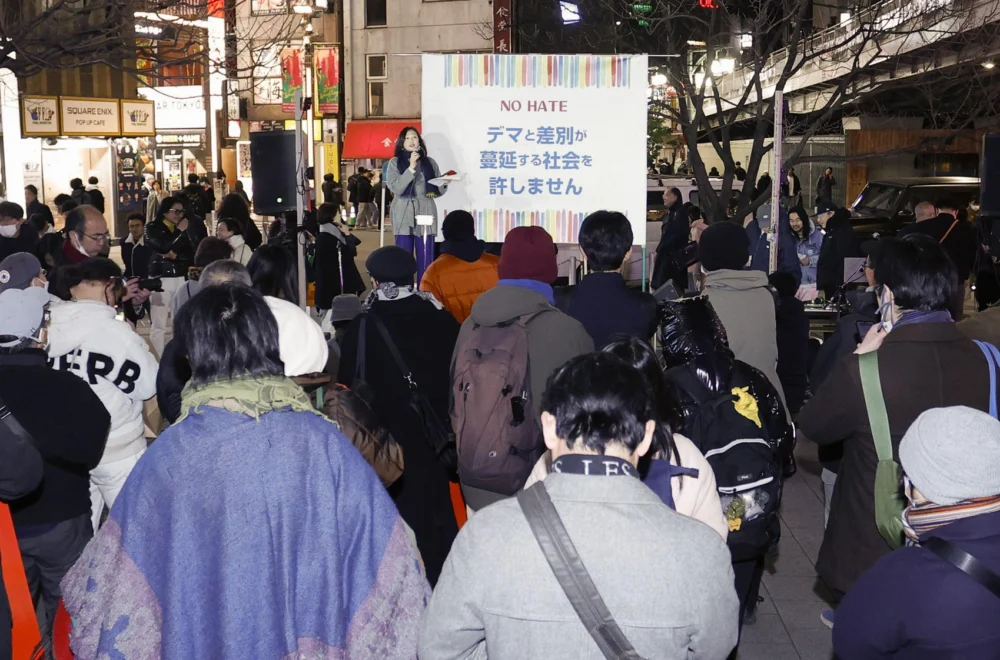
As the electoral landscape of Japan shifts towards the upcoming general election on February 8th, a significant gathering took place in Tokyo, where concerned citizens coalesced to actively counter the rising tide of misinformation and discrimination directed at the nation’s foreign residents. This demonstration, held on a Friday, underscored a growing unease about the rhetoric shaping political discourse, particularly in the wake of policies that have increasingly focused on foreigners since the previous national election last summer. A notable contributor to this heightened attention has been the emergence of Sanseito, a fringe party whose platform advocating for “Japanese First” policies has drawn sharp criticism for its perceived xenophobic undertones.
The rally, meticulously organized by a coalition of dedicated civic groups, including prominent lawyers and esteemed university faculty members, served as a powerful platform for participants to articulate their profound concerns. They voiced a collective apprehension that the upcoming election campaign could become a breeding ground for xenophobic rhetoric, potentially exacerbating existing prejudices and fostering a climate of fear and exclusion. At its heart, the gathering was a fervent plea for “a society in which everyone is respected,” a vision that transcends national origin and embraces inclusivity.
Lawyer Keiko Ota, a key organizer of the event, eloquently articulated the sentiment driving the rally. Speaking from the bustling vicinity of JR Shinjuku Station, a hub of constant activity and diverse human interaction, she emphasized the urgent need to amplify the voices of those who stand in opposition to candidates who seek electoral success through the dissemination of falsehoods and the exploitation of discriminatory sentiments. “We need to make visible the voices of citizens who are against candidates trying to win elections with false information and discrimination,” Ota declared, highlighting the vital role of active citizenship in safeguarding democratic values.
Further adding his voice to the chorus of concern was Kihei Maekawa, a distinguished former top bureaucrat within Japan’s Ministry of Education. Maekawa did not mince words in his critique of the current government, led by Prime Minister Sanae Takaichi. He accused the administration of resorting to a divisive tactic, attempting to garner voter support by “treating foreigners living in Japan as a nuisance.” This pointed accusation suggested a cynical political strategy that, in his view, demonized an entire segment of the population to achieve electoral gains.
Prime Minister Sanae Takaichi, known for her staunch conservative stance, has indeed signaled a significant shift in the ruling Liberal Democratic Party’s (LDP) approach to issues concerning foreign nationals. Her call for a House of Representatives election is ostensibly to seek a public mandate for the three-month-old ruling coalition formed between the LDP and the Japan Innovation Party. However, the LDP’s campaign pledges have demonstrably indicated a tougher stance on matters affecting foreigners, with a particular emphasis on addressing issues such as visa overstays. This policy direction has fueled anxieties among those who fear a more restrictive and potentially discriminatory immigration and residency framework.
During the rally, a message from a prominent figure within the LDP, Shigeru Ishiba, the party’s former Secretary-General and a former Prime Minister himself, was read aloud, offering a contrasting perspective. Ishiba’s words resonated with a more inclusive interpretation of conservatism, a sentiment that seemed to stand in stark contrast to the prevailing rhetoric. “The true essence of conservatism lies in a sincere and tolerant attitude that does not permit prejudice or discrimination, respects others, and listens humbly to differing opinions,” the former prime minister stated. This message, emanating from within the LDP itself, offered a glimmer of hope for a more nuanced and compassionate approach to national policy, suggesting that not all within the party endorse a hardline stance on foreign residents.
The concerns raised at the rally are not isolated incidents but reflect a broader societal conversation about Japan’s identity and its place in an increasingly globalized world. The nation has a long history of a relatively homogenous population, and while this has contributed to a strong sense of national unity, it has also presented challenges in adapting to a more diverse society. As Japan faces demographic shifts, including a declining birthrate and an aging population, the role of foreign workers and residents is becoming increasingly critical to the nation’s economic and social sustainability. This reality often clashes with deeply ingrained cultural norms and nationalistic sentiments, creating a complex and often contentious political environment.
The rise of Sanseito, while a fringe element, has nonetheless tapped into existing anxieties and resentments held by a segment of the population. These anxieties can stem from various sources, including concerns about economic competition, perceived strains on social services, and cultural integration challenges. However, critics argue that parties like Sanseito exploit these fears by presenting simplistic, often inaccurate, narratives that scapegoat foreigners, diverting attention from more complex socio-economic issues. The “Japanese First” slogan, while superficially appealing to national pride, can easily morph into a justification for exclusionary policies and discriminatory practices.
The lawyers and academics who organized the Tokyo rally understand that political rhetoric has tangible consequences. Misinformation and prejudice, once amplified during an election campaign, can have lasting effects on the lives of individuals and communities. They can lead to increased instances of hate speech, discrimination in employment and housing, and a general sense of unease and alienation for foreign residents. The call for a “society in which everyone is respected” is therefore not merely an abstract ideal but a practical necessity for fostering social cohesion and ensuring that Japan can harness the full potential of its diverse population.
The criticism directed at Prime Minister Takaichi’s government by figures like Maekawa highlights a potential disconnect between the stated aims of some political factions and the lived experiences of people in Japan. While the government may frame policies related to foreigners as necessary for national security or economic stability, the language and approach used can significantly impact public perception and the treatment of individuals. The framing of foreigners as a “nuisance” rather than as valuable contributors to society can foster a climate of hostility and distrust, undermining the very integration efforts that are crucial for Japan’s future.
The contrasting message from Shigeru Ishiba offers a crucial counterpoint within the LDP itself. His articulation of conservatism as being rooted in tolerance, respect, and an openness to differing opinions suggests that there is a spectrum of views within the ruling party. This internal dissent, even if subtle, can be vital in moderating extreme positions and encouraging a more inclusive policy debate. It also provides an opening for dialogue and persuasion, demonstrating that the narrative is not monolithic and that alternative perspectives can gain traction.
The current political climate in Japan, marked by the approaching general election, is therefore a critical juncture. The choices made by voters and the rhetoric employed by political parties will have a profound impact on the trajectory of Japan’s engagement with its growing foreign population. The activists and concerned citizens who gathered in Tokyo are not merely protesting; they are actively participating in the democratic process, seeking to inject a message of inclusivity and respect into a political discourse that too often veers towards division and prejudice. Their efforts underscore the importance of vigilant citizenship in ensuring that democratic elections serve as a platform for progress and understanding, rather than for the perpetuation of outdated prejudices.
The implications of this election extend beyond the domestic sphere. Japan’s role in the international community is also shaped by its internal policies and societal attitudes. A perception of Japan as an unwelcoming or discriminatory nation can have implications for international relations, trade, and its ability to attract talent and investment in the future. As the world becomes increasingly interconnected, nations that embrace diversity and foster inclusive societies are better positioned to thrive and to contribute positively to global challenges.
The rally in Shinjuku was a microcosm of a larger, ongoing debate within Japan about its future. It was a testament to the power of ordinary citizens to organize and to voice their concerns, even in the face of powerful political currents. The participants’ determination to counter misinformation and discrimination reflects a deep-seated belief in the fundamental human right to be treated with dignity and respect, regardless of one’s nationality or background. Their message is clear: a strong and prosperous Japan is one that embraces all its residents and fosters a society where everyone feels safe, valued, and respected.
The upcoming election will undoubtedly be a test of these values. The outcome will reveal the extent to which the concerns of those who advocate for inclusivity resonate with the broader electorate. The voices raised in Tokyo on Friday serve as a crucial reminder that the fight against prejudice and misinformation is an ongoing one, requiring constant vigilance and active participation from all segments of society. The future of Japan, in many ways, depends on its ability to navigate these complex issues with wisdom, empathy, and a commitment to the principles of equality and respect for all.
© KYODO