


Climate Justice for the Next Decade: Why UN Women is Demanding a Transformative Gender Action Plan at COP30
As the world’s gaze shifts to the lush, ecologically vital landscape of Belém, Brazil, for the thirtieth United Nations Framework Convention on Climate Change (UNFCCC) Conference of the Parties—widely known as COP30—a critical battle for the future of human rights is unfolding. UN Women, the global champion for gender equality, has arrived at this summit with a clear and urgent mandate: the international community must adopt a transformative, well-funded, and rigorously accountable Gender Action Plan (GAP). This framework is not merely a bureaucratic checkbox; it is the essential machinery required to ensure that climate policies across the globe do not leave half the population behind. The decisions made in Belém will reverberate for the next ten years, determining whether gender equality remains a central pillar of the global climate response or is relegated to a footnote in the history of the green transition.
The reality on the ground is stark: climate change is not gender-neutral. While the rising tides and scorching droughts affect everyone, they do not affect everyone equally. For women and marginalized groups, the climate crisis acts as a “threat multiplier,” intensifying existing socio-economic disparities. From the frontlines of climate-induced displacement to the increasing fragility of food systems, women are often the first to feel the sting of environmental collapse and the last to receive the resources needed to recover. In many regions, women are the primary providers of food, water, and fuel, yet they possess fewer assets and less legal protection to withstand the shocks of a warming planet. The adoption of a robust Gender Action Plan at COP30 is therefore far more than a matter of social justice; it is a strategic necessity. Without the leadership and participation of women, climate action remains incomplete and inherently less effective.
“Failure to adopt a robust GAP would set back gender equality and human rights, undermining hard-won progress and signaling that women’s leadership and experience are expendable in the climate fight,” warns Sarah Hendriks, Director of the Policy, Programme, and Intergovernmental Division at UN Women. Her words echo the sentiments of thousands of activists and policymakers who view COP30 as a definitive crossroads. The original Gender Action Plan, established in 2017, served as a foundational milestone. It was the first time the UNFCCC process formally recognized that gender considerations must be embedded across all facets of climate work, including mitigation, adaptation, finance, technology transfer, and capacity-building. Over the last several years, that initial GAP has empowered countries and civil society organizations to make gender equality a tangible component of climate decision-making. However, as the climate crisis accelerates, the tools used to combat it must also evolve.
UN Women is now calling on the gathered Parties to move beyond rhetoric and commit to a new, more ambitious GAP. This updated framework must be designed to dismantle the structural barriers that prevent women from accessing climate finance and participating in the “green economy.” It must also address the specific needs of those living in rural and Indigenous communities, who often possess the traditional knowledge necessary for sustainable land management but are frequently excluded from the halls of power. Hendriks emphasizes that the adoption of a strong GAP in Belém will be a “defining moment” for the integrity of the UNFCCC, proving that the platform is capable of inclusive, rights-based multilateral governance.
To provide a data-driven foundation for these demands, UN Women, in collaboration with the Kaschak Institute for Social Justice for Women and Girls, has officially launched the Gender Equality and Climate Policy Scorecard. This pioneering tool offers the first comprehensive measurement of how national governments are integrating gender into their climate strategies. Specifically, the scorecard analyzes Nationally Determined Contributions (NDCs)—the individual climate action plans that countries are required to submit under the landmark Paris Agreement. By examining these documents, the scorecard reveals exactly where the world stands and where it is failing.
The initial findings of the scorecard are both illuminating and concerning. After analyzing 32 NDCs across various regions, the research identified progress and gaps across six critical dimensions: economic security, unpaid care work, health, gender-based violence, participation and leadership, and gender mainstreaming. The results show a significant disconnect between recognition and action. While a majority of countries now acknowledge that women are disproportionately vulnerable to the impacts of climate change, far fewer recognize women as agents of change or leaders in the development of climate solutions.
According to the analysis, only ten countries, representing five different global regions, are currently leading the way with policy commitments that span five or six of the scorecard’s dimensions. In contrast, sixteen of the 32 countries take what is described as a “moderately comprehensive” or “limited” approach. Most alarming are the six countries that failed to commit to any future gender-responsive actions within their NDCs. The data further reveals that even when gender is mentioned, the focus is often narrow. Most commitments revolve around women’s economic security in the face of crisis, while critical issues such as women’s health, the disproportionate burden of unpaid care work, and the rise of gender-based violence in the wake of climate disasters remain largely neglected.
The burden of unpaid care work is a particularly vital, yet often overlooked, intersection of gender and climate. As water sources dry up or crops fail, the time women spend fetching water and securing food increases exponentially, often at the expense of their education or paid employment. Similarly, the link between climate stress and gender-based violence (GBV) is well-documented; as resources become scarce and families are displaced, women and girls face a heightened risk of violence both within the home and in temporary shelters. By neglecting these dimensions, national climate plans fail to address the root causes of vulnerability.
The Gender Equality and Climate Policy Scorecard will be the centerpiece of a major side event at COP30 on Thursday, November 20. Hosted in partnership with the Government of Liberia and the Kaschak Institute, the event—titled “Gender-Responsive Climate Action: Unleashing and Accelerating Implementation of the Paris Agreement”—will take place at the Liberian pavilion. This forum will serve as a platform for experts and world leaders to discuss how the scorecard can be used as a roadmap for more effective, inclusive policy-making.
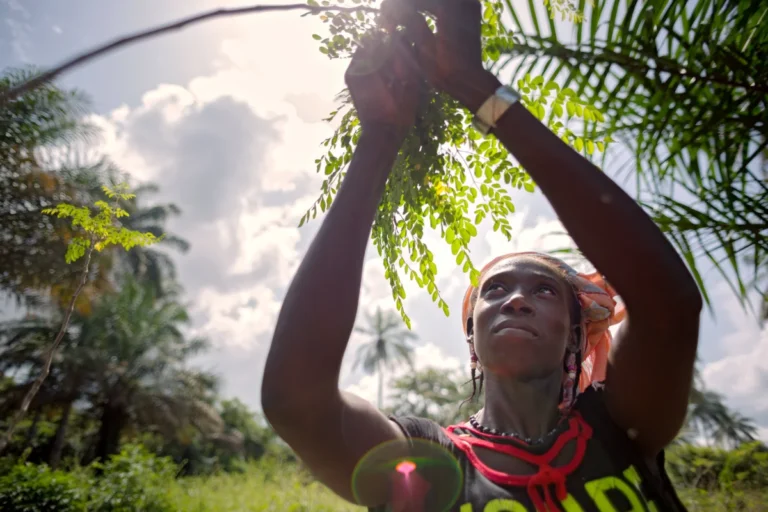
The call for gender-responsive action also extends to the very structure of the COP negotiations themselves. UN Women maintains that achieving true climate justice requires the full, equal, and meaningful participation of women in all levels of decision-making. This is particularly true for women on the frontlines of the crisis, such as Indigenous leaders and rural farmers, whose lived experiences provide invaluable insights into adaptation and resilience. When women are at the table, the resulting policies are more likely to be sustainable, community-oriented, and equitable.
As the lead United Nations entity for gender equality, UN Women’s role at COP30 is part of its broader mission to shift laws, institutions, and social behaviors to close the global gender gap. The organization operates on the fundamental belief that gender equality is not a “fringe concern” or a luxury to be addressed once the planet is stabilized. Rather, it is the very foundation upon which a stable and just planet must be built. The climate crisis is the greatest challenge of our time, but it also presents an opportunity to rebuild our global systems in a way that values every human being.
In the coming days in Belém, the pressure will be on global leaders to prove that they are listening. The adoption of a transformative Gender Action Plan would signal a renewed commitment to the idea that human rights and environmental health are inextricably linked. For the women of the world—those harvesting vegetables in climate-smart gardens in Kenya, those defending the Amazonian rainforest, and those navigating the aftermath of floods in Southeast Asia—the stakes could not be higher. They are not waiting for permission to lead; they are already doing the work. What they require now is a global framework that supports their efforts, protects their rights, and ensures that the future of climate action is a future that belongs to everyone.