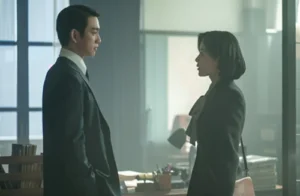

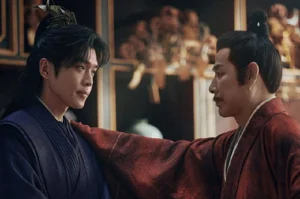
The wait for the highly anticipated continuation of the historical political drama Joy of Life, starring the captivating Zhang Ruoyun, may soon be over. After a five-year hiatus that only amplified fan fervor, promising news has emerged suggesting a strategic approach to filming the remaining seasons. Tian Yu, who masterfully portrays Fan Xian’s steadfast confidant Wang Qinian, recently shared insights that have sent ripples of excitement through the show’s dedicated fanbase. He revealed that the production team is actively targeting the end of this year or early next year to commence filming, contingent on the finalization of the script. Even more thrilling, Tian Yu hinted at the possibility of filming Seasons 3 and 4 back-to-back, a move that could significantly streamline the production process and ensure greater continuity.
This ambitious plan is fueled by the sheer scale and depth of the narrative. Even after two successful seasons, Joy of Life has only managed to adapt a fraction of the original novel’s intricate plot. Many of the most pivotal and eagerly awaited story arcs remain unaddressed on screen. Fans are still holding their breath for the dramatic unfolding of the Battle of Dongshan, the tumultuous Kyoto rebellion, the poignant and tragic demise of Chen Pingping, and the ultimate showdown between Fan Xian and the formidable Qing Emperor. Since Season 2 concluded its broadcast in 2024, a chorus of viewer pleas has echoed across social media platforms and fan forums, urging the production to press onward and bring the complete saga to life.
According to Tian Yu’s statements, the progress of screenwriter Wang Juan is paramount to setting the production timeline in motion. However, his comments strongly indicate that the creative minds behind Joy of Life are envisioning a narrative arc that extends beyond a singular third season. For a vast segment of the show’s devoted audience, this is the most welcome development imaginable. The prospect of condensing such a sprawling and complex story into just one more season would inevitably necessitate significant cuts or rushed pacing, potentially diminishing the impact of crucial plot points and disappointing viewers who have invested so deeply in the novel’s rich tapestry. By expanding the adaptation to include a fourth season, the narrative is afforded the necessary breathing room to fully explore its most compelling moments and ensure that its grandest scenes are rendered with the epic scope they deserve.
Beyond the narrative imperative, the decision to film multiple seasons concurrently addresses a significant practical challenge: preserving cast continuity. Assembling the original ensemble, a roster of highly sought-after talent including Zhang Ruoyun, the esteemed Chen Daoming, the versatile Li Qin, the charismatic Song Yi, the popular Guo Qilin, and the elegant Li Xiaoran, is a monumental undertaking. Chen Daoming, in particular, whose age has been a subject of past speculation regarding his potential withdrawal from Season 3 due to the physically demanding nature of the role, adds another layer of complexity to scheduling. The worry among fans has been palpable, with many fearing that the integrity of the original cast might be compromised, thereby altering the chemistry that has made the show so beloved.
Season 2 itself faced some headwinds regarding casting changes, with the introduction of new actors for the roles of Ye Ling’er and Yan Bingyun eliciting a mixed response from viewers. Many felt that these replacements did not quite capture the essence and nuance of the original portrayals, sparking discussions about the challenges of recasting beloved characters. Filming the remainder of the story in a single, extended production block could therefore prove to be the most astute strategy. This approach would not only safeguard cast continuity by allowing for simultaneous scheduling and minimizing the need for individual actor availability over extended, staggered periods, but it would also preemptively mitigate the risk of further delays or disruptive casting alterations. The unified production of Seasons 3 and 4, therefore, represents a strategic masterstroke, aimed at delivering a cohesive and high-quality continuation that honors the source material and satisfies the immense expectations of its global audience.
The enduring success of Joy of Life is a testament to its exceptional storytelling, compelling characters, and breathtaking production values. The first season, which premiered in 2019, captivated audiences with its unique blend of historical intrigue, witty dialogue, and a protagonist who navigates a complex political landscape with a modern sensibility. Zhang Ruoyun’s portrayal of Fan Xian, a young man with a mysterious past and an uncanny understanding of strategy and human nature, resonated deeply with viewers. He masterfully balanced the character’s cunning intellect with moments of vulnerability and unexpected humor, making him an instantly iconic figure in the landscape of Chinese television. The series’ ability to weave together intricate political machinations, martial arts action, and poignant personal relationships created a viewing experience that was both intellectually stimulating and emotionally engaging.
The long gap between Season 1 and Season 2, while frustrating for fans, also allowed for meticulous script development and preparation, contributing to the high quality of the second installment. Season 2 picked up threads from the first season, delving deeper into Fan Xian’s journey as he grapples with his newfound responsibilities and the dangerous machinations of the imperial court. The introduction of new characters and the expansion of the world-building further enriched the narrative, while maintaining the signature tone and style that had garnered such a devoted following. However, the scale of the novel’s remaining plotlines means that even two full seasons have only scratched the surface of the epic tale.
The novel, written by Mao Ni, is renowned for its intricate world-building, philosophical undertones, and complex character development. It explores themes of destiny, free will, the corrupting nature of power, and the search for meaning in a world rife with conflict. The adaptation has been praised for its faithful yet dynamic interpretation of these themes, making it a standout in the historical drama genre. The anticipation for the subsequent seasons stems from the knowledge of the epic events that lie ahead in the novel, events that promise to escalate the stakes and deepen the emotional impact of Fan Xian’s journey. The potential for filming Seasons 3 and 4 back-to-back addresses the very real concern that a prolonged production schedule could lead to significant shifts in the actors’ appearances or even their willingness to commit to a project spanning several more years.
Tian Yu’s role as Wang Qinian is particularly significant. His character serves as Fan Xian’s loyal protector and a source of both comic relief and unwavering support. Wang Qinian’s perspective often provides a grounded counterpoint to Fan Xian’s more ambitious and world-weary outlook. Tian Yu’s insights carry considerable weight, as he is privy to the internal discussions and planning surrounding the future of the series. His confirmation of the potential for simultaneous filming is a strong indicator of the production’s commitment to seeing this ambitious project through to its conclusion.
The challenges of maintaining cast continuity are amplified by the seniority and demanding schedules of some of the key actors. Chen Daoming, a legendary figure in Chinese cinema and television, brings an unparalleled gravitas to his role as the Emperor. His presence is a cornerstone of the series’ authenticity and dramatic weight. While rumors of his potential departure have circulated, the prospect of filming both remaining seasons concurrently could offer a more manageable and appealing commitment for actors of his stature, allowing them to complete their involvement in a concentrated period rather than spread across years.
Furthermore, the lessons learned from the recasting in Season 2 are likely to inform the production’s strategy for the remaining seasons. While the new actors were undoubtedly talented, the audience’s strong emotional attachment to the original portrayals created a hurdle that was difficult to overcome. By prioritizing the retention of the core cast for the entirety of the remaining narrative, the production team can ensure a seamless transition and avoid alienating viewers who have invested so heavily in the established characters. This holistic approach to production planning, from script finalization to actor availability and audience reception, underscores the dedication to delivering a final product that lives up to the immense expectations.
The news of Seasons 3 and 4 potentially being filmed together is more than just an update; it’s a strategic promise. It signals a commitment to not only completing the story but doing so in a way that preserves its artistic integrity and the magic that has captivated millions. The wait has been long, but the prospect of a more cohesive and efficiently produced continuation of Joy of Life offers a beacon of hope for fans eager to witness the epic conclusion of Fan Xian’s extraordinary journey. The intricate dance of political power, personal loyalty, and the relentless pursuit of justice is poised to reach its crescendo, and the synchronized production of the final two seasons is the key to ensuring that this grand finale is delivered with the impact and brilliance it deserves.