

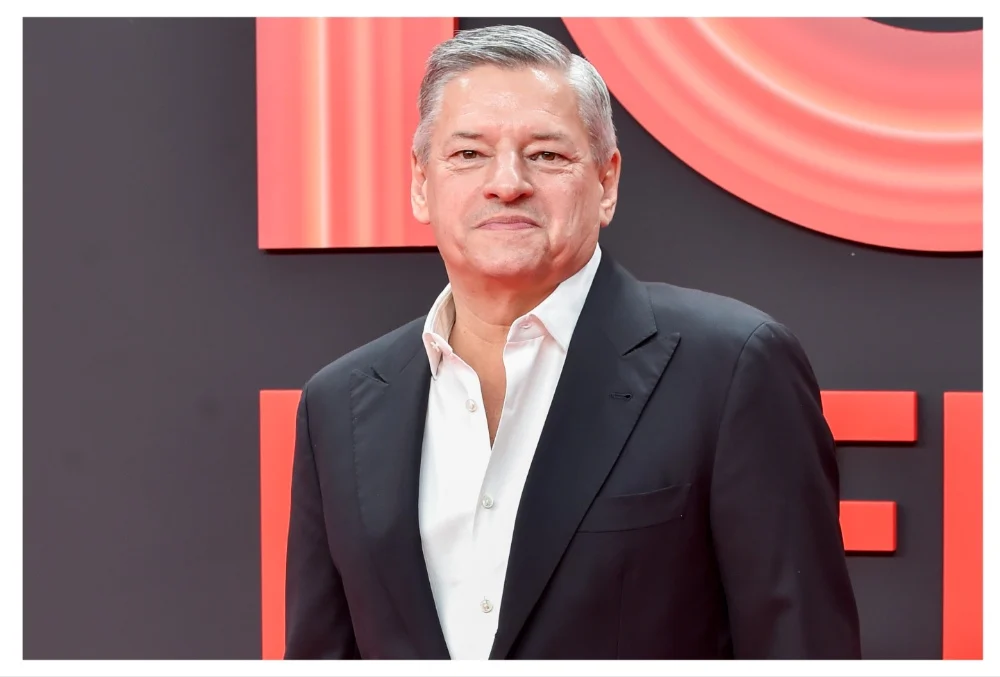
In the high-octane world of media mergers and acquisitions, Netflix co-CEO Ted Sarandos is not one to stand idly by. With characteristic directness and unwavering conviction, Sarandos has launched a vigorous public campaign to underscore why Netflix remains the rightful and ultimate owner of Warner Bros. Discovery (WBD). His assertive advocacy comes at a pivotal moment, as the WBD board, despite a signed agreement with Netflix, recently re-engaged in negotiations with a rival bid from Paramount Skydance. Far from being rattled, Sarandos views this intensified competition as a mere distraction, a “minor hurdle” in the path toward a strategic endgame that he believes will redefine the entertainment landscape.
Sarandos’s proactive stance is a notable departure from Netflix’s historically insular “build, not buy” philosophy. For years, the streaming behemoth meticulously cultivated its content library and technological infrastructure from within, shunning the mega-mergers that reshaped legacy media. Yet, the pursuit of WBD represents a calculated and strategic pivot, signaling Netflix’s readiness to acquire established intellectual property and production capabilities to further cement its global dominance. This shift underscores a broader industry trend where content ownership, scale, and direct-to-consumer relationships are paramount. Sarandos, a seasoned veteran of Netflix’s transformative journey from DVD-by-mail service to a global streaming powerhouse, is now applying his strategic acumen to an external acquisition of unprecedented scale.
The intensity of the current bidding war has brought with it an expected flurry of competitive tactics, including what Sarandos dismisses as “misinformation” emanating from the Paramount Skydance camp. He doesn’t mince words, suggesting that the rival’s efforts are more about generating “noise” than presenting a genuinely superior offer. “It’s probably cheaper to make noise than it is to raise your bid,” Sarandos remarked in a recent interview from Netflix’s Hollywood headquarters, a statement that encapsulates his confident and somewhat dismissive view of the ongoing maneuvering by Paramount Skydance CEO David Ellison.
While Sarandos remains strategically tight-lipped about the granular details of a post-merger Netflix-WB-HBO entity, he has offered tantalizing glimpses into his vision for an expanded media empire. This includes a commitment to preserving the sacrosanct 45-day theatrical exhibition window for Warner Bros. films – a promise he has dramatically termed a “blood oath.” This commitment marks a significant evolution for Netflix, which has historically been at odds with the traditional theatrical model. Furthermore, he pledges to uphold the existing paid download home entertainment window, explicitly stating that Warner Bros. films would not immediately stream on Netflix or HBO on Day 46, a crucial assurance for studios and exhibitors alike. Beyond these operational specifics, Sarandos envisions a unified entity better positioned to compete with the broadest spectrum of entertainment, including digital titans like YouTube, a competitor he openly acknowledges and against whom he admits to having felt the sting of defeat, notably in the bid for the Academy Awards TV rights pact.
The journey to this current impasse began on December 5, when Netflix’s initial agreement with WBD was signed and unanimously endorsed by the latter’s board, poised for shareholder approval. Sarandos expressed genuine surprise at the protracted nature of the process, particularly the “remarkable amount of noise” generated by Paramount since the deal’s announcement. He meticulously recounted the WBD board’s transparent bidding process, contrasting it with Paramount’s alleged missteps. According to Sarandos, Paramount had “missed every deadline,” was “bidding for assets that weren’t for sale,” and demonstrated a persistent “lack of clarity” regarding their offer. This ambiguity, he asserts, directly led to the current seven-day window granted to Paramount, a concession aimed at bringing much-needed clarity to WBD shareholders.
This seven-day extension, allowing Paramount to present a more concrete and compelling offer, was not a sign of weakness from Netflix, Sarandos insists. Instead, he framed it as a “sign of confidence” and a strategic move to eliminate any potential “black cloud” of shareholder uncertainty or future litigation. The Netflix board, he revealed, quickly agreed to the waiver, recognizing its value in providing “complete certainty and clarity.” Critically, this extension also served to “bring this thing to a head,” setting a definitive date for the shareholder meeting and accelerating the regulatory review process, which otherwise could have lingered for months.
As the Monday, February 23 deadline loomed for Paramount Skydance to firm up its offer, the media world held its breath. Should WBD’s board deem Paramount’s revised proposal superior, Netflix would then have a four-day window to match it. Sarandos, ever the disciplined negotiator, remained tight-lipped about Netflix’s counter-strategy. “The next move is up to somebody else,” he stated, reiterating Netflix’s reputation as “super-disciplined buyers.” He underscored their willingness to “walk away and let someone else overpay for things,” a sentiment rooted in Netflix’s history of calculated investments rather than speculative acquisitions. This disciplined approach is a cornerstone of Netflix’s financial strategy, balancing aggressive growth with fiscal prudence, a message that resonates strongly with investors and analysts scrutinizing multi-billion-dollar deals.
The regulatory landscape is another critical battleground in this acquisition saga. Paramount recently announced the completion of its Hart-Scott-Rodino (HSR) process, a mandatory antitrust filing. Sarandos, however, swiftly downplayed this, characterizing it as merely “turning in the homework” rather than receiving a “passing grade.” He highlighted the distinction between submitting paperwork and gaining actual approval, a point often overlooked in the public discourse surrounding complex mergers. Netflix, he confirmed, is “deep into the regulatory process” as well, engaging with authorities in multiple jurisdictions, including the UK, where he noted Paramount’s unusual decision to issue a press release about meeting with a culture secretary. Netflix, by contrast, prefers to conduct these discussions out of the public eye, adhering to traditional Department of Justice merger guidelines.
A central tenet of the regulatory review hinges on market concentration and potential monopolistic practices. Sarandos vehemently rejects claims that a combined Netflix-WBD entity would constitute a monopoly. Citing Nielsen’s “The Gauge,” which tracks streaming market share, he pointed out that Netflix commands approximately 9% of the business, rising to roughly 10% when combined with HBO. These figures are a far cry from the 50-70% market share typically associated with monopoly concerns. Furthermore, Sarandos argues for a broader definition of the competitive market, one that undeniably includes platforms like YouTube. He emphasized that Netflix competes directly with YouTube for “television screen” viewing time, advertising dollars, subscription revenue, and even talent. To exclude YouTube, a platform where consumers spend a significant amount of their screen time, from the competitive analysis would be “indulging fantasy,” he asserted, stressing that “the television screen itself is a zero-sum game.” This expansive view of competition is crucial in shaping regulatory perceptions and fending off demands for concessions.
Sarandos was particularly sharp in his critique of Paramount Skydance’s alleged “misinformation” campaign, directly accusing them of disseminating “knowingly, provably wrong” information, such as exaggerated claims of Netflix’s market share. He also suggested that the “woke content” criticisms leveled during a Senate hearing were likely fed by Paramount’s communications and policy teams, designed to “distract from what we have, which is a superior offer.” For Sarandos, these tactics are an attempt to “attack ours, instead of just making a superior offer yourself.” This robust defense highlights the often-aggressive undercurrents of high-stakes corporate contests, where perception and narrative can be as important as financial figures.
Beyond the market share debate, Sarandos also scrutinized the financial underpinnings of Paramount’s bid. Based on their public filings, Paramount outlined $6 billion in synergies, primarily cost savings. However, Sarandos performed his own calculations, projecting that Paramount would need to de-lever significantly—from a proposed six to seven times levered to a more sustainable two to three times—within a mere 18 months. This ambitious deleveraging, he estimates, would necessitate at least $16 billion in cuts, far exceeding the stated synergies. “Their biggest cost centers are production and people,” Sarandos noted, implying that such aggressive cost-cutting would inevitably lead to “job cuts” and “fewer productions.” This directly contrasts with Netflix’s proposed “vertical merger,” which, according to Sarandos, would involve adding assets and investing further, thereby preserving and even increasing jobs and production output.
Netflix’s strategy, he explained, is not about dismantling or consolidating in the traditional sense of a “horizontal media merger” (like Disney-Fox, which saw a reduction in film output). Instead, it’s about leveraging Netflix’s robust balance sheet and distribution model to “better monetize” WBD’s existing assets. “We need all those people to keep making them,” Sarandos declared, committing to running Warner Bros. and HBO “largely like it is today,” but with enhanced business models and broader distribution. This commitment to maintaining creative output and employment is a powerful counterpoint to the concerns surrounding industry consolidation, appealing not only to regulators but also to the creative community and the broader workforce.
A significant component of the WBD deal is the future of HBO, a brand synonymous with prestige television. Sarandos expressed deep respect for HBO’s legacy and its creative leadership, including Casey Bloys. His vision is clear: HBO will “keep being exactly what it is,” a purveyor of “great stories” and “prestige television.” He believes it doesn’t need to morph into a general entertainment brand to achieve scale, emphasizing that Netflix excels at taking “great stories and making them big.” While HBO Max would continue as a standalone product, Sarandos hinted at potential bundling options with Netflix subscriptions, leveraging the significant overlap in their subscriber bases (85% of HBO subscribers also subscribe to Netflix). He even mused about dropping the “Max” from the name, asserting that “everyone loves HBO” and the brand “doesn’t actually needs any amplifiers.” This nuanced approach seeks to harness HBO’s unique identity while integrating it into Netflix’s expansive ecosystem.
The acquisition also raises questions about consumer value and pricing power, especially given the current streaming fatigue. Netflix, without ads, costs around $18 per month, while HBO Max is approximately $18.50. Sarandos positioned Netflix as a “champion of consumer value,” reiterating its history of “giving more for less.” He argued that subscribers who already pay a premium for both services would find “tremendous value in a combined service,” potentially even benefiting from discounts. For those who prefer HBO exclusively, it would remain available as a standalone offering. This strategy aims to assuage regulatory concerns about rising costs while maximizing the economic benefits of integration. The ultimate upside, Sarandos believes, lies in expanding Netflix’s “engagement view time” beyond its current 10%, capturing more moments of consumer attention and thereby increasing the perceived value of the combined offering.
Sarandos’s willingness to pursue WBD marks a unique chapter for Netflix, largely driven by the specific carve-out of assets. Unlike previous opportunities, this deal presents WBD’s film and television studios, and critically, HBO, separate from its legacy linear television channels (CNN, TNT, etc.)—assets Netflix had no interest in acquiring. This bespoke nature of the WBD offering made it uniquely attractive, aligning with Netflix’s strategic priorities without entangling it in the complexities of traditional cable television. As the deadline for Paramount’s counter-offer passes and the regulatory machinery grinds on, the media world watches closely. Ted Sarandos, through his confident leadership and articulate strategic vision, is not just bidding for an asset; he’s attempting to chart a new course for Netflix and, in doing so, reshape a significant portion of the global entertainment industry.