



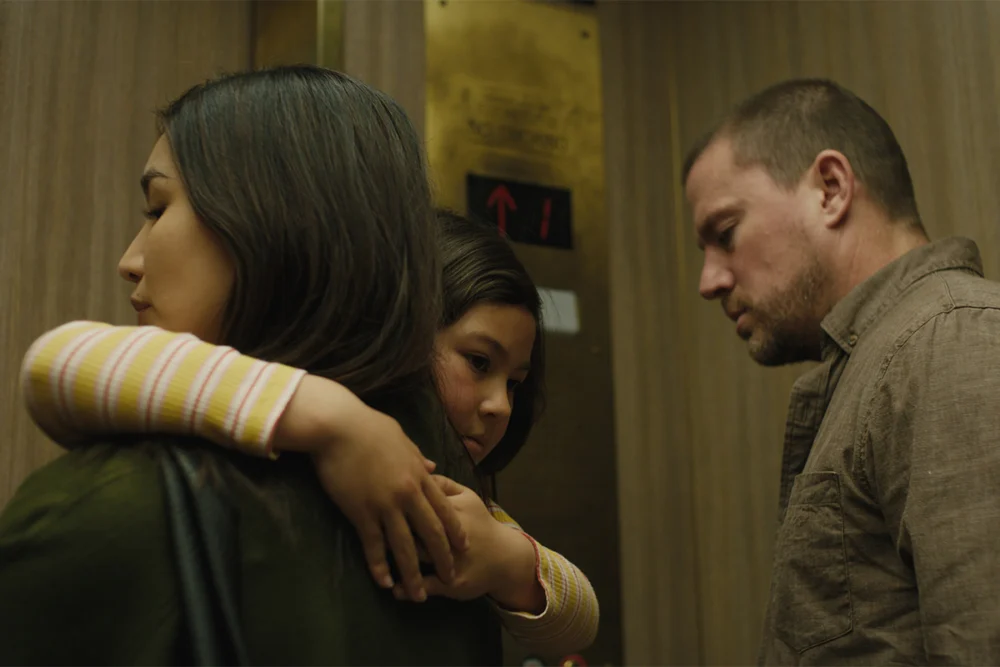
For actress Gemma Chan, the journey to bring “Josephine” to the screen was far more than just another role; it was a deeply personal odyssey, resonating with profound experiences from her own life. The British star, celebrated globally for her captivating performances in blockbusters like “Crazy Rich Asians” and the Marvel Cinematic Universe epic “Eternals,” steps into a dramatically different, yet equally impactful, role in Beth de Araújo’s poignant new film. In “Josephine,” Chan embodies Claire, a mother thrust into an unimaginable ordeal as she grapples with the aftermath of her 8-year-old daughter, Josephine (portrayed by the remarkable newcomer Mason Reeves), witnessing a brutal rape in a serene San Francisco park. The narrative meticulously navigates the emotional labyrinth faced by Claire and her husband Damien (a performance by Channing Tatum described as strikingly vulnerable) as they confront the agonizing decision of whether to permit their young daughter to testify in a court case that hinges on her fragile testimony.
Chan’s career trajectory has been a fascinating blend of commercial success and artistic integrity. From her breakout role as Astrid Leong-Teo in “Crazy Rich Asians,” where she became a beacon of grace and strength, challenging preconceived notions of Asian representation in Hollywood, to her commanding presence as Sersi in “Eternals,” she has consistently chosen roles that resonate with depth and nuance. “Josephine” marks a pivotal moment, showcasing her commitment to character-driven drama that delves into the darker, more complex facets of the human condition. It’s a testament to her evolving artistry that she can transition from global blockbusters to an intimate, emotionally charged independent film, imbuing each character with a unique authenticity that captivates audiences worldwide. This latest venture underscores a deliberate choice to explore narratives that are not just entertaining, but profoundly meaningful, prompting reflection and challenging societal norms.
The genesis of “Josephine” is as compelling as the film itself. Director Beth de Araújo drew inspiration from a harrowing experience she endured as a child, lending an unparalleled authenticity and vulnerability to the screenplay. This foundation struck a powerful chord with Chan, whose own life had been marked by a similar, traumatic event. In 2012, while residing in London, Chan bore witness to a fatal stabbing and, with immense courage, chose to testify in court. This experience, etched into her memory, provided an immediate and visceral connection to the film’s central themes of trauma, witnessing, and the daunting path to justice. Her personal history didn’t just inform her performance; it became an intrinsic part of her commitment to the project, elevating the narrative beyond mere fiction.
Reflecting on her decision to join the film, Chan shared with *Variety*, just two days prior to “Josephine’s” international premiere at the prestigious Berlin Film Festival, that her personal experience was a significant driving force. “It was a big part of me wanting to be a part of the story and connecting to it emotionally,” she articulated, her voice carrying the weight of her conviction. “The world is a very dangerous place. Unfortunately, I know that and many people know that. It just really hit a raw nerve with me.” This profound statement underscores the film’s universal resonance, acknowledging the pervasive nature of violence and the shared human experience of confronting its aftermath. For Chan, “Josephine” became an opportunity not only to portray a character but to channel her own understanding of resilience in the face of harrowing circumstances.
Chan’s commitment to “Josephine” was unwavering from its earliest stages. She was the first artist to sign onto the project after de Araújo shared the script with her in 2019. From that initial reading, Chan recognized the singular vision and profound truth embedded within every page. “I really believed in her vision for the film and it just felt like there was so much truth in every page of the script,” she explained. What particularly resonated with Chan was de Araújo’s nuanced approach to such sensitive subject matter. “It was attempting to tell a story that I didn’t feel had any been told in that way before. This is very challenging, difficult subject matter, but I never felt that she was coming at it from an angle that was exploitative or trying to sensationalize anything.” This discerning perspective speaks volumes about Chan’s integrity as an artist, her insistence on narratives that explore trauma with empathy and respect rather than for shock value. De Araújo, known for her unflinching examination of uncomfortable truths in her work, including her critically acclaimed 2022 psychological thriller “Soft & Quiet,” found in Chan an equally committed partner who understood the delicate balance required for such a film.
The path to production for “Josephine” was, however, far from straightforward. The global COVID-19 pandemic cast a long shadow, forcing an indefinite delay in filming. This unexpected pause meant that de Araújo, a burgeoning talent in independent cinema, went on to direct “Soft & Quiet” first, gaining significant critical attention for her intense and claustrophobic debut. Yet, despite the intervening projects and the inherent challenges of independent filmmaking, “Josephine” remained a steadfast presence in the minds of both Chan and de Araújo. “It was a bit of a winding road,” Chan admitted, hinting at the numerous obstacles that could have easily derailed the project entirely. However, fueled by a shared passion and an unyielding belief in the story’s importance, filming finally commenced in the spring of 2024. This eventual triumph was largely thanks to the crucial support of producer David Kaplan, alongside the significant commitment from Chan and Tatum, who not only starred but also signed on as producers, investing their own capital and influence to bring the vision to life. This move underscores the power of actor-producers in shepherding challenging, independent narratives through the often-turbulent waters of film financing and production.

For Chan, the realization of “Josephine” was nothing short of miraculous. “It’s a small miracle that the film was made and I’m so proud of it,” she stated, her voice imbued with a sense of accomplishment and relief. “I wanted to do whatever I could to help the project get off the ground.” This sentiment highlights not only her dedication as an actress but also her growing influence as a formidable force behind the camera, actively shaping the landscape of storytelling. Her transition into a producing role for “Josephine” reflects a broader trend among leading actresses who are leveraging their platforms to champion stories they believe in, ensuring diverse and meaningful narratives reach wider audiences. This commitment goes beyond the call of duty, signaling a deep personal investment in the film’s message and its potential impact.
In “Josephine,” Chan delivers a performance that critics have lauded as “quietly powerful.” Her portrayal of Claire is a masterclass in nuanced acting, where unspoken emotions often convey more than dialogue. Throughout many heart-wrenching scenes, Chan skillfully communicates a profound inner turmoil and unwavering maternal instinct with her eyes, creating a deeply empathetic and raw portrayal of a mother’s agony. This ability to convey complex emotional states through subtle expressions is a hallmark of her refined craft. Chan credits the collaborative and supportive environment on set for fostering the vulnerability required for such an intense role. “Nothing had to be forced,” she reflected, emphasizing the organic nature of their creative process. “It was really a place where we could find the truth of the scene and I was able to be just emotionally truthful.” This speaks to de Araújo’s directorial approach, which prioritizes authenticity and emotional honesty, allowing her actors the space to truly inhabit their characters without artifice.
A secret weapon in the film’s powerful ensemble was the extraordinary Mason Reeves, who portrays the titular Josephine. De Araújo discovered Reeves at a local farmer’s market, a serendipitous encounter that brought an untrained but incredibly gifted talent to the project. Reeves, with no prior acting experience, brought an unparalleled rawness and authenticity to her role as the young witness. Chan was effusive in her praise for her young co-star, acknowledging the profound impact Reeves had on the seasoned actors around her. “She really brought out the best in Channing and I,” Chan shared, highlighting the fresh energy and uninhibited honesty Reeves brought to every scene. “There was no artifice at all. I’m just in awe of her — she’s amazing and wise beyond her years.” This natural, unvarnished performance from Reeves undoubtedly anchored the film’s emotional core, providing a genuine and heartbreaking portrayal of childhood innocence confronted by brutal reality, prompting both Chan and Tatum to deepen their own performances.
The film’s reception since its premiere has been nothing short of triumphant. When “Josephine” debuted at the Sundance Film Festival, one of the world’s most prestigious platforms for independent cinema, Chan admitted to having no preconceived notions about how it would be received. The festival, renowned for its discerning audiences and critical eye, proved to be the perfect launching pad. Watching the film with an audience for the first time, Chan experienced a profound sense of relief and gratification. “It was special and I was really moved by the way that people connected with it,” she recounted. “For it to have won the awards is just the icing on top.” Indeed, “Josephine” emerged as one of Sundance’s biggest breakouts, securing both the coveted Grand Jury Prize and the Audience Award. This dual recognition signifies not only critical acclaim but also a powerful emotional resonance with viewers, a testament to its compelling narrative and powerful performances. The film’s success at Sundance immediately generated significant industry buzz, positioning it as a strong contender for future awards seasons and validating the long, arduous journey to its completion.
With its Sundance triumph under its belt, “Josephine” is now poised to reach a broader audience. The film has recently been acquired for U.S. release by Sumerian Pictures, a relatively new distributor making significant strides in the independent film landscape. While Sumerian Pictures may not yet be a household name, Chan expresses profound confidence in their ability to shepherd “Josephine” to the audiences it deserves, especially as early awards buzz continues to mount. “I feel that they really believe in the film and understand what it is and they are really excited for audiences to see it,” she affirmed, emphasizing the importance of alignment between filmmakers and distributors. “We were very much led by what Beth felt was right and it just felt like it was a good match for a whole bunch of different reasons.” This strategic partnership reflects a growing trend where independent filmmakers prioritize passionate, dedicated distributors who deeply understand and champion their artistic vision, ensuring the film receives a thoughtful and impactful rollout rather than being lost in the shuffle of larger studio releases.
The film’s journey continues to unfold on the international stage, with its highly anticipated premiere in competition at the Berlin Film Festival. As “Josephine” seeks distribution across Europe, Chan remains hopeful, her “fingers crossed” that buyers at the Berlinale will recognize the film’s profound impact and secure its wider global reach. Beyond commercial success, Chan articulates a deeper aspiration for “Josephine”: to ignite vital conversations among festivalgoers and, eventually, with audiences worldwide. The film, she believes, poses a fundamental and timely question: “The film asks the question, ‘How does a young person deal with the violence of the world?’ And really, that can extend to all of us,” she explains, broadening the scope of the film’s inquiry. “How do we persevere, how do we respond, how can we overcome fear and hatred and trauma and still hold onto our humanity? And that’s a question that I think is really important for where we are at the moment in the world.” In an era marked by increasing global anxieties and societal challenges, “Josephine” stands as a powerful artistic statement, offering a mirror to our collective struggles and a testament to the enduring human spirit. It is a film that not only entertains but also challenges, provokes, and ultimately, inspires empathy and resilience, making it an essential watch for audiences seeking stories that illuminate the complexities of life and the unwavering strength of the human heart.