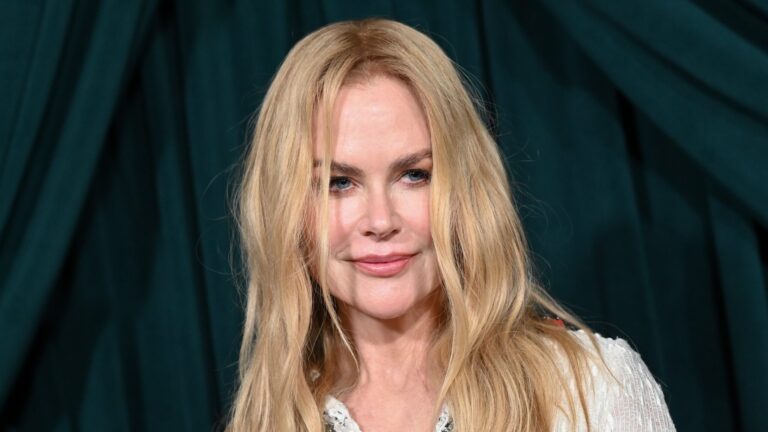




Indian actor Sheena Chohan, a versatile talent celebrated for her compelling performances across various languages and platforms, is set to make a significant entry into Tamil cinema as the lead in "Arjunanin Allirani." This powerful Tamil-language drama promises to be a poignant exploration of folk artistry and the pervasive issue of caste discrimination, aligning perfectly with Chohan’s commitment to socially conscious narratives and demanding roles that push the boundaries of her craft. Her casting in this pivotal project not only marks a new chapter in her diverse career but also underscores her growing influence as an artist who champions meaningful storytelling.
"Arjunanin Allirani" is poised to be a cinematic event, helmed by an esteemed creative team. The screenplay is penned by the acclaimed Tamil author B. Jeyamohan, known for his profound and often complex narratives that delve deep into human psychology and societal structures. Directing the film is Vino Vikraman Pillai, whose previous work, "Kafir," hinted at his ability to tackle sensitive subjects with nuance and gravitas. The film’s musical landscape will be crafted by none other than the legendary composer Ilaiyaraaja, whose melodies have transcended generations and cultural barriers, making him an icon in Indian cinema. His involvement alone signals the film’s artistic ambition and potential for widespread appeal. For Chohan, this project represents her formal debut in Tamil cinema, adding another vibrant language and industry to her already impressive filmography that spans Malayalam, Hindi, and international productions.
At its core, "Arjunanin Allirani" is an intimate yet expansive tale following two marginalized artists: a folk dance performer and a Dalit singer. Their intertwined relationship forms the emotional heart of the narrative, serving as a lens through which the film examines larger societal issues. The story meticulously traces the arduous journey of the female protagonist, Rani, as she navigates profound family tragedies and ultimately seeks justice, transforming her art into a powerful tool for resistance and advocacy. This narrative structure allows for a deep dive into the lives of individuals often relegated to the fringes of society, shedding light on their resilience, struggles, and inherent dignity.
Chohan steps into the shoes of Rani, a character whose arc is extraordinary in its breadth and complexity. Produced by Irfan Khan for EBG Films, the role demands Chohan to portray Rani across four distinct life phases, charting her evolution from her innocent teenage years through to her resilient middle age. Such a role requires not only immense emotional range but also significant physical prowess. Rani’s journey is punctuated by moments that call for extensive martial arts training, specifically in Chilambattam, a traditional Tamil stick-fighting technique. This ancient martial art, deeply rooted in Tamil culture, adds an authentic layer to the character’s strength and her connection to her heritage, making the physical demands of the role as challenging as its emotional ones.
Director Vino Vikraman Pillai articulated the multifaceted nature of Rani, emphasizing the transformative journey Chohan is embarking upon. "Rani is a young woman who spends her formative years immersed in devotion, singing hymns to God in temples," Pillai told Variety. "Beginning with the vibrancy and innocence of her twenties, her life unfolds across four distinct phases, tracing her journey from youth to middle age. To authentically portray this evolution, the actress taking on the role must master martial arts, including Chilambattam. As the narrative moves through different eras, the character undergoes significant physical and emotional transformations, requiring the actress to adapt her appearance and presence accordingly." This detailed description highlights the immense preparation and dedication required for Chohan to embody Rani fully.
Pillai’s account of Chohan’s casting was one of serendipity, a fortunate alignment of talent and vision. "From our very first conversation, I was struck by her deep passion and dedication to her craft," he shared. "When I shared the story of Allirani, she showed a genuine and immediate interest. The character of Rani is a powerful and resilient woman, whose journey spans from her teenage years to middle age. The role also demands extensive martial arts sequences, a challenge Sheena is exceptionally well suited for, given her many years of training and experience in martial arts." This affirmation from the director underscores Chohan’s natural suitability for such a demanding role, a testament to her long-standing commitment to honing her skills.
For Chohan, the appeal of "Arjunanin Allirani" lies in its profound alignment with her longstanding commitment to socially grounded material. She is an actor who shies away from superficiality, constantly seeking characters that offer depth and a chance for genuine artistic exploration. "I did so much theatre and acting training, that it’s a waste to do a flat character," she passionately expressed to Variety. Her philosophy extends beyond merely interpreting a script; she believes in infusing every role with authentic human complexity. "Also, if you have your acting skills sharpened, you can, and should, give what appears to be a one-note character more depth — of course the most important thing is to be a blank page for your director and give them what they want for the story, but no real people are shallow and morally simple, so I don’t like any of my characters to be." This insight reveals her dedication to crafting believable, nuanced portrayals, even within the confines of a director’s vision.
Beyond her artistic pursuits, Chohan is a vocal advocate for human rights, serving as the United for Human Rights South Asia Ambassador. This advocacy directly influences her project choices, guiding her towards narratives that resonate with her values and away from those that might perpetuate harmful stereotypes. "I turn down so many films because of derogatory or degrading roles," she stated, highlighting her ethical approach to her career. Yet, she remains optimistic about the evolving landscape of the industry. "But the good news is that the industry is changing — with all of the good work of women like the Women’s Collective in Kerala, and women and men across the country and world pushing against discrimination — new characters and stories are being written which show women as equal citizens — real-life, breathing, thinking humans, not just pretty Christmas tree decorations." This statement reflects a broader cultural shift, where actors and filmmakers are increasingly seeking to portray women with authenticity and agency, a movement Chohan actively supports and contributes to through her choices.
Chohan’s recent work offers a glimpse into her versatility and dedication. Earlier this year, she made her Hindi-language feature film debut in Aditya Om’s biopic "Sant Tukaram," where she portrayed Avali Jijabai, the wife of the titular saint. Her performance in the film was widely lauded for its quiet power and profound emotional depth, showcasing her ability to inhabit historical figures with grace and conviction. This role, demanding a portrayal of strength and resilience amidst spiritual devotion, served as a powerful introduction to her talent for a broader Hindi-speaking audience.
Her performance approach is deeply rooted in rigorous character research and a technique honed during intensive training at The Acting Center in Los Angeles, an experience she underwent while working on the Hollywood film "Nomad." This foundational training equipped her with a systematic way to delve into the psyche of her characters. "What I learned was how to develop a character in terms of understanding their inner thoughts and motivations overall and in each scene," she explained. For "Sant Tukaram," this meant an immersive process. "So, while I read and watched everything connected to Avali Jijabai, including having the original 17th century historical texts read to me and working and eating with the village women who still work the fields Avali worked in, I then used all of that gathered information to truly understand and fit into her character, so that my reactions were natural." This meticulous preparation ensures that her portrayals are not merely acted but genuinely lived.
Reflecting on her Hindi debut, Chohan expressed a particular sense of accomplishment in seeing the film play across theaters in Mumbai, her current base. "After doing five years of theater, training in my craft, martial arts and dance in Kolkata, I shifted to Mumbai keeping it as a base but working pan India in different languages with legendary directors nationally and internationally," she recounted. "But living in Mumbai, it was deeply special to see ‘Sant Tukaram’ playing across theatres here and release nationwide. Having friends and colleagues join me at the Mumbai — national premiere did feel like an arrival. But creatively, it was never a reset — it was a continuation." This sentiment highlights the dual nature of an actor’s journey: the personal satisfaction of reaching a new milestone coupled with the ongoing evolution of one’s craft.
Chohan’s upcoming slate is as diverse as her journey so far. She has completed work on J.D. Chakravarthy’s pan-India thriller "Jatasya Maranam Dhruvam," in which she takes on the role of a police officer. This character, starkly different from a saint’s wife, required another layer of intense immersion. "I literally followed a policewoman around into her dangerous job, in her home life — I did so much to get into the head-space of that character, and that too in such a dark, complex thriller, that I can only feel what I brought to the character gave the director an insight that he was desperate for," she shared. This dedication to method acting ensures authenticity, even in the most intense and gritty roles.
Another highly anticipated project on her horizon is the VFX-heavy streaming series "Bhaayava," where she embodies the formidable character of Lilith. The platform for this ambitious production is yet to be locked, as the team meticulously completes extensive visual effects work. The role of Lilith represents a dramatic departure from her previous characters, a testament to her willingness to embrace contrasting challenges. "I went from playing the wife of a saint, to a devil, and perhaps that’s what made me take the role — it was so different — I went from the most simple scenes in fields where we’ve worked in saris for a thousand years, to being flung out of a car in a harness for a flying scene after five hours of prosthetics in front of one of the biggest green screens in Mumbai," she vividly described. Beyond the physical demands and visual spectacle, the character’s rich backstory was a major draw. "However, again, the character was so rich — Lilith was Adam’s first wife in the bible — she was banished from Eden for refusing to be dominated by and obey every word from Adam — so that was a character I had to sink my teeth into." This fascination with complex, historically and mythologically significant female figures underscores Chohan’s intellectual curiosity and her desire to give voice to stories of female agency and defiance.
Chohan’s international credits further solidify her global appeal. Her work in Mostofa Sarwar Farooki’s "Ant Story" (2013) garnered critical acclaim, playing at prestigious events like the Shanghai and Dubai International Film Festivals, showcasing her talent on a global stage. She has also graced popular streaming series, appearing alongside industry stalwarts like Madhuri Dixit in Netflix’s "The Fame Game" (2022) and sharing the screen with Kajol in JioHotstar’s "The Trial" (2023). These roles on major OTT platforms have significantly expanded her reach, allowing her to connect with a diverse global audience.
Her career trajectory began with a notable debut opposite the legendary Mammootty in the Malayalam-language film "The Train" (2011), directed by Jayaraj. Reflecting on her journey and the invaluable experience of working with renowned actors and directors like Mammootty, Dixit, and Kajol, Chohan highlights how different directorial visions have shaped her approach to acting. "Acting in India has changed a lot since I was launched by Mammootty — what my director Jayaraj wanted in terms of restraint on the set of ‘The Train’ was quite opposite to what Suparn Varma wanted on the set of ‘The Trial,’” she observed. "For Jayaraj I was much more expressive but for Suparn I had to keep it subtle and do so much character research to get into her mind and be my character, without ‘acting.’ What I learned from these legends in terms of command and screen presence in many ways tie in with professionalism — they are really there, doing what they’re doing while they’re doing it." This deep understanding of directorial styles and the nuances of performance is a hallmark of a truly seasoned actor.
When asked about balancing the wider reach offered by big platforms with the lasting cultural impact of certain roles, Chohan’s priorities remain clear. "What I care most about is character and story, so that’s what matters most," she affirmed. However, she also articulated an ambitious dream for her career: "but of course, a rich, nuanced character in a well-told, original, larger-than-life, rooted story, that reaches the whole world — that’s the dream — and I want to live the dream.” Sheena Chohan’s journey is a testament to an actor’s relentless pursuit of artistic excellence, ethical storytelling, and global impact, making her a compelling figure to watch in the evolving landscape of Indian and international cinema.