


More Than a Rivalry: Hudson Williams on ‘Heated Rivalry’s’ Pivotal Mother-Son Scene and the Nuances of Queer Romance
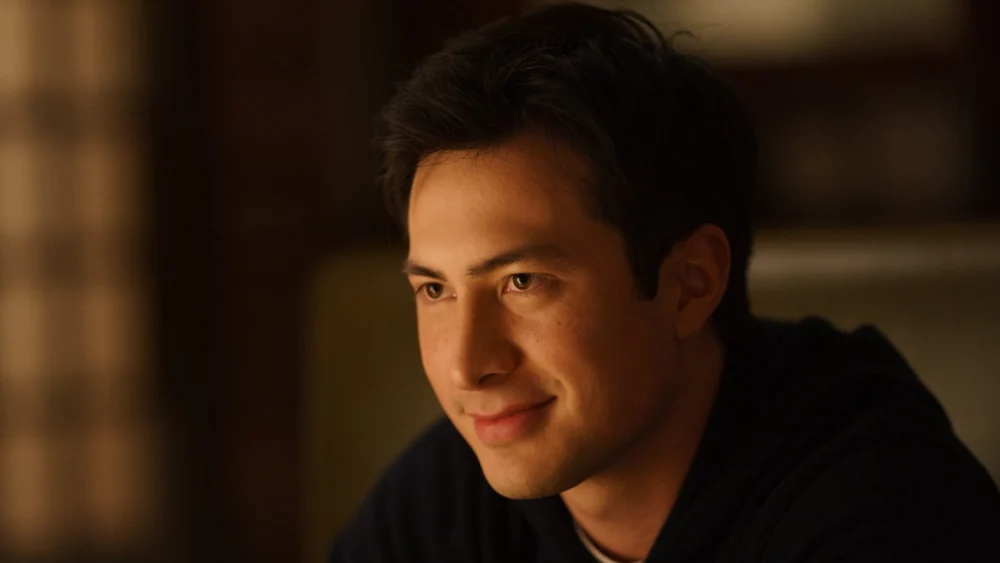
Hudson Williams on the ‘Heated Rivalry’ Finale, That Improvised Sex Scene and Shane’s Talk With His Mom: ‘That Ruined Me the Most’
In the vibrant landscape of contemporary television, few shows have captured the zeitgeist quite like “Heated Rivalry.” Billed as a primetime drama replete with compelling romance, undeniable chemistry, and, yes, “very hot men” and sex, the series has carved out a unique space, captivating audiences with its passionate portrayal of a secret love affair within the high-stakes world of professional hockey. Yet, beyond the alluring surface, lies a profound emotional depth, a quality that resonated most deeply with its star, Hudson Williams, who brings to life the complex character of Shane Hollander.
For Williams, the true heart of the series, particularly its Season 1 finale (Episode 6, now streaming on HBO Max), was not found in the grand romantic gestures or the thrilling on-ice action, but in a remarkably quiet, yet overwhelmingly powerful, mother-and-son scene. This pivotal moment sees Shane’s mother, played with poignant grace by Christina Chang, extend a heartfelt plea for forgiveness to her son. Her regret stems not from his identity, but from her failure to cultivate an environment where Shane felt safe enough to reveal his true self as a gay man sooner. Williams describes this scene as an emotional anchor, a moment that irrevocably drew him to the role and solidified his belief in the show’s unique power.
“That scene was the scene that ruined me the most when I read the script,” Williams revealed in a candid interview. His words convey the deep personal impact the narrative beat had on him, underscoring its raw, authentic emotional core. “It was the scene that I was like, ‘If I don’t get to play Shane Hollander…’” The intensity of his desire to portray Shane, rooted in this singular moment, speaks volumes about its narrative significance. He further emphasizes its critical importance to the show’s arc, particularly as it diverges from its literary origins. “It’s also a scene that’s not in the book, but to me it is the quintessential wrap-up scene to that arc for him and his mom. Period.” This deliberate departure from the source material by showrunner Jacob Tierney highlights a conscious effort to enrich the characters’ journeys and imbue the adaptation with new layers of emotional resonance, particularly concerning themes of family acceptance and personal vulnerability.
For those uninitiated into the world of “Heated Rivalry,” the series is Jacob Tierney’s acclaimed six-episode adaptation of Rachel Reid’s beloved “Game Changers” queer hockey romance novel series. Reid’s books have garnered a dedicated following for their tender, authentic, and often steamy portrayal of queer love stories within the demanding, often heteronormative, world of professional sports. The television adaptation, acquired for U.S. distribution by HBO Max from Canadian streamer Crave, meticulously tracks the burgeoning and long-secret romance between two superstar hockey players: the disciplined, introspective Shane Hollander (Hudson Williams) and the passionate, often fiery Ilya Rosanov (Connor Storrie). Their journey unfolds as they navigate not only the intense pressures of their careers but also a clandestine affair spanning several years, culminating in a deepening emotional bond that transcends their initial rivalry. The show’s rapid success and critical acclaim have already led to a greenlight for a second season, a testament to its compelling storytelling and dedicated fanbase.
The creation of the impactful mother-and-son scene was itself a testament to the collaborative and organic nature of the production. Filmed over two days, it encountered an unexpected interruption. “The first time we couldn’t get through it because it started raining,” Hudson recounted, a minor setback that ultimately paved the way for a more profound outcome. When they returned the following day to complete the shoot, Tierney, ever the meticulous storyteller, had refined the script. “Jacob goes, ‘I rewrote it,’” Williams remembered, painting a picture of himself and Christina Chang huddled in a small makeup room, earnestly committing the revised lines to memory. The rewrite, far from being a complication, only served to strengthen the scene’s core message. Williams found the updated dialogue “so beautiful” and deeply logical. “It made so much sense. It stands on the right side of what I think a parent should be because there are outdated notions. There are old school ways of parenting that maybe we can leave in the past.” This perspective reveals Williams’s personal investment in the scene’s message, not just as an actor, but as an individual contemplating future parenthood. “As someone who thinks of raising their kids in the future and wanting to be a father, this is the environment you have to foster.” His reflection highlights the universal appeal of the scene, touching on the enduring desire for unconditional parental love and acceptance, particularly for LGBTQ+ individuals whose coming-out journeys can often be fraught with anxiety and fear of rejection.
The scene’s tension is exquisitely crafted, keeping viewers on edge until the very last moment. The audience, much like Shane, is left to wonder: will his mother truly embrace him, or will she succumb to societal pressures, perhaps expressing concern over his career? The delicate balance is skillfully maintained until her words shift, revealing an unexpected, almost pragmatic, acceptance, even touching upon the potential for positive endorsement deals. This nuanced reaction, while affirming, leaves Shane in a state of partial, rather than complete, emotional release. Williams delves into Shane’s complex internal state post-confrontation: “Shane gets a release to a degree, but I’m not sure it’s a full one. I think there’s still a degree to Shane where it’s like, a part of me wanted a bigger release.” This candid insight into Shane’s psyche is crucial. It underscores the reality that the journey of acceptance, both from others and within oneself, is rarely a singular, cathartic event. It’s a process, often marked by lingering vulnerability and self-protection.
Williams initially grappled with his own inability to fully “pour myself into it and completely get vulnerable” as an actor, a process that usually comes naturally to him. However, he soon recognized that his struggle mirrored Shane’s own internal resistance. “As an actor, that’s never really been that hard for me. I was retroactively trying to figure out why am I not fully able to get this. But then, I was like, ‘Oh, it’s Shane who isn’t able to get that fully.’” This realization showcases Williams’s profound understanding of his character, allowing Shane’s emotional guardedness to inform his performance. The scene depicts Shane’s difficulty in meeting his mother’s gaze, unable to fully reconcile his perceived “unwritten idea of what a man is” with his authentic self. It’s a subtle yet powerful portrayal of the internalized pressures many queer individuals face, even in moments of perceived familial acceptance.

Beyond the familial dynamics, the romantic core of “Heated Rivalry” is undeniably Shane and Ilya’s evolving relationship. A significant milestone in any love story is the first “I love you,” and in this regard, Ilya Rosanov, the outwardly more tempestuous of the pair, takes the lead. Williams reflects on this pivotal moment, acknowledging with a hint of playful chagrin, “The motherfucker beat me.” While Ilya had expressed his feelings in a Russian monologue earlier in the season, Shane, not understanding the language, couldn’t count it. The explicit declaration, however, was a game-changer. Williams admits to being “surprised he said it first,” given Shane’s seemingly more grounded nature. Yet, he quickly clarifies that Shane’s actions had already spoken volumes, creating the very space for Ilya’s verbal affirmation. “But even though Shane doesn’t say it first, he says all these things that are, if they’re not love, what the fuck are they?” Williams posits. He points to Shane’s visionary planning – suggesting they “start a foundation,” staying up late “plotting their way.” When Ilya, surprised by Shane’s forward-thinking, asks, “You think that far ahead, Hollander?” Shane’s response is definitive: “I do about this.” This reveals a side of Shane that is typically absent in his highly regimented life. “Hollander is not a planner. He’s a diligent worker. He’s someone who is routine – dial in, show up in the game today, show up in practice right now. Forget in five years. Be the best hockey player now.” This departure from his usual character underscores the depth of his feelings. “It’s out of character to let this game plan run so far ahead. But it is because he loves Ilya so dearly. So I think he, even though he didn’t say it first, he made that cottage a home for Ilya to be able to say it.” This insight beautifully captures the different ways love manifests – through words, yes, but also through unwavering commitment, protective planning, and the creation of a safe haven for one’s beloved.
The cottage itself, a secluded sanctuary that becomes the backdrop for much of the finale, initially felt to some viewers like it might serve as a mere “fuck fest,” a stage for purely physical intimacy. However, as Williams and Tierney emphasize, its role was far more profound. “Jacob Tierney recently said it – it’s boyfriend,” Williams states, highlighting the shift from casual encounters to committed partnership. The cottage symbolizes the couple’s transition into a more domestic, emotionally integrated phase of their relationship, a space where they can simply *be* together, experiencing the mundane joys and intimate vulnerabilities of being a couple. This newfound comfort is perfectly encapsulated in a now-iconic, humorously improvised blowjob scene.
“That was improv,” Williams reveals, much to the surprise of many. The scene, which injects a delightful dose of levity and realism into their intimacy, was born from the genuine camaraderie between Williams and Storrie. Recalling their goofing off in the makeup trailer, which was, amusingly, another cottage nearby, Williams describes Storrie’s spontaneous actions. “Connor, being the great scene partner he is, he was like, ‘I’ll be here doing this.’ Then he did something and we were hitting each other, goofing off. Then he’s hitting me, hitting me and he did this slap.” Williams, filming himself, recognized the comedic gold. “I was like, ‘Do that again.’ I couldn’t hold in my laughter because it was so brilliant. It’s so funny, and it makes sense for where they’re at in the story.” The intimacy coordinator, witnessing the spontaneous hilarity, immediately championed its inclusion: “She was cackling. She’s like, ‘You have to do that.’” With Tierney’s enthusiastic blessing – “Go for it. Go crazy” – the scene made it into the show, becoming a fan favorite. Williams fondly remembers the first take: “The first take was the first time I *broke* broke because Connor is taking all the liberties. I am shoving him. I’m slapping him back. I’m putting the phone away to get in the gasps and moans. I’m so happy with how that scene turned out.” This scene beautifully illustrates the genuine intimacy and trust that has developed between Shane and Ilya, allowing for humor and playfulness within their sexual encounters, a clear marker of a secure, loving relationship. As Williams aptly puts it, “You don’t get the blow job on the phone from your fuck buddy or your friends with benefits. You get that when you’re in a relationship. In Episodes 1 and 2, it’s lust – it’s charged and fast. But now we have humor and levity within the sex.” This evolution of their intimacy reflects the organic growth of their emotional bond.
The filming of these final cottage scenes held a special significance for the cast and crew, marking the last two days of shooting for the season. “It’s when sentiment of the show really matched the sentiment of where we are in filming,” Williams reflects. The final scene captured was particularly poignant: Ilya talking about his mother while resting in Shane’s lap, a mirror to Shane’s own recent familial reconciliation. For Shane, the cottage represents a true haven. “That was finally where Shane can be as boring as he wants and as fun as he wants. He gets to be everything. They have those two weeks.” It’s a space where he can shed the public persona of a hockey superstar and simply exist as himself, vulnerable and in love. While the visual of them “riding off into the sunset” might suggest a perfectly happy, unblemished ending, Williams is quick to add a layer of crucial nuance. “It’s still bittersweet. A lot of people have said that’s a very happy ending, but I’m like, ‘This isn’t a straight story.’” His distinction is vital for understanding the complexities of queer narratives. “This is not the happy ending because they’re still in the closet. They’re not coming out to Reebok, they’re not coming out to anyone.” The revelation of their relationship was not a conscious, empowering coming out, but rather a consequence of being “caught.” Williams highlights the profound difference: “It looks more like forgiveness than pride. That’s where they’re at. Forgiveness implies there’s something that was wrongfully done.” The very word “caught” carries an inherent weight of shame, implying that their actions were illicit or something to be hidden. As Williams points out, “And they were just kissing. They’re not fucking butt naked on the countertop.” This subtle yet powerful commentary underscores the ongoing societal pressures and internalized shame that can still color queer relationships, even when love is undeniable.
In an age dominated by constant digital engagement, Williams periodically steps back from the internet, a conscious effort to maintain his well-being amidst the public scrutiny that comes with newfound fame. He acknowledges the duality of online interaction. While largely positive, “The hateful comments are easy to disregard to a degree because they’re coming from such vile places of bias or they’re just obnoxious. It’s closer to trolling than it is criticism.” This ability to differentiate and dismiss negativity allows him to appreciate the overwhelming support for “Heated Rivalry.”
Indeed, “Heated Rivalry” transcends mere entertainment; it offers a vital fantasy for many. As Williams articulates, “Heated Rivalry is not reality. It’s like a good rom-com where we get to fantasize about love and romance.” It’s a space for optimism, a quality Williams believes is sorely needed. “It’s OK to be optimistic. So many people just want to be negative.” The show’s deliberate choice to embrace hope, even amidst the challenges faced by its characters, is a key to its success. “Even queer storytellers sometimes want to double down on pessimism,” he observes. “I think the reason why our show is doing so well is it doesn’t want to reinforce the worst fears.” In a media landscape where queer narratives can sometimes be dominated by trauma or tragedy, “Heated Rivalry” offers a refreshing and empowering counter-narrative: one of love, growth, and the enduring power of connection, proving that optimistic storytelling can be both deeply moving and incredibly impactful. It’s a story that allows its audience to dream of a future where love, in all its forms, can flourish, even if the journey is still unfolding.
And for a touch of lightheartedness, when asked about tuna melts, Williams confessed to a fondness for them, albeit with a dietary caveat. “I do, but I don’t eat carbs or cheese. But as a treat, I’ll take a tuna melt with a nice brioche.” A simple pleasure, perhaps, for an actor who has so deeply delved into the complex emotional landscape of a beloved character.