


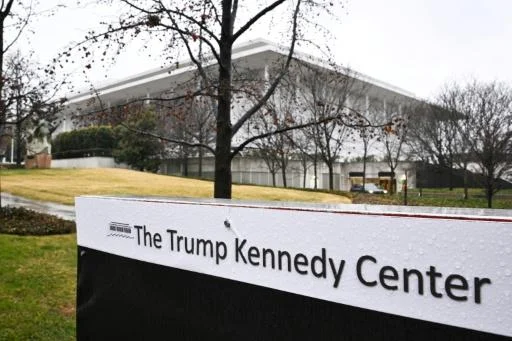
Washington D.C. – In a move poised to reshape the nation’s premier performing arts institution, U.S. President Donald Trump announced Sunday his intention to close the John F. Kennedy Center for the Performing Arts for an extensive two-year renovation, commencing on July 4th, 2026, the 250th anniversary of American independence. The decision, revealed via Trump’s Truth Social platform, signals a dramatic shift for the landmark venue, which has recently undergone significant upheaval since his return to a prominent leadership role.
President Trump, who now presides as chairman of the Kennedy Center’s board of directors, declared that the hiatus in entertainment operations is the most expedient path to elevate the “Trump Kennedy Center” to its “highest level of Success, Beauty, and Grandeur.” He elaborated on his social media, stating, “I have determined that the fastest way to bring The Trump Kennedy Center to the highest level of Success, Beauty, and Grandeur, is to cease Entertainment Operations for an approximately two year period of time.” This ambitious undertaking, he suggested, would necessitate the temporary suspension of all performances, from concerts and operas to musicals, ballet, and interactive arts exhibitions, asserting that their ongoing presence would inevitably impede and delay the crucial construction and renovation efforts.
The proposed closure is contingent upon the approval of the Kennedy Center’s board, a body that has seen substantial changes since Trump assumed the chairmanship. He personally curated the appointments to this board, a move that has been closely scrutinized by arts patrons and critics alike. The president’s vision for the center, which he described as a potential “finest Performing Arts Facility of its kind, anywhere in the World” after its transformation, emphasizes a complete rebuilding and revitalization. “The Trump Kennedy Center, if temporarily closed for Construction, Revitalization, and Complete Rebuilding, can be, without question, the finest Performing Arts Facility of its kind, anywhere in the World,” he proclaimed, envisioning a renewed landmark that “America will be very proud of its new and beautiful Landmark for many generations to come.”
The precise scope of this “complete rebuilding” remains somewhat opaque. However, President Trump has consistently voiced his long-held conviction that the iconic structure, erected as a living tribute to the assassinated President John F. Kennedy and inaugurated in 1971, has fallen into disrepair and is in urgent need of a comprehensive facelift. His administration’s focus on this particular renovation underscores a broader pattern of re-branding and asserting control over institutions previously characterized by their non-partisan ethos. The addition of his name to the center’s façade, a move that has drawn considerable controversy, is emblematic of this assertive approach.
This period of transition at the Kennedy Center has been marked by a notable exodus of prominent artists and productions. Since the restructuring of the board and President Trump’s ascent to the chairmanship, several high-profile cancellations have occurred. These include the highly acclaimed musical “Hamilton,” the celebrated operatic soprano Renée Fleming, and the pioneering composer Philip Glass, all of whom have opted to withdraw their scheduled appearances. The reasons cited for these departures have varied, with some artists and organizations directly referencing the controversial renaming of the institution and the prominent display of Trump’s name. Others have pointed to logistical challenges and shifting financial landscapes, although the pervasive influence of the new leadership has been widely speculated as a contributing factor.
Further underscoring the seismic shifts within the cultural landscape, the Washington National Opera recently announced its departure from the Kennedy Center. The opera company has been a resident at the center since its very inception, making its decision to relocate a significant blow to the institution and a testament to the profound changes underway. This departure, coupled with the other cancellations, paints a picture of an arts complex grappling with a fundamental redefinition of its identity and artistic direction under its new leadership.
The Kennedy Center, a symbol of American cultural achievement and a vital hub for artistic innovation, was conceived as a memorial to President John F. Kennedy, a leader deeply associated with the arts and public service. Its mission has always been to foster creativity, provide a platform for diverse artistic expression, and serve as a beacon of cultural diplomacy. The decision to undertake such a lengthy and disruptive renovation, especially during a period of significant artistic flux, raises questions about the future trajectory of this esteemed institution and its ability to maintain its standing as a globally recognized center for the performing arts.
The financial implications of a two-year closure are also substantial. While the exact budget for the renovation has not been disclosed, such extensive reconstruction projects typically involve significant public and private funding. The economic impact on the surrounding community, including local businesses that rely on the steady stream of patrons attending performances, is also a considerable factor. The arts sector, which has faced numerous challenges in recent years, will undoubtedly be watching the developments at the Kennedy Center closely.
The controversy surrounding President Trump’s involvement with the Kennedy Center began to escalate shortly after his return to a leadership position. Critics argued that his interventions, including the branding initiatives and the perceived politicization of artistic programming, undermined the center’s long-standing commitment to artistic freedom and inclusivity. The designation of certain artistic expressions as “woke” by the president has been particularly contentious, leading to concerns that a more narrowly defined and politically aligned artistic vision might be imposed on the institution.
The rationale provided by President Trump for the closure – that ongoing performances would hinder renovation – has been met with skepticism by some within the arts community. Historically, major cultural institutions have managed to undertake renovations while maintaining partial operations, often employing phased approaches to minimize disruption. The choice for a complete shutdown suggests an ambition for a more radical transformation, aligning with his stated desire for “complete rebuilding.”
The legacy of President Kennedy, in whose honor the center was established, is intrinsically linked to the ideals of public service, cultural enrichment, and a belief in the power of the arts to unite and inspire. The current leadership’s approach to the Kennedy Center inevitably invites comparisons to these foundational principles. The addition of the Trump name to the center, a move that bypasses traditional naming conventions and is often reserved for significant benefactors or historical figures, has been seen by many as a departure from the center’s original intent and a symbolic shift in its identity.
As the nation approaches its 250th anniversary, the decision to close such a prominent cultural landmark for an extended period is a stark reminder of the evolving landscape of American arts and culture. The coming years will undoubtedly be a period of intense scrutiny and anticipation as President Trump’s vision for the “Trump Kennedy Center” unfolds, with the hope that the promised grandeur and success will ultimately serve the enduring spirit of artistic excellence and national pride. The temporary silence within its halls will be a prelude to what many hope will be a revitalized future, though the path to achieving it is already marked by significant artistic departures and public debate.
© 2026 AFP