
Comedy Loses a Queen: Catherine O’Hara, Beloved Star of ‘Schitt’s Creek’ and Screen Icon, Dies at 71
The entertainment world is in mourning following the passing of Catherine O’Hara, the inimitable actress whose comedic genius illuminated screens for decades. O’Hara, a true titan of character work and improvisation, died on January 30 at the age of 71, following a brief illness. Her death has sent a ripple of profound sadness through Hollywood and especially among the devoted fans and castmates of “Schitt’s Creek,” the beloved Canadian sitcom where she crafted one of her most iconic and unforgettable characters.
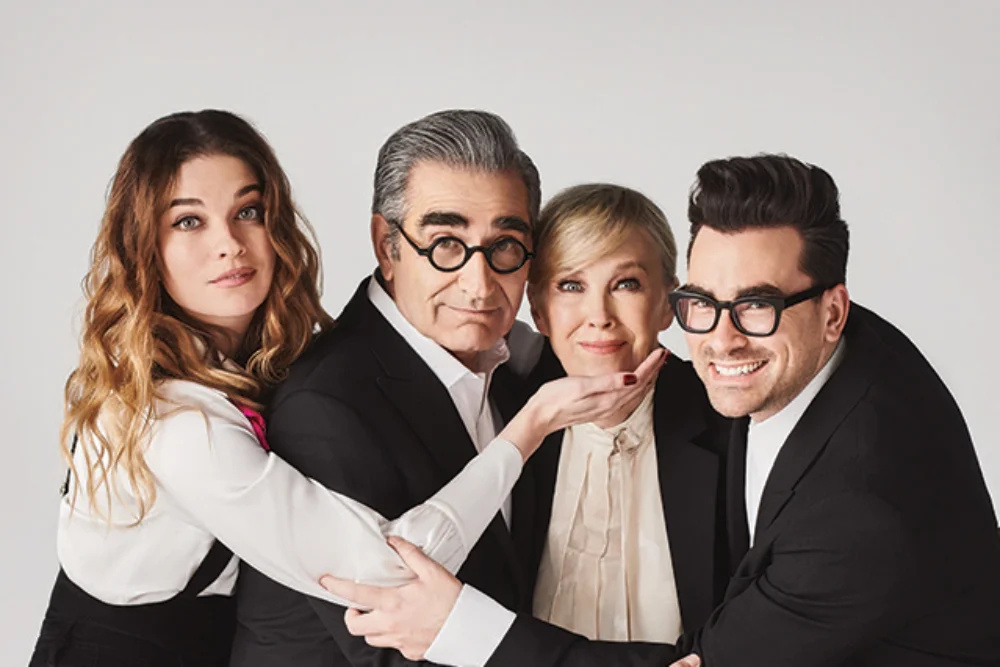
For five glorious years, from 2015 to 2020, O’Hara embodied the eccentric, wig-loving matriarch Moira Rose on “Schitt’s Creek.” Her portrayal of the former soap opera star, thrust from a life of opulence into the humble confines of a roadside motel, was a masterclass in physical comedy, vocal affectation, and deeply layered character development. Alongside her long-time collaborator Eugene Levy as her ever-patient husband Johnny Rose, and their real-life children Dan Levy as David Rose and Annie Murphy as Alexis Rose, O’Hara helped anchor a series that transcended its premise to become a cultural phenomenon, celebrated for its heart, humor, and unwavering message of love and acceptance.
The news of her passing immediately prompted an outpouring of heartfelt tributes from her “Schitt’s Creek” family, many of whom shared an unbreakable bond with O’Hara that extended far beyond the show’s set. Dan Levy, who co-created the Emmy-winning series with his father, Eugene, took to Instagram to share his grief, articulating the immense privilege of working alongside such a singular talent. “What a gift to have gotten to dance in the warm glow of Catherine O’Hara’s brilliance for all those years,” Levy wrote, his words painting a picture of admiration and deep affection. He underscored the profound connection that predated their on-screen family dynamic, noting, “Having spent over fifty years collaborating with my Dad, Catherine was extended family before she ever played my family.” The thought of a world without her, he confessed, was “hard to imagine.” Levy concluded his poignant message by pledging to “cherish every funny memory” he was fortunate enough to make with her, extending his condolences to her husband Bo Welch and her sons, Matthew and Luke, and the entirety of her “big, beautiful family.”
Eugene Levy, whose professional and personal history with O’Hara spanned over half a century, issued his own deeply moving statement, reflecting on a partnership that defined much of his career. “Words seem inadequate to express the loss I feel today,” Levy began, capturing the ineffable nature of his grief. Their journey together began on the hallowed stages of The Second City, blossomed through the groundbreaking sketch comedy series SCTV, continued with a series of critically acclaimed mockumentary films directed by Christopher Guest, and culminated in the global success of “Schitt’s Creek.” “I had the honor of knowing and working with the great Catherine O’Hara for over fifty years,” Levy wrote, emphasizing the extraordinary longevity and depth of their collaboration. While he cherished their professional relationship, he stressed that it was their friendship that held the most profound significance. “But most of all our friendship,” he affirmed, “And I will miss her.” His message, too, concluded with heartfelt condolences to O’Hara’s family.
“Schitt’s Creek,” which followed the once-affluent Rose family as they navigated financial ruin and a forced relocation to the titular small town they once bought as a joke, became a global phenomenon. Beyond the core Rose family, the series boasted a stellar ensemble cast, including Emily Hampshire as the cynical motel owner Stevie Budd, Jennifer Robertson as the earnest Jocelyn Schitt, Noah Reid as David’s eventual husband Patrick Brewer, Sarah Levy as Twyla Sands, and Chris Elliott as the often-crude but ultimately kind-hearted Mayor Roland Schitt. Each character, no matter how small, contributed to the show’s unique charm, and O’Hara’s presence elevated every scene she was in.
Jennifer Robertson, who played Moira’s best friend and local choir director Jocelyn Schitt, shared her sentiments with USA Today, echoing the sentiment of loss felt by many. “I am deeply saddened to hear we have lost Catherine,” Robertson expressed. Her words highlighted O’Hara’s inherent grace and humility: “Being in Catherine O’Hara’s orbit was a beautiful, magical gift. She was absolute star who never understood why people made such a fuss about her.” Robertson’s tribute painted a picture of a brilliant performer who remained grounded despite her immense talent and widespread adoration. “Her passing is a loss for everyone who knew and loved her,” she concluded, extending her “deepest condolences to Bo, her sons, and the O’Hara family.”

Chris Elliott, whose character Roland Schitt provided a hilarious foil to Moira’s aristocratic sensibilities, also offered a statement to USA Today, reflecting on the joy of their shared screen time. “Working with her and Eugene was a dream come true for me,” Elliott said, underscoring the privilege of collaborating with such comedic legends. He, too, spoke of O’Hara’s warm and generous spirit, qualities that endeared her to colleagues and fans alike. “Made all the more special because Catherine was such a warm hearted, generous and humble human being,” he continued. Elliott fondly recalled their shared moments, both on and off-screen, adding a personal touch: “I will always remember the laughs we shared on screen and off, and I’ll never forget our fun shopping spree at Joe Fresh.” These anecdotes paint a picture of O’Hara not just as a brilliant actress, but as a kind and engaging human being.
The impact of O’Hara’s passing resonated far beyond her immediate colleagues. CBC Television, the network that produced “Schitt’s Creek,” released a heartfelt statement acknowledging her profound contribution to Canadian culture and global entertainment. “We are devastated to learn of the passing of Catherine O’Hara, a beloved Canadian icon whose brilliance lit up screens and stages around the world,” the statement read. It highlighted the breadth of her career, from her early days on SCTV and her unforgettable role in “Home Alone” to her defining performance as Moira Rose. “Catherine brought unmatched talent and a rare and radiant spirit to everything she touched,” CBC affirmed, capturing the essence of her unique artistic footprint. The statement concluded with a somber reflection: “With her passing, a light has gone out. We send our heartfelt condolences to Catherine’s family and friends. She will be forever missed.”
Moira Rose was undoubtedly a capstone in O’Hara’s career, earning her widespread critical acclaim and a slew of prestigious awards during the show’s six-season run. Her portrayal garnered a Primetime Emmy Award for Outstanding Lead Actress in a Comedy Series, a Golden Globe Award, a SAG-AFTRA Actor Award, a TCA Award, and a Critics Choice Award. These accolades were a testament to the depth and nuance she brought to a character that could have easily become a caricature. As Variety TV critic Alison Herman eloquently articulated in her tribute piece, Moira Rose—a “proudly out-of-touch lady of leisure forced to rub elbows with the hoi polloi”—was much more than just comic relief. Her “impractical outfits and fish-out-of-water frenzy helped crystallize the comedic contrast that was the series’ creative engine,” Herman wrote, encapsulating how O’Hara’s performance was fundamental to the show’s narrative and thematic success. Her distinctive accent, an ever-evolving blend of transatlantic affectations, and her penchant for dramatic, often nonsensical, pronouncements, became instant fan favorites and cemented Moira’s place in the pantheon of television’s most memorable characters.
But long before she donned Moira’s array of avant-garde wigs, O’Hara had already established herself as a comedic force of nature. Her decades-long partnership with Eugene Levy began in the vibrant crucible of The Second City, the renowned improvisational comedy troupe in Toronto. It was there, in the early 1970s, that she honed her craft, developing an unparalleled ability to create indelible characters on the spot. This foundation led her to the groundbreaking sketch comedy series SCTV (Second City Television), which ran from 1976 to 1984. On SCTV, O’Hara created a gallery of beloved characters, showcasing her incredible range, from the perpetually drunk Lola Heatherton to the perky but somewhat unhinged Pirini Scleroso. Her work on SCTV not only cemented her status as a comedic genius but also forged lasting professional bonds, most notably with Eugene Levy, John Candy, Martin Short, and Andrea Martin, who would remain lifelong friends and collaborators. The show’s influence on comedy is immeasurable, and O’Hara was a pivotal part of its success.
Her collaborative spirit found another fertile ground in the mockumentary films of Christopher Guest. Working alongside Guest, Levy, and a rotating ensemble of improvisational actors, O’Hara crafted some of her most memorable big-screen characters. In 2003’s “A Mighty Wind,” she played the emotionally fragile, folk-singing Mitchie Cohen, reuniting with her former musical partner Mickey (Eugene Levy) for a tribute concert. Their rendition of “A Kiss at the End of the Rainbow” earned an Academy Award nomination for Best Original Song, showcasing O’Hara’s unexpected musical talent and her ability to imbue even the most absurd characters with genuine pathos. Prior to that, she delighted audiences as the dog-obsessed, yuppie socialite Cookie Fleck in “Best in Show” (2000), a role that allowed her to showcase her physical comedy and a knack for understated absurdity. She also appeared in “Waiting for Guffman” (1996) as Sheila Albertson and “For Your Consideration” (2006) as Marilyn Hack, consistently delivering performances that blended sharp wit with a unique, endearing vulnerability. Christopher Guest himself acknowledged the profound loss, stating, “I am devastated. We have lost one of the comic giants of our age.” He, too, extended his love to her family.
Beyond her collaborations with Levy and Guest, O’Hara left an indelible mark on mainstream cinema with a diverse array of roles that showcased her versatility. She became a household name for her iconic portrayal of Kate McCallister, the frantic and loving mother who accidentally leaves her son Kevin behind in the first two “Home Alone” movies (1990 and 1992). Her exasperated cries of “Kevin!” became a memorable part of cinematic history, endearing her to a generation of moviegoers. In 1993, she lent her distinctive voice talents to the animated classic “The Nightmare Before Christmas,” bringing to life both Sally, the rag doll with a heart of gold, and the mischievous Shock. Her ability to convey emotion and character through voice alone demonstrated yet another facet of her extraordinary talent. And in Tim Burton’s darkly whimsical “Beetlejuice” (1988), O’Hara captivated audiences as Delia Deetz, the pretentious, avant-garde stepmother who attempts to transform a haunted house into an artistic masterpiece. Her performance was a perfect blend of comedic timing and theatrical flair, a role she was set to reprise in the highly anticipated sequel, “Beetlejuice 2,” making her passing even more poignant for fans looking forward to her return.
Catherine O’Hara was more than just an actress; she was a creator of worlds, an architect of laughter, and a master of transformation. Her unique ability to fully inhabit a character, from the most subtle vocal inflection to the grandest physical gesture, set her apart. She approached each role with an unwavering commitment to authenticity, no matter how outlandish the character, making them relatable, lovable, and endlessly rewatchable. Her legacy is not just in the awards she won or the films and shows she starred in, but in the joy she brought to millions and the profound impact she had on her colleagues, who consistently described her as kind, humble, and genuinely wonderful. Her passing leaves an irreplaceable void in the hearts of her family, friends, and legions of fans, but her brilliant comedic spirit will undoubtedly continue to inspire and entertain for generations to come.