

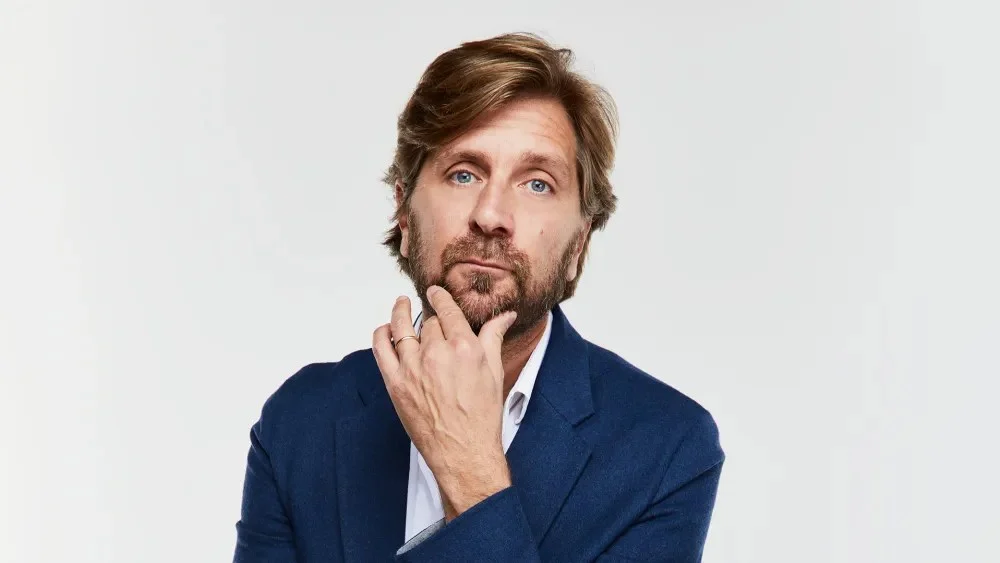
Ruben Östlund, the acclaimed director behind the Palme d’Or-winning “Triangle of Sadness,” is once again poised to shake up the cinematic landscape with his eagerly anticipated next feature, “The Entertainment System Is Down.” Following an audacious, “explosive presentation” at the Göteborg Film Festival, where he unveiled significant plot points, including the film’s ending, Östlund sat down with press to discuss his unconventional approach and the intricate vision behind his latest project. While the film’s potential premiere at Cannes is tentatively slated for either 2026 or 2027, the buzz surrounding Östlund’s provocative candor and the film’s premise is already reaching a fever pitch.
Östlund, known for his incisive social satires and unflinching examination of human behavior, is no stranger to challenging audience expectations. His decision to reveal crucial narrative details, far from diminishing excitement, stems from a deeply considered philosophy on storytelling and audience engagement in the modern era. “When I think about some of the directors I really admire, I like it when they make me curious about how they’re going to visualize things,” Östlund explained. For him, the true allure of cinema lies not in the suspense of the unknown outcome, but in the masterful execution of the narrative journey. “When I watch a movie or hear about a great idea, I don’t care how it ends. All I want to know is: How will it be made? That’s what creates my curiosity.”
This perspective is acutely attuned to contemporary media consumption habits. Östlund points to the ubiquitous nature of platforms like YouTube, which, since around 2005, have normalized “spoilers” by often giving away crucial plot points or conclusions directly in video titles. Yet, despite this foreknowledge, viewers still click, driven by a desire to witness the *how*. The phenomenon isn’t new, he argues; audiences flock to theatrical productions of “Hamlet” fully aware of its tragic conclusion, their interest piqued by the interpretation and artistry of the performance. In an increasingly saturated content landscape, Östlund believes that cinema must forge a connection with its audience more swiftly and directly. Any element that genuinely piques curiosity, he contends, is a powerful tool to be utilized.
Beyond simply sparking curiosity, Östlund’s work consistently aims to provoke deeper introspection rather than superficial shock. “The goal is to make them think,” he asserts, drawing a clear distinction between cheap thrills and meaningful engagement. “Shocking them just for the sake of it is not interesting. It’s easy. Making them think is the hard part.” His films often place characters in morally ambiguous or deeply uncomfortable situations, prompting viewers to consider their own reactions and biases. These narratives, he reveals, are often rooted in his own experiences, observations, or even anecdotes he’s gathered. The directorial process, for Östlund, is an intensely personal one, requiring a willingness to delve into one’s own lived realities, pains, and understandings of the human condition.
The ambitious scope of “The Entertainment System Is Down” presented significant logistical and creative challenges, particularly given its setting: an airplane. Östlund underscored the inherent difficulties of filming in such a confined and complex environment. “Shooting a film on an airplane is extremely difficult. If you’re not careful, you won’t end up with a good movie.” To overcome this, the production team embarked on the extraordinary task of constructing an airplane set essentially from scratch. This allowed for unprecedented control over the environment, enabling the precise staging and camera work for which Östlund is renowned.
A crucial innovation in this process was the integration of virtual reality (VR) technology into the pre-production workflow. Östlund, who previously meticulously drew his own storyboards, found the prospect of repeatedly illustrating identical airplane scenes “incredibly boring.” His Director of Photography, Fredrik Wenzel, introduced him to VR, revolutionizing their collaborative process. Östlund recounts a scenario where he was in Mallorca, Wenzel in Stockholm, and the set designer in Gothenburg. Despite the geographical distance, they could don VR headsets, enter a shared virtual representation of the set as avatars, and collaboratively walk through scenes, discuss blocking, and fine-tune spatial arrangements. This cutting-edge approach allowed for unparalleled precision, efficiency, and creative freedom in designing the complex interior of the aircraft.
The narrative itself delves into the intimate and often absurd dramas that unfold within this pressurized environment. Östlund teased one particularly agonizing scenario: a couple confronting infidelity at 10,000 meters, with no possibility of escape or concealment. This “biggest nightmare” for many, including Östlund himself, forms a potent backdrop for his exploration of human fragility and conflict. The director further revealed a striking juxtaposition he captured through external shots of the plane, soaring at 1,000 kilometers per hour high above the clouds. Inside, oblivious to the grand scale of their journey, characters are embroiled in trivial disputes. This inherent absurdity, the clash between humanity’s petty squabbles and the sublime indifference of the vast external world, is a hallmark of Östlund’s satirical genius.
The film’s casting further highlights Östlund’s knack for unexpected choices that yield compelling results. The inclusion of Keanu Reeves as an electrician immediately sparked intrigue, given his iconic status primarily in action and dramatic roles. While Reeves has ventured into comedy, notably with the “Bill & Ted” franchise, it’s not the genre he’s most readily associated with. Östlund, however, recognized a unique comedic potential. “He has a very deadpan comedic quality to his acting, and it worked out really well,” Östlund observed. He anticipates a strong audience reaction to Reeves’ performance, particularly in a scene where the actor’s character is introduced with classic Östlundian dark humor: asked to change seats with a grieving widow and compelled to sit beside her deceased husband’s corpse due to lack of storage space. This playful subversion of public perception surrounding a beloved star like Reeves is a testament to Östlund’s clever directorial hand.
A recurring thread throughout Östlund’s filmography is his ability to extract humor from the most terrible and unpleasant human situations. He embraces this quality, expressing satisfaction that his work often elicits laughter amidst discomfort. “It’s absurd to make dramas about human beings,” he muses, reflecting on the privileged position of much of modern life. He finds the conflicts he observes in his own life, or those of others, to be inherently trivial when viewed through the lens of ultimate mortality. His 2017 retrospective in the U.S., titled “In Case of No Emergency,” aptly summarizes his thematic concerns: characters often find themselves in situations that *feel* like emergencies, yet lack genuine physical danger, until perhaps the very end. “There will be physical danger in this film,” Östlund reveals, “but the characters won’t realize it until the last 15 minutes of their lives.”
Östlund’s films consistently delve into the complexities of “herd mentality” and the profound human sensitivity to social dynamics. From birth, individuals are trained in socialization, a process that, he suggests, can later be manipulated to induce significant emotional pain. Among all human emotions, shame stands out for Östlund as particularly potent, capable of dominating brain processes and manifesting almost physically. He believes shame, in certain contexts, can be a healthy and necessary emotion. His provocative example: “Trump would probably appear more sympathetic if we could see that he was ever ashamed,” highlighting shame’s role in accountability and empathy.
Despite the immense anticipation for “The Entertainment System Is Down,” particularly with the specter of a Cannes premiere, Östlund remains steadfast in his commitment to a thorough and deliberate post-production process. He acknowledges the possibility of waiting until 2027 to ensure the film reaches its full potential. The critical factor for him is not simply rushing to a festival, but the invaluable insight gained from test screenings. “As a director, what would be even more important to me is seeing the dynamics in the cinema when people are watching it,” he explains. He emphasizes the necessity of conducting these screenings, especially given the film’s “many sensitive elements,” including a crucial 15-minute sequence. His resolve stems from a “painful experience” with his 2011 film “Play,” for which he lacked sufficient time for test screenings, a situation he vows never to repeat.
The concept of “test screenings” often elicits apprehension among many European directors, who might view them as a concession to commercial pressures or a dilution of artistic vision. Östlund, however, vehemently disagrees with this sentiment, considering it “completely wrong.” He argues that the collective experience of an audience in a cinema fundamentally alters the film’s pacing and impact. His approach isn’t about soliciting superficial feedback like, “Did you like this, or did you like that?” Instead, it’s about the director’s presence in the room, “sitting with them as a director and feeling the energy in the room.”
Östlund began incorporating this rigorous test screening process with “Force Majeure,” continuing through “The Square” and “Triangle of Sadness.” His motivation is a belief that European cinema, in its pursuit of certain arthouse traditions, has inadvertently “lost its connection with audiences.” He harks back to the 1960s, ’70s, and ’80s, when he perceives a much stronger relationship between films and their viewers. He cites the legendary John Cleese, who famously fine-tuned the humor in “A Fish Called Wanda” after a remarkable twelve different screenings, demonstrating that meticulous audience engagement is not about compromising artistic integrity, but about maximizing its impact. While he clarifies that this process isn’t about making audiences “comfortable,” he asserts that it is “very ignorant to think that you don’t have to carefully consider how the audience will react.” For Ruben Östlund, the audience is not just a recipient of his art, but an integral part of its final realization, ensuring that “The Entertainment System Is Down” will not just be watched, but deeply experienced and debated.