
In an era saturated with quick-fix solutions to body image anxieties, where the promise of effortless transformation often overshadows the hidden costs, filmmaker Natalie Erika James returns with her third feature, "Saccharine." This chilling new horror offering serves as a potent and timely commentary on the insidious pressures of weight-loss culture, particularly as it targets young women, and the dangerously high price of succumbing to its siren song. Far more damaging than a monthly subscription to a trending weight-loss drug, the journey of "Saccharine"’s protagonist, Hana, plunges into a realm where the horror of one’s own body becomes terrifyingly real, blurring the lines between psychological torment and grotesque, fantastical manifestations.
James, an Australian helmer whose distinctive voice has already resonated within the horror genre, establishes "Saccharine" as a critical piece of contemporary cinema, tapping directly into the widespread medical phenomenon of rapid weight loss while aligning itself with a recent wave of genre fare—most notably the 2024 sleeper hit "The Substance"—that unflinchingly confronts female body insecurity. The film masterfully exploits the most insidious kind of body horror: the internal, self-inflicted terror born from societal expectations. Yet, James doesn’t shy away from delivering a measure of the gorily fantastical, ensuring "Saccharine" carves out its own unsettling niche.
For Natalie Erika James, "Saccharine" represents a poignant homecoming, marking her return to the independent Australian filmmaking scene where her career first soared. She burst onto the global stage in 2020 with "Relic," an unexpectedly devastating and uniquely humane horror film that deftly explored the terrors of late-stage dementia within a family dynamic. "Relic" was lauded for its ability to locate profound emotional depth within its genre framework, earning it both critical acclaim and a devoted following among arthouse and horror enthusiasts alike. Following this breakout success, James ventured to the United States for "Apartment 7A," a sleekly crafted prequel to "Rosemary’s Baby." While demonstrating her technical prowess, "Apartment 7A," by its very nature as a studio-backed prequel, felt inevitably less distinctive than her original work.
"Saccharine," filmed and set in Melbourne, proudly embraces its independent spirit. Operating on a seemingly modest but exceptionally well-utilized budget, the film underscores that James’s unique gifts for unsettling atmosphere and psychological depth are often best served by more unconstrained, independent means. While "Saccharine" may not quite reach the profound emotional and dramatic heft that characterized "Relic" – a film that achieved an almost perfect equilibrium between genre thrills and arthouse appeal – it nonetheless solidifies James’s reputation as a director unafraid to tackle deeply human anxieties through the lens of horror. The film has already garnered significant attention on the festival circuit, making its rounds at prestigious events like Sundance and Berlin. It is slated for release as a streaming original in its home territory, with IFC and Shudder partnering to bring its unsettling narrative to audiences in the United States, positioning it as a must-see for fans of thought-provoking genre cinema.
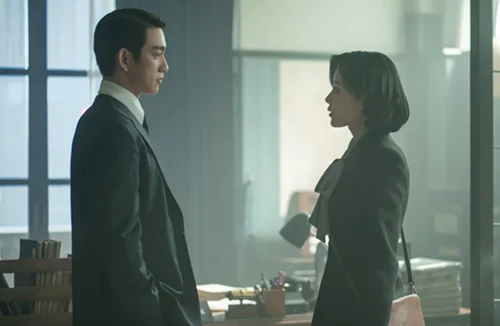
At the heart of "Saccharine" is Hana, portrayed with compelling vulnerability and a credible Australian accent by former "Grey’s Anatomy" regular Midori Francis. Hana is a Melbourne medical student, a profession that inherently demands a pledge to "first do no harm." Ironically, this fundamental principle appears to have been tragically overlooked when it comes to her own well-being. Tormented by a deeply distorted perception of her perfectly healthy body as severely overweight, Hana is caught in a relentless and destructive cycle of binge-eating followed by punishing self-deprivation. Her desperation leads her to enroll in an intensive 12-week transformation program, pitched by the svelte and alluring gym trainer, Alanya, played by Madeleine Madden. The narrative subtly hints that Hana’s burgeoning attraction to Alanya might be as significant a motivating factor as her desire for physical change, adding a layer of complex emotional vulnerability to her already precarious state.
However, Hana’s path to what she perceives as self-improvement is drastically derailed by a chance encounter with a former school friend. Once plus-size, this friend is now unrecognizably slender, a stark testament to a radical transformation. She becomes a pushy, almost evangelical advocate for an exclusive and mysterious new weight-loss pill she simply refers to as "The Gray." Tempted by the promise of such rapid results but reluctant to spend the exorbitant amount of money required, Hana’s medical curiosity overrides her caution. She decides to run some tests on the illicit drug. What she uncovers is a grim horror-film twist that pushes the boundaries of medical ethics and human decency: the pill’s composition, she discovers, is almost entirely human ashes.
Shockingly, this horrifying revelation is not enough to deter Hana. Instead of halting her dangerous pursuit, her desperation drives her to an unthinkable act. Resolving to create her own version of "The Gray," she begins stealing and cremating flesh from the cadaver assigned to her and her fellow student, Josie (an underused Danielle Macdonald), for anatomical research. This particular cadaver, an obese cancer victim, has been crassly nicknamed "Big Bertha" by the students, a detail that foreshadows the lack of respect shown to the deceased and sets the stage for the supernatural retribution to come.
Predictably, the pounds begin to fall off Hana at an alarming rate, a transformation so rapid and extreme that it even begins to concern the increasingly watchful Alanya. But as the film chillingly reveals, ingesting incinerated human remains proves to be a catastrophically bad idea, for reasons extending far beyond the many glaringly obvious ethical and health implications. Before long, the violated spirit of the cadaver, "Big Bertha," is roused from its eternal rest. This spectral presence appears to be angered not only by the macabre desecration of her corpse but also by the sickly, increasingly emaciated state of Hana, whose new regimen is a perverse inversion of healthy living.
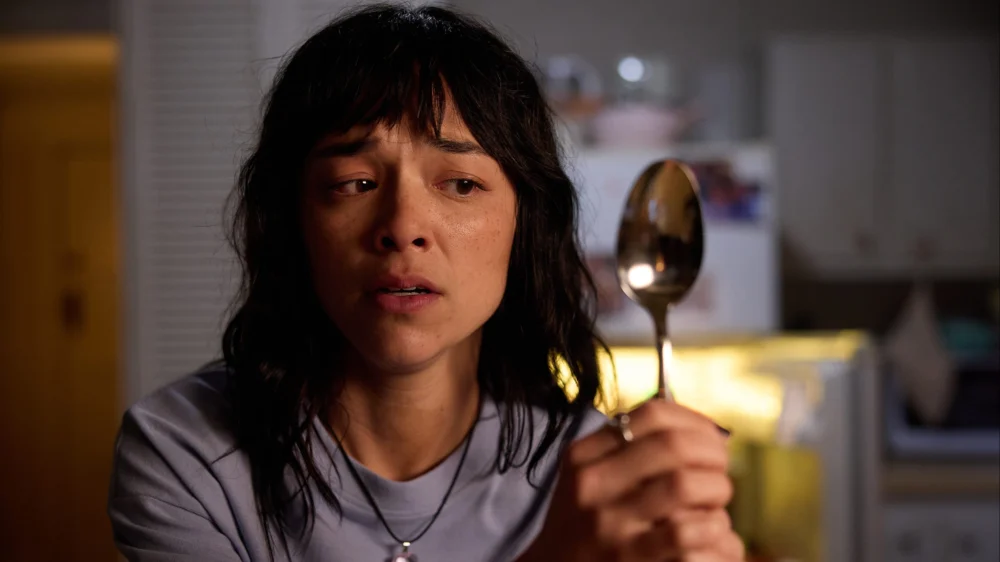
The ensuing fallout from this supernatural violation is less overtly frightening in the traditional sense and more deeply, viscerally queasy. James employs expert gross-out prosthetics and old-school ghost-story effects to deliver jolts that are designed to unsettle rather than merely scare. The visual manifestation of "Bertha" is particularly ingenious: she is only visible to Hana in concave reflective surfaces, such as spoons. This "neat, witty visual touch" serves not only as a clever cinematic device but also as a powerful metaphor for Hana’s distorted self-perception, hinting that the monstrous vision she perceives is inextricably linked to her own internal struggle and body dysmorphia.
However, the film does navigate a complex terrain when it comes to its message. The consistent portrayal of the cadaver’s large, decaying form as a source of increasingly monstrous jump-scares, haunting Hana’s dreams and causing physical havoc in her waking hours, runs the risk of undermining "Saccharine’s" otherwise generally body-positive message. One could argue, compellingly, that this grotesque depiction is not a literal condemnation of larger bodies, but rather a powerful, externalized manifestation of the protagonist’s own most extreme bodily neuroses and self-loathing, a tangible representation of her internal demons.
Another element that receives somewhat questionable handling is a psychologically illuminating subplot concerning Hana’s family history of weight problems. This narrative thread is teased with needless shadowy ambiguity, building towards a surprise reveal that, while impactful, might have benefited from a more direct approach to maximize its emotional resonance. Nevertheless, the film features a fine and touching performance from Showko Showfukutei as Hana’s loving but fretful mother. Her portrayal captures the heartbreaking paradox of a parent desperately concerned for her daughter’s well-being, yet inclined to show love primarily through unrequired domestic service, a subtle yet profound commentary on intergenerational patterns of care and anxiety.
Midori Francis delivers a warm, vulnerable, and deeply human performance, grounding a character whose choices, on the surface, are frequently inexplicable and self-destructive. Through Francis’s nuanced portrayal, "Saccharine" transcends simple genre fare to function as a powerful cautionary tale, illustrating the psychological mania fueled by a relentlessly body-conscious culture. This pervasive cultural obsession taints every aspect of life, from casual, seemingly innocuous friendly conversations that subtly reinforce impossible beauty standards, to the punishingly aspirational and often deceptive images propagated across social media platforms like Instagram.
In its commitment to this theme, "Saccharine" goes to great lengths to deglamorize its gaze. This aesthetic choice is immediately apparent in the film’s visual language, characterized by the scuzzy lighting and a seasick palette meticulously crafted by Director of Photography Charlie Sarroff. These visual elements create an oppressive and unsettling atmosphere, mirroring Hana’s deteriorating mental and physical state, pulling the audience into her suffocating reality.
Yet, it is aurally that the film achieves its most profoundly disquieting effects. Hannah Peel’s inventive score is a masterful blend of haunting elements, merging gasping vocal expressions that evoke distress and struggle with grinding, dehumanized mechanical instrumentation. This sonic tapestry creates a sense of dread that is both primal and alienating. Complementing this, sound designer Robert Mackenzie’s work is exceptionally eerie, amplifying the smallest, most intimate sounds to disturbing effect: shortened breathing becomes a desperate gasp, groaning physical exertions resonate with pain, and, perhaps most viscerally unsettling, the regular chomp and smack of chewing food is transformed into something repulsive. The cumulative effect of this meticulously crafted soundscape is akin to a deliberate anti-ASMR experience; audiences are likely to leave "Saccharine" craving not just sensory relief, but a profound and calming sensory underload, underscoring the film’s success in creating a truly immersive and unnerving horror experience.