




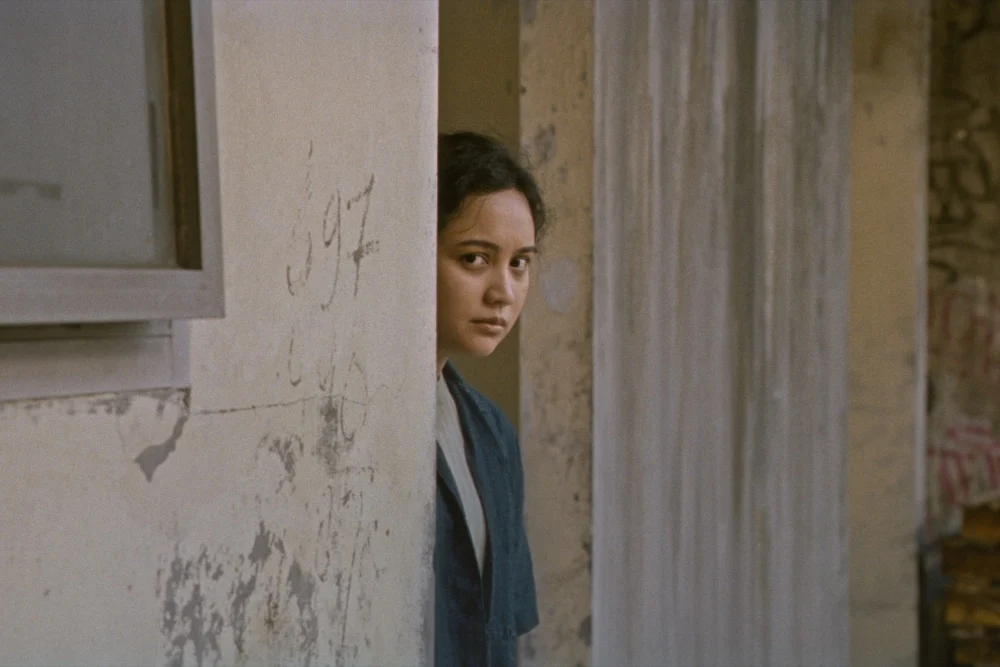
The global cinematic stage is set to witness a chilling and profoundly relevant narrative as the first trailer for the Indonesian horror feature, “Sleep No More,” makes its debut ahead of its screening at the prestigious Berlinale Special Midnight section. Helmed by acclaimed filmmaker Edwin, known for his distinctive blend of social commentary and genre-defying storytelling, this film, locally titled “Monster Pabrik Rambut,” promises a visceral exploration of the human cost of unchecked labor exploitation, seen through the harrowing experiences of its female protagonists.
Edwin, a director whose previous works have garnered international accolades, including the Fipresci prize at Rotterdam for “Blind Pig Who Wants to Fly” and the coveted Golden Leopard at Locarno in 2021 for “Vengeance Is Mine, All Others Pay Cash,” continues his trajectory of crafting cinema that is both artistically daring and socially incisive. With “Sleep No More,” he ventures into the horror genre, not merely for frights, but as a potent vehicle to dissect the dehumanizing realities of modern industrial labor. The film’s premise, centering on factory workers pushed to inhumane extremes, resonates deeply in a world grappling with persistent issues of worker rights and corporate responsibility.
At the heart of “Sleep No More” are Putri and Ida, two women whose lives, already strained by the relentless grind of factory work, begin to unravel in a terrifying descent into the unknown. Their workplace, a metaphor for systemic oppression, becomes a literal breeding ground for terror as a shadowy entity emerges, preying on those deprived of their fundamental need for rest. As physical and mental exhaustion mounts, the line between waking nightmares and supernatural possession blurs, forcing Putri and Ida to confront not only a malevolent, otherworldly threat but also the very system that feeds on their sleeplessness and labor. This narrative choice to center the story on female factory workers is particularly poignant, highlighting the often-overlooked struggles of women in demanding, low-wage industries, where their vulnerability to exploitation can be compounded by societal pressures and lack of adequate protections.
The film’s thematic depth, blending gritty social realism with supernatural horror, offers a powerful commentary on the psychological and physical toll of modern capitalism. Edwin’s vision transcends mere entertainment, inviting audiences to reflect on the broader implications of a society that prioritizes profit over human well-being. The factory setting, often a backdrop for stories of economic struggle, is transformed into a claustrophobic crucible where the mundane horrors of daily life fuse with the fantastical, creating a uniquely terrifying experience. The horror, in this context, is not just about jump scares but about the insidious erosion of humanity under relentless pressure, a reality that many working women globally can intimately understand.
Behind the scenes, “Sleep No More” is a testament to the power of international collaboration in filmmaking, bringing together creative forces from across Asia and Europe. The production is led by Indonesia’s Palari Films and Beacon Film, alongside a diverse group of co-production partners: Singapore’s Giraffe Pictures, Japan’s Hassaku Labs, Germany’s In Good Company, and France’s Apsara Films. This multinational effort underscores the universal resonance of the film’s themes, transcending geographical boundaries to tell a story that speaks to shared human experiences of struggle and resilience. The film is produced by Meiske Taurisia and Muhammad Zaidy, with a formidable list of co-producers including Anthony Chen, Teoh Yi Peng, Atsuko Ohno, Terutaro Osanai, and notably, several prominent women in cinema: Dian Sastrowardoyo, Roshanak Behesht Nedjad, and Marine Arrighi de Casanova. Their collective expertise and vision have undoubtedly enriched the film’s nuanced portrayal of its characters and themes, especially the female experience within this intense narrative.
The involvement of such a diverse and accomplished team, particularly the strong female presence in key production roles, signals a growing trend towards more inclusive and globally representative filmmaking. For a professional women-focused news and entertainment website, highlighting the contributions of producers like Dian Sastrowardoyo, a celebrated actress and producer, and Roshanak Behesht Nedjad, a veteran European producer, underscores the significant impact women are making in shaping international cinema. Their collaboration on a film that confronts issues of labor exploitation and the psychological burden on women offers a powerful example of art intersecting with social consciousness.
Worldwide sales for “Sleep No More” are being handled by South Korea’s Showbox, a testament to the film’s anticipated broad appeal and market potential. This strategic partnership further positions the film for significant international distribution, allowing its crucial message to reach a global audience eager for thought-provoking genre cinema.
In his director’s statement, Edwin articulates his ambitious vision for the film, describing it as an attempt to seamlessly merge horror with elements of dark comedy and surreal fantasy, all while confronting the stark realities of labor exploitation and dehumanizing working conditions. His words, “People are expected to grow body parts in order to survive long hours of slavery,” are particularly striking. This powerful imagery suggests that the horror in “Sleep No More” is not a mere metaphor for societal ills but an amplified, visceral extension of the lived reality endured by those trapped in such exploitative systems. It underscores a central tenet of elevated horror: that the most terrifying monsters are often born from human cruelty and systemic injustice. This approach is particularly compelling for audiences, especially women, who are drawn to horror that challenges perceptions and offers deeper psychological and social insights rather than just surface-level scares.
The selection of “Sleep No More” for the Berlinale Special Midnight section at the 76th Berlin Film Festival is a significant endorsement. This section is renowned for showcasing films that push boundaries, explore darker themes, and often blend genres in innovative ways, making it an ideal platform for Edwin’s unique cinematic voice. Premiering at a festival of Berlinale’s caliber not only provides immense visibility but also places “Sleep No More” within a prestigious context of global cinema that values artistic integrity and social relevance. For an Indonesian horror film with such profound social commentary to achieve this recognition speaks volumes about the increasing international appreciation for diverse cinematic narratives and the evolving landscape of global genre filmmaking.
Indonesian cinema has been steadily gaining international traction, particularly in the horror genre, with filmmakers exploring a rich tapestry of local folklore, social anxieties, and contemporary issues. “Sleep No More” stands as a potent example of this vibrant cinematic movement, demonstrating how genre conventions can be subverted and re-imagined to deliver powerful social critique. Edwin’s film adds to a growing body of work from the region that refuses to shy away from difficult truths, instead using the potent language of horror to bring uncomfortable realities into the light. For women, who often connect deeply with narratives that explore resilience in the face of adversity and systemic challenges, “Sleep No More” offers a compelling and unsettling mirror to modern existence.
The anticipation surrounding the film is palpable, fueled by the compelling trailer which offers a glimpse into its unsettling atmosphere. Viewers are plunged into a world where the mundane clatter of machinery gives way to eerie whispers and shadowy figures, where the exhaustion etched onto the faces of Putri and Ida transforms into a visceral fear. The trailer hints at a relentless psychological ordeal, a blurring of reality that makes every creak and shadow a source of terror, effectively conveying Edwin’s commitment to creating a horror experience that is both deeply unsettling and intellectually stimulating. It promises a journey into the darkest corners of human endurance, where the fight for survival extends beyond the physical realm into a battle for one’s very sanity and soul.
Ultimately, “Sleep No More” is more than just a horror film; it is a profound social statement wrapped in a terrifying package. It is a cinematic cry for recognition of the countless individuals, particularly women, who labor under oppressive conditions, their dreams and well-being sacrificed at the altar of productivity. Edwin’s latest offering promises to be a memorable and impactful contribution to world cinema, sparking conversations long after the credits roll, and reinforcing the notion that true horror often lies not in the supernatural, but in the depths of human injustice.