



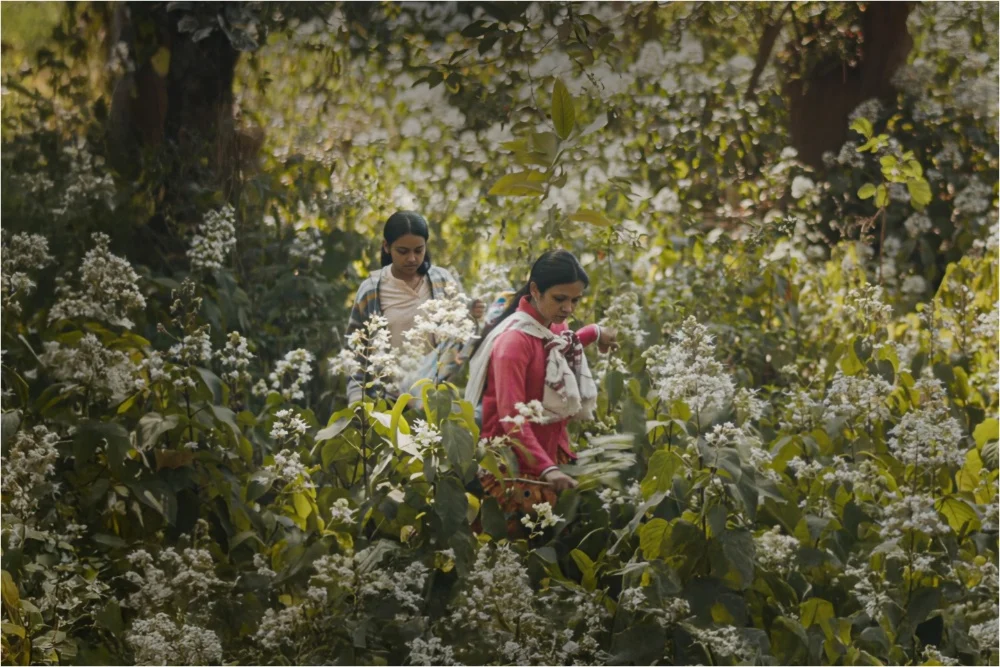
A groundswell of international acclaim is building for “Humans in the Loop,” an independent feature film from India that has captured the imagination of cinematic heavyweights and critics alike. The film, a tender yet incisive exploration of the burgeoning intersection between advanced artificial intelligence and deeply rooted indigenous traditions, is making a significant push in the awards season, particularly eyeing recognition in the highly competitive Best Original Screenplay category at the upcoming 98th Academy Awards. This ambitious bid is now bolstered by the formidable backing of three titans of Indian cinema: legendary actor Shabana Azmi, and acclaimed directors Ritesh Batra and Shaunak Sen, who have all stepped into executive producer roles, lending their immense prestige and discerning artistic sensibilities to the project.
Their collective endorsement is a powerful testament to the film’s profound impact and comes at a crucial juncture for writer-director Aranya Sahay’s debut feature. Produced by Mathivanan Rajendran, “Humans in the Loop” introduces audiences to a world rarely depicted on screen. Its narrative centers on a woman from an indigenous community nestled in the remote, rural heartlands of India. Her unique and increasingly vital profession involves the meticulous task of educating machine learning systems – a role that bridges ancient wisdom with the cutting edge of technological advancement. The film’s very title, “Humans in the Loop,” references a critical concept in AI development, acknowledging the indispensable role of human intelligence, oversight, and ethical judgment in shaping the algorithms that increasingly govern our lives. It’s a term that underscores the film’s central thesis: even as technology accelerates, the human element remains paramount, especially when it comes to instilling values and understanding nuance.
Sahay’s meticulously crafted script unfolds across a three-chapter structure, each segment deepening the audience’s engagement with the film’s central philosophical inquiry: how does the enduring wisdom of traditional societies interface with the relentless march of technological progress? The story artfully positions the protagonist’s work, the careful feeding of data and context into nascent AI, as analogous to the patient and loving act of nurturing a child. This analogy elevates the mundane into the mythical, imbuing the technical process with a deeply human, almost maternal, resonance. The genesis of this unique project is as compelling as its premise, having originated from a potent news story that sparked Sahay’s imagination, and subsequently developed further during a transformative residency at the esteemed Museum of Imagined Futures. This incubator for innovative ideas provided the fertile ground for the script to evolve from a compelling concept into a fully realized cinematic vision.
The film’s ability to blend intellectual rigor with emotional depth has resonated profoundly with its high-profile supporters. Ritesh Batra, the celebrated director behind the globally acclaimed “The Lunchbox,” was particularly moved by the film’s delicate tone. “What moved me about ‘Humans in the Loop’ is its tenderness,” Batra shared, his words echoing the sentiment of many who have experienced Sahay’s work. “It looks at systems and data, but listens closely to the people inside them, their pauses, their compromises, and their need to be seen.” Batra’s observation highlights the film’s genius in humanizing the abstract world of algorithms, reminding us that behind every data point lies a lived experience, a personal history, and a voice yearning for recognition.
Shabana Azmi, an icon of Indian cinema renowned for her powerful performances and unwavering commitment to socially conscious storytelling, emphasized the film’s accessible narrative. Azmi, who has recently garnered international attention for her role in the global series “Halo,” spoke passionately about the film’s universal appeal. “It is a beautiful story, told very simply with a heart. It makes you sensitive to what is happening around us in the world. It is a film that touches and enriches you in many ways,” she stated. Her words underscore the film’s capacity to transcend cultural boundaries, inviting audiences worldwide to reflect on the profound societal shifts occurring as AI integrates into daily life, especially within communities often overlooked by the global tech narrative.
Shaunak Sen, whose documentary masterpiece “All That Breathes” captivated audiences at Sundance and Cannes before earning an Oscar nomination, delved into the philosophical dimensions of Sahay’s work. Sen, a filmmaker celebrated for his nuanced approach to complex themes, articulated the film’s unique contribution to the dialogue around technology. “‘Humans in the Loop’ is attentive to the quiet spaces where technology meets lived experience,” Sen remarked. “Rather than offering answers, the film stays with the ethical uncertainty of technological progress and the people whose lives are shaped by it.” This insight points to the film’s courage in grappling with moral ambiguities, refusing simplistic solutions, and instead fostering a deeper contemplation of the human cost and benefit of rapid technological advancement.
Adding his authoritative voice to the chorus of praise, director Shekhar Kapur, whose internationally acclaimed works include “Elizabeth,” also weighed in on the film’s subtle brilliance. “The film is written in such a way that it reminds us that in the pauses between technology and humanity lies something more ethereal, the responsibility of choice,” Kapur stated. His comment speaks to the profound ethical questions the film poses, urging viewers to consider the moral imperative that accompanies technological power and the critical decisions that must be made at the intersection of innovation and human values.
The journey of “Humans in the Loop” from concept to critical darling has been a collaborative endeavor, drawing on a diverse network of talent and support. Bijjo Toppo joined the project as an executive producer during its crucial development phase, providing early guidance and vision. The film’s reach was further extended through strategic partnerships: Kiran Rao, a prominent figure in Indian independent cinema, skillfully facilitated its release within India, ensuring it connected with domestic audiences. Concurrently, Misaq Kazimi oversaw the intricate American rollout, navigating the complexities of the US market. The production also received a significant boost from Film Independent’s 2025 Sloan Distribution Grant, a prestigious award specifically designated for films that thoughtfully engage with science and technology, further validating the film’s intellectual and artistic merit.
To maximize its impact and visibility in the fiercely competitive American awards landscape, a sophisticated stateside engagement strategy has been meticulously crafted. This effort is spearheaded by experienced advisors Ketki Parikh and Priya Samant, who are working in tandem with a distinguished group of ambassadors. These influential figures include Aroon Shivdasani, the Executive Director of the Indo American Arts Council, a venerable institution dedicated to promoting Indian culture in the US; celebrity chef Vikas Khanna, known for his global culinary empire and cultural advocacy; and respected media personalities Medha Jaishankar and Sanjay Sharma. This diverse team is leveraging their collective networks and expertise to elevate the film’s profile, foster discussions, and ensure it reaches key decision-makers and influencers within the Academy and broader cinematic community.
Reflecting on the overwhelming outpouring of support, Aranya Sahay expressed a deep sense of gratitude and humility. “I feel deeply honored that artists whose work has inspired me have connected with this film,” Sahay shared, acknowledging the profound impact of her mentors and peers. “It began as a short script and gradually evolved into the feature we see today, and that journey has been a labor of love.” Sahay’s words underscore the dedication and passion that fueled the project, highlighting the often-arduous yet ultimately rewarding path of independent filmmaking. Her journey, from a nascent idea to a film championed by industry stalwarts, serves as an inspiring beacon for emerging voices in cinema, particularly those from underrepresented backgrounds.
The film’s awards season campaign has been meticulously planned to ensure maximum exposure. Academy members were granted early access to “Humans in the Loop” through the organization’s exclusive screening platform earlier in the year, allowing them ample time for consideration. This strategic early viewing was followed by a wider release on Netflix in November, making the film accessible to a global audience and generating significant buzz. Beyond the pursuit of awards, the creators of “Humans in the Loop” are committed to fostering a broader dialogue around its central themes. The project is actively staging a series of discussion events focused on the complex interplay between artificial intelligence and indigenous perspectives. These events aim to move beyond theoretical debates, bringing together technologists, ethicists, cultural leaders, and community representatives to explore the real-world implications of AI development, advocating for a future where technology is developed with greater cultural sensitivity and ethical foresight. By engaging in these vital conversations, “Humans in the Loop” positions itself not merely as a film, but as a catalyst for meaningful societal reflection and change.