
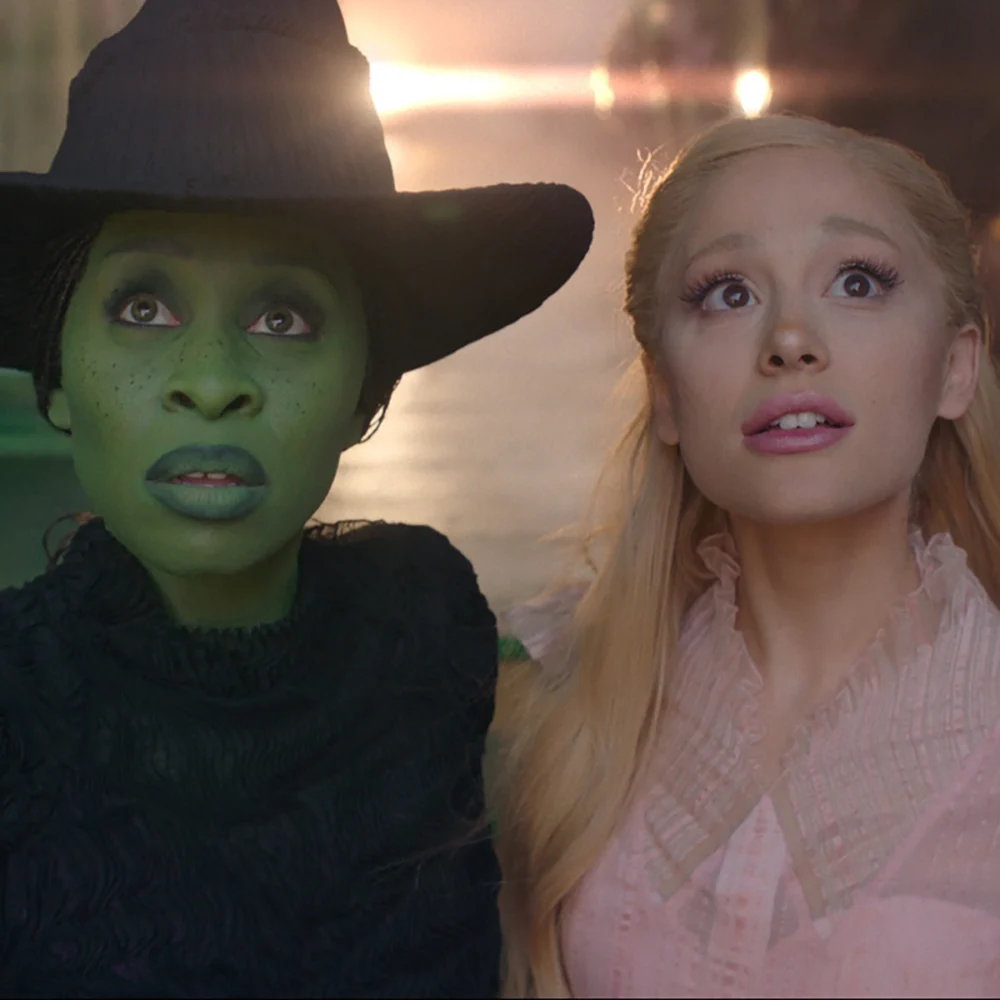
The journey from the printed page to the proscenium arch, and finally to the silver screen, is a path rarely traveled with as much anticipation as that of Wicked. When Gregory Maguire first published his revisionist novel in 1995, few could have predicted it would spawn one of the most successful stage musicals in history. Now, decades later, the cinematic adaptation has arrived not as a single film, but as a sprawling two-part epic. With the first installment captivating audiences in 2024 and the concluding chapter, Wicked: For Good, set to dominate the cultural conversation in November 2025, the adaptation has already proven its prestige, garnering seven Critics Choice Award nominations, including nods for Best Picture and a standout performance by Ariana Grande. While the films remain deeply faithful to the spirit of the 2003 Broadway sensation, director Jon M. Chu and the creative team have taken significant liberties to enrich the lore of Oz, expanding the narrative tissue and introducing new musical elements that bridge the gap between the stage and the screen.
The decision to split the musical into two distinct films allowed the filmmakers to explore the intricacies of Elphaba and Glinda’s world in a way a two-and-a-half-hour stage show never could. Part one, while covering the familiar ground of the musical’s first act, nearly doubled the runtime of its source material. This breathing room was used to flesh out the backstories of the protagonists, most notably Elphaba’s difficult childhood. On stage, Elphaba’s birth is a brief, stylized prologue. In the film, viewers are treated to a visceral look at her upbringing as an outcast. A pivotal addition to this backstory is Dulcibear, a talking bear who assists in Elphaba’s birth and essentially raises her after her father, the Governor of Munchkinland, rejects her due to her green skin. Dulcibear serves as a crucial emotional anchor, providing a clear origin for Elphaba’s fierce advocacy for Animal rights—a theme that resonates throughout both the stage and film versions.
The transition to Shiz University also received a narrative makeover. In the Broadway production, Elphaba is already an enrolled student, tasked primarily with caring for her sister, Nessarose. The film shifts this dynamic; Elphaba arrives at Shiz merely to drop Nessarose off, but her raw, untapped power catches the eye of Madame Morrible, played with a chilling elegance by Michelle Yeoh. This change emphasizes Elphaba’s status as an accidental prodigy, making her eventual enrollment feel like a destiny she didn’t choose, rather than a pre-planned academic path. Even the "meet-cute" between the lead characters and the dashing Fiyero was reimagined. Instead of a carriage nearly striking Elphaba at the school gates, the film opts for a more rugged introduction in the woods, where Fiyero’s horse nearly tramples her, leading to a playful exchange about her blending into the greenery.
As the story moves toward the Emerald City, the spectacle only intensifies. The iconic "One Short Day" sequence was transformed into a massive production number, featuring an extended musical bridge and new lyrics by the show’s original composer, Stephen Schwartz. For fans of the musical, this sequence offered the ultimate "Easter egg" in the form of a cameo by Idina Menzel and Kristin Chenoweth. The original Elphaba and Glinda appeared as the "Wiz-O-Mania Super Stars," a meta-moment that served as a passing of the broom to Cynthia Erivo and Ariana Grande. Furthermore, the film provides a more mechanical, propaganda-driven look at the Wizard’s power. Jeff Goldblum’s Wizard uses a massive model of Oz to charm the witches, even allowing them to choose the color of the road that will connect the provinces to the capital—thus "birthing" the Yellow Brick Road in a moment of political theater.
The sequel, Wicked: For Good, takes even bolder steps away from the stage script. Picking up "12 tide turns" after Elphaba’s flight from the Emerald City, the film dives deep into the political unrest of Oz. To facilitate this transition, Schwartz penned three new songs that do not appear in the Broadway version. "Every Day More Wicked" serves as an expansive opening for the second part, allowing the principal cast to reflect on the growing legend of the Wicked Witch. "No Place Like Home" is a melancholic anthem sung by Elphaba as she reunites with Dulcibear and attempts to convince the remaining talking Animals to stay and fight for their homeland. Finally, "The Girl in the Bubble" provides Glinda with a moment of profound introspection, as she realizes that her life of curated perfection has become its own kind of prison.
Character arcs that were mere subplots on stage are given center stage in the sequel. The Cowardly Lion, who only appears as a tail or a brief cub in the musical, is a fully realized character in the film, voiced by Colman Domingo. In a tragic twist, the grown-up Lion confronts Elphaba, blaming her for his cowardice because she "stole" him from the only life he knew at Shiz. This adds a layer of moral ambiguity to Elphaba’s "good deeds," showing that even her attempts at rescue can have unintended consequences. Similarly, the tragedy of Nessarose and Boq is expanded. In the film, Nessa is shown as a more complex political figure, inheriting her father’s governorship and using travel permits to trap Boq in Munchkinland. When Elphaba attempts to help her sister, the spell is changed from the stage version’s "walking shoes" to a "floating spell." This choice recalls a moment from their youth, emphasizing that Nessa’s desire isn’t just for mobility, but for the feeling of lightness she once felt at a dance.
The climax of the story is also significantly more cinematic. While the musical mentions the engagement of Glinda and Fiyero, the film actually takes the audience to their lavish wedding ceremony. This event becomes a flashpoint for the resistance, as Elphaba crashes the celebration to expose the Wizard’s corruption. The film utilizes this moment to pay homage to the 1939 Wizard of Oz film, featuring Elphaba writing "Surrender" in the sky with her broom—a direct nod to the classic iconography of the Wicked Witch. The subsequent chaos leads to the liberation of the Wizard’s underground menagerie, where he has been keeping talking Animals, including a captive Doctor Dillamond, in a heartbreaking state of regression.
The environmental and magical stakes are heightened through the depiction of Madame Morrible’s powers. On stage, the cyclone that brings Dorothy to Oz is a plot point discussed after the fact. In Wicked: For Good, viewers witness Morrible actually casting the dark weather spell, watching as the storm ravages the landscape and leads to the accidental death of Nessarose. This makes Morrible a much more direct antagonist, highlighting the cruelty of the Wizard’s regime. The film also provides a more visceral look at Fiyero’s transformation into the Scarecrow. Rather than an off-stage event, the camera lingers on the magic as straw begins to emerge from his skin, cementing the sacrifice he makes to protect Elphaba.
Perhaps the most significant bridge between the Wicked prequel and the original Wizard of Oz narrative is the appearance of Dorothy Gale herself. While the Broadway show keeps the "Kansas girl" in the shadows, the film offers a fleeting but clear look at Dorothy and her companions. Though her face remains obscured, she is given a speaking line, pleading with the Wizard to help her get home. This inclusion anchors the film firmly within the wider Oz mythos, making the world feel interconnected and lived-in.
The film concludes by providing a sense of closure that the stage show often leaves to the audience’s imagination. After faking her death with Fiyero’s help, the two are seen departing Oz for a life of anonymity. Meanwhile, the film tracks the fallout of their departure: Doctor Dillamond returns to a restored Shiz University, and Glinda, now truly "the Good," begins the arduous task of studying the Grimmerie to undo the damage done by the Wizard. The final frame of the movie is a poignant tribute to the source material, with Glinda and Elphaba posed in a way that mirrors the iconic green-and-white Broadway poster, a silent acknowledgement of the sisterhood that started it all. By expanding the world, adding new musical layers, and deepening the character motivations, the Wicked films have managed to transform a beloved stage show into a cinematic landmark that honors its past while carving out its own magical legacy.