



Japan’s Western Expressways Snarled by Fierce Snowfall, Stranding Thousands
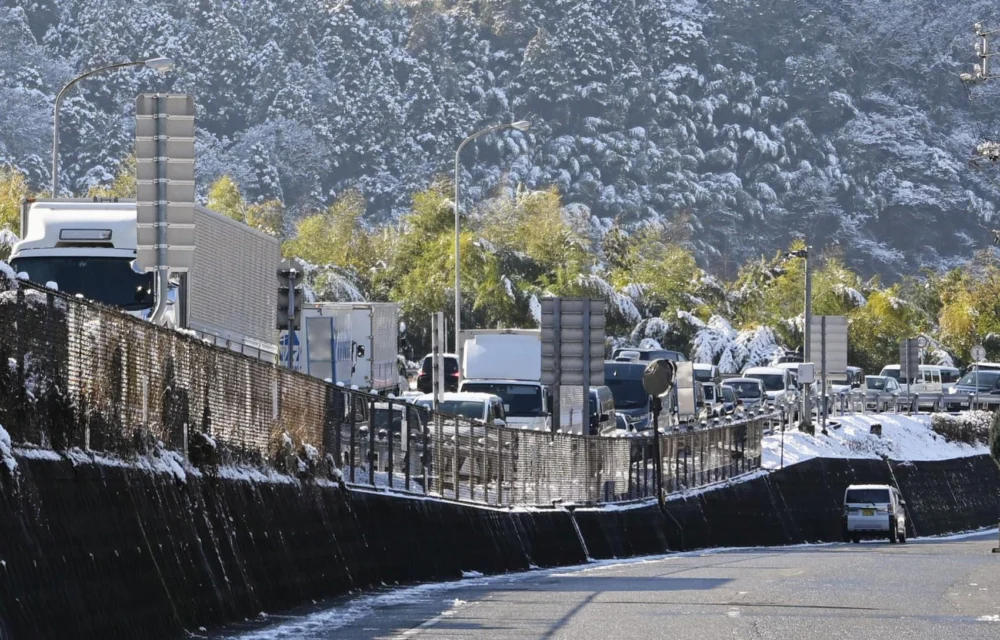
A relentless barrage of heavy snowfall descended upon western Japan on Friday, precipitating a massive traffic standstill on the Sanyo Expressway. The gridlock, which stretched an astonishing 23 kilometers overnight, is believed to have ensnared approximately 3,000 vehicles, according to initial assessments by the highway operator and local emergency services. The disruption brought travel to a grinding halt, particularly impacting those returning from New Year holiday visits to their hometowns.
The initial spark for this widespread chaos ignited around 7:20 p.m. on Friday. Local police reported receiving an emergency call detailing a car with standard tires becoming hopelessly stuck in the accumulating snow on a critical stretch of the Sanyo Expressway within Hiroshima Prefecture. This initial incident was not an isolated event; within a short period, authorities confirmed that at least four other vehicles in the same vicinity had encountered similar predicaments, necessitating further calls for assistance.
The severity of the situation soon became apparent as individuals trapped in the sprawling traffic jam began to experience the physical and emotional toll of being stranded for extended hours. In a stark illustration of the challenges faced, local firefighters confirmed that a man in his 30s, caught in the relentless standstill, experienced distressing symptoms including ringing in his ears, dizziness, and nausea. He was subsequently transported to a hospital for medical attention, underscoring the urgent need for relief and support for those caught in the impasse.
For many, the traffic jam materialized as they were making their way back to their urban residences after spending the New Year holidays with family and loved ones. The return journey, often anticipated with a mix of relief and perhaps a touch of melancholy at the end of a festive period, was abruptly transformed into an ordeal of prolonged waiting and uncertainty. The contrast between the warmth of familial gatherings and the cold, isolating reality of being stuck on a snow-bound highway was palpable for thousands.
One such traveler, a woman in her 40s, recounted her family’s harrowing experience. Her group was en route back to Tokyo from Oita Prefecture, where they had been visiting relatives. What should have been a drive home turned into a nearly 12-hour entrapment, commencing around 7:30 p.m. on Friday. “I was stuck inside a tunnel where my cellphone was out of service area, and I was very anxious,” she shared, her voice conveying the deep sense of helplessness and fear that permeated the darkness of the tunnel, compounded by the inability to communicate or receive updates. The claustrophobic environment of the tunnel, coupled with the silence of her mobile device, amplified her distress.
In response to the escalating crisis, West Nippon Expressway, the operator of the Sanyo Expressway, made the difficult decision to close sections of both eastbound and westbound lanes between Hiroshima and Yamaguchi prefectures. This measure, while necessary to prevent further vehicles from entering the gridlocked areas and to facilitate rescue and clearance operations, further compounded the inconvenience for those already trapped and those attempting alternative routes.
The Japan Meteorological Agency confirmed that the region had been subjected to exceptionally heavy snowfall. The agency’s data indicated that the intense snowfall commenced on Friday evening and persisted through the late hours of the night, creating treacherous driving conditions and overwhelming the capacity of road maintenance crews to keep the expressways clear. The sheer volume and intensity of the snowfall caught many by surprise, even in a country accustomed to seasonal weather challenges.
The prolonged gridlock not only disrupted travel plans but also raised concerns about the logistical challenges of providing essential services to stranded motorists. Reports emerged of drivers struggling with dwindling fuel supplies, limited food and water, and the need for basic sanitation. Emergency services, including police and fire departments, worked tirelessly to reach stranded vehicles, delivering aid and assessing the needs of those caught in the snowbound traffic. The dedication of these first responders, often operating in hazardous conditions, was crucial in mitigating the worst effects of the situation.
The incident also highlighted the importance of preparedness for winter weather, especially for long-distance travel. While many drivers were returning from holiday visits, the sudden and severe nature of the snowfall meant that even those who might have anticipated some wintry conditions were caught off guard by the extent of the disruption. The reliance on standard tires, as reported in the initial incident, became a critical factor in many vehicles becoming immobilized, demonstrating the necessity of appropriate winter tires or chains in regions prone to heavy snowfall.
As the snowfall eventually subsided and daylight broke on Saturday, efforts to clear the expressway intensified. Heavy machinery was deployed to plow the snow and tow stranded vehicles, a painstaking process that took many hours. The return to normalcy was gradual, with significant delays continuing even as the lanes were progressively reopened. The images of snow-laden vehicles stretching for kilometers served as a stark reminder of nature’s power and the vulnerability of modern infrastructure when faced with extreme weather events.
This event serves as a critical case study for future disaster preparedness and response in Japan. The sheer scale of the traffic jam, involving thousands of vehicles and stranding individuals for extended periods, points to potential areas for improvement in communication strategies, the deployment of emergency resources, and the dissemination of real-time travel advisories during severe weather. The experience of being trapped in a tunnel with no cell service, as described by one traveler, underscores the need for robust communication infrastructure that can withstand challenging conditions.
The human element of such disruptions cannot be overstated. Beyond the inconvenience and economic impact, these events can have profound emotional and psychological effects on individuals. The anxiety of being stranded, the fear for personal safety, and the prolonged uncertainty can be deeply unsettling. The incident involving the man who required hospitalization for stress-related symptoms is a poignant reminder of the human cost of such large-scale disruptions. Stories of kindness and mutual support among stranded motorists also emerged, showcasing resilience and community spirit in the face of adversity.
The Sanyo Expressway, a vital artery connecting major cities and regions in western Japan, is a testament to the country’s advanced transportation network. However, as this incident demonstrated, even the most sophisticated infrastructure can be tested by the unpredictable forces of nature. The recovery process involved not only clearing the physical obstructions but also managing the logistical complexities of reuniting people with their vehicles and addressing the immediate needs of those who were significantly inconvenienced.
Looking ahead, authorities and transportation operators will undoubtedly review the protocols and procedures that were in place during this event. Enhancements to early warning systems, more proactive road closure strategies based on meteorological forecasts, and improved methods for assisting stranded motorists are likely to be key areas of focus. The incident also serves as a prompt for individual travelers to remain vigilant about weather conditions, to ensure their vehicles are equipped for winter travel, and to carry emergency supplies when venturing into regions known for their susceptibility to heavy snowfall.
The prolonged closure and the extensive traffic jam on the Sanyo Expressway during the New Year holiday period underscore the interconnectedness of daily life and the transportation systems that support it. The ripple effects of such a significant disruption extend beyond the immediate area, impacting businesses, supply chains, and the overall flow of commerce. The resilience of the Japanese spirit, however, was evident in the collective efforts to overcome this challenge and restore normalcy to the affected regions.
The incident also brought into sharp focus the role of social media and alternative communication channels in disseminating information during emergencies. While cell service was an issue in some areas, the rapid sharing of information through various platforms, by those who had connectivity, played a role in keeping some informed and coordinated. This highlights the evolving landscape of crisis communication and the importance of leveraging all available tools to ensure public safety.
Ultimately, the significant traffic jam on the Sanyo Expressway serves as a powerful reminder of the importance of respecting the power of nature and the need for continuous adaptation and preparedness in the face of an ever-changing climate. The experiences of the thousands stranded will undoubtedly inform future planning and response efforts, aiming to mitigate the impact of similar events should they occur again.
© KYODO