


Aviation Safety Alarms Sound as In-Flight Smoking Incidents Skyrocket to Record Highs
Japanese airlines are grappling with an unprecedented surge in onboard smoking incidents, with a staggering 429 cases reported in 2025 alone. This alarming figure, representing a dramatic 6.6-fold increase from the low of 65 incidents in 2019, marks a new nadir in aviation safety since comprehensive data collection began in 2004. The Ministry of Land, Infrastructure, Transport and Tourism is now intensifying its efforts to collaborate with carriers to educate the public on the severe fire risks associated with smoking aboard aircraft, particularly in light of the burgeoning popularity of heated tobacco products.
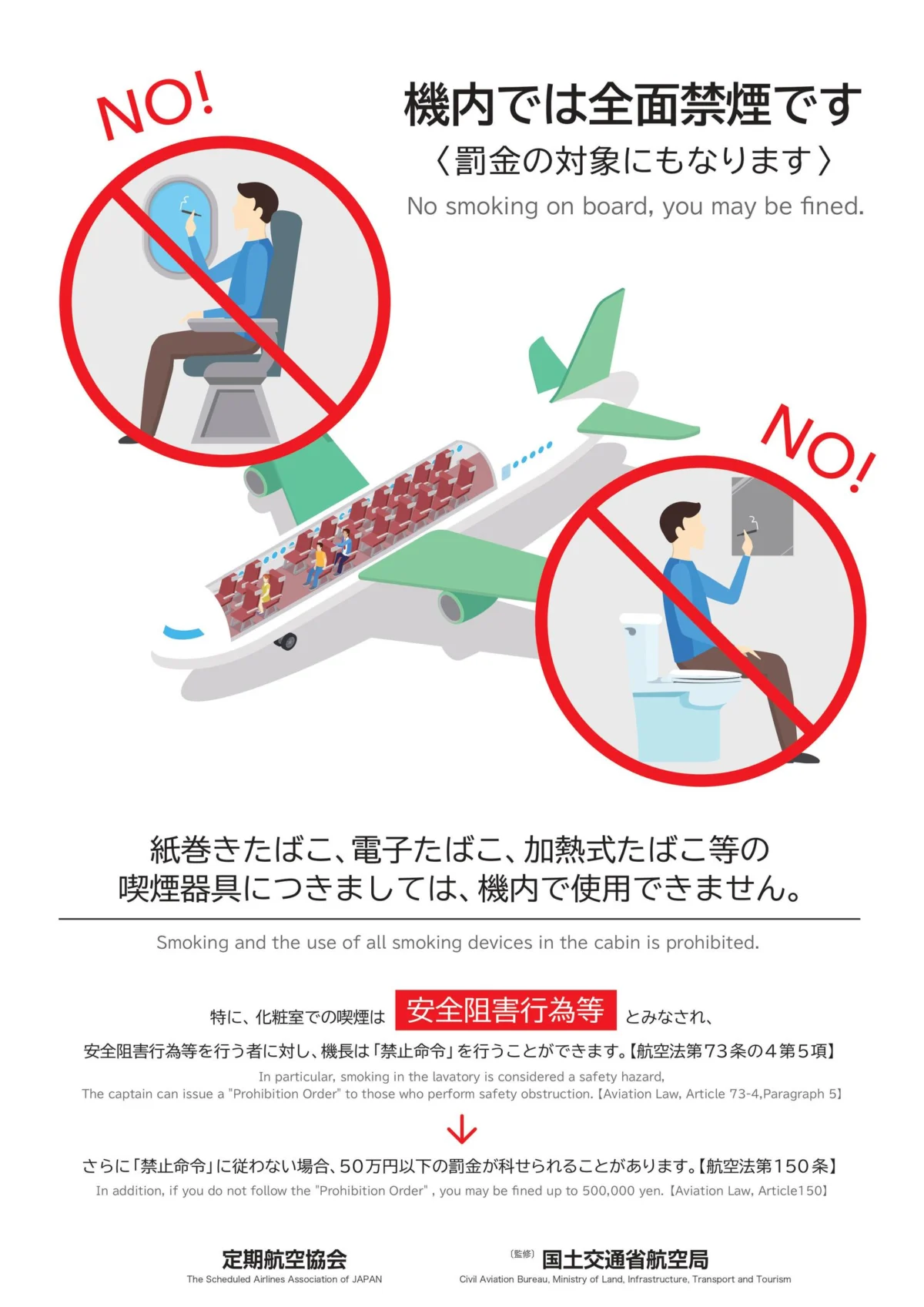
The legal framework surrounding in-flight smoking is stringent. The Civil Aeronautics Act, revised in 2004, explicitly designates smoking in lavatories as an act that endangers flight safety. Non-compliance with an explicit order from the captain can result in a hefty fine of up to 500,000 yen. Further underscoring the evolving nature of the threat, a 2020 revision to government guidelines specifically included electronic cigarettes and heated tobacco products. This addition was a direct response to concerns that the vapor produced by these devices could inadvertently trigger sensitive smoke detectors, leading to false alarms and potential disruptions to flight operations. The ministry clarifies that even smoking in passenger seats or aisles can lead to penalties if passengers disregard instructions from the captain or crew.
These comprehensive reports on in-flight smoking are meticulously collected annually by the ministry from Japanese airlines operating aircraft that meet specific size criteria: those with more than 100 passenger seats or a maximum takeoff weight exceeding 50,000 kilograms. While the number of airlines submitting these reports has seen some fluctuation over the years due to market dynamics and the emergence of new carriers, the historical data reveals a significant upward trend in smoking incidents. In 2004, when comparable data first became available, 359 in-flight smoking cases were recorded. This number saw a decline, falling to 185 in 2007, and dipped below the 100-case mark for the first time in 2018, with 76 incidents. However, the subsequent years have witnessed a dramatic reversal of this trend.
The surge in in-flight smoking incidents appears to be intrinsically linked to shifting consumer preferences in tobacco consumption. Over the past decade, Japan has experienced a substantial increase in the adoption of heated tobacco products. According to data from the Tobacco Institute of Japan, these products now constitute over 40 percent of the total sales volume within the tobacco market. This growing prevalence has coincided with a noticeable uptick in reports of in-flight smoking, with the trend beginning to rise noticeably from 2020 onwards. This temporal correlation suggests that the perceived lower risk or different social stigma associated with newer tobacco alternatives may be contributing to a more relaxed attitude among some passengers regarding their use in environments where traditional smoking is strictly prohibited.
An official from the transport ministry’s aviation security office offered a nuanced perspective on the phenomenon. While current statistical reporting does not differentiate between conventional cigarettes, electronic cigarettes, and heated tobacco products, the official posited that “there may be a lower sense of guilt associated with the latter.” This suggests a potential psychological factor at play, where users of newer tobacco products might not perceive their actions as carrying the same level of transgression as smoking a traditional cigarette, thus increasing the likelihood of them attempting to use them covertly during flights.
In response to this escalating concern, the Ministry of Land, Infrastructure, Transport and Tourism has been actively engaged in public awareness campaigns. In close cooperation with airline carriers, the ministry has been deploying a multi-pronged approach, utilizing posters displayed in airports and during in-flight safety briefings, as well as incorporating messages into in-flight entertainment systems and safety videos. The aim is to unequivocally communicate the dangers of smoking on board and the potential consequences for non-compliance.
The Scheduled Airlines Association of Japan, an influential body representing 19 domestic airlines, has also pledged its commitment to addressing the issue. Hidehiko Yoshida, the 42-year-old secretary-general of the association, stated, “We will also strive to understand the situation and work with airlines and the government to take necessary measures.” This collaborative approach signifies a shared responsibility between regulatory bodies and the industry to safeguard the flying public. The association’s proactive stance suggests an understanding that the current trend is not merely a matter of isolated incidents but a systemic challenge requiring a coordinated and robust response.
The implications of these record-high smoking incidents extend beyond mere rule-breaking. Aircraft cabins are complex, pressurized environments where even minor contaminations can have significant consequences. The introduction of smoke, regardless of its source, can interfere with air circulation systems, trigger smoke detectors, and, in the worst-case scenario, ignite flammable materials, posing a direct and severe threat to the safety of everyone on board. The meticulous design of aircraft cabins, including fire-resistant materials and sophisticated ventilation systems, is predicated on the assumption of a smoke-free environment. Any deviation from this can compromise these safety features.
Aviation authorities worldwide have long recognized the inherent risks of smoking in confined spaces. Historically, the prohibition of smoking on aircraft was a crucial step in enhancing air travel safety, particularly after tragic accidents in the mid-20th century were linked to discarded cigarettes. The advent of newer tobacco products, however, presents a new frontier in this ongoing safety battle. While often marketed as less harmful alternatives to traditional cigarettes, their use in an aircraft cabin introduces a new set of challenges that regulators and airlines are now actively confronting.
The ministry’s emphasis on raising public awareness is a critical component of its strategy. Educating passengers about the specific risks associated with heated tobacco products and e-cigarettes, and reiterating the legal ramifications of their use on flights, is paramount. This educational push aims to foster a culture of compliance and deter potential offenders. It’s not just about the fines; it’s about instilling a deeper understanding of the collective responsibility passengers have in maintaining a safe and secure environment for all. The goal is to shift perceptions and reinforce the understanding that any form of smoking on board is a serious offense with potentially catastrophic consequences.
The involvement of industry associations like the Scheduled Airlines Association of Japan is vital. Their role in disseminating information to their member airlines, implementing consistent policies across different carriers, and contributing to the development of effective educational materials is indispensable. The collective voice of these airlines can amplify the safety messages and ensure that passengers receive clear and consistent information regardless of which airline they choose to fly with. Furthermore, their insights into passenger behavior and the practical challenges of enforcement can inform the development of more targeted and effective safety measures.
The ongoing monitoring and analysis of these incidents by the transport ministry are crucial. By understanding the patterns, the types of products being used, and the circumstances surrounding each infraction, authorities can refine their strategies and allocate resources more effectively. This data-driven approach allows for a more proactive rather than reactive stance on aviation safety. The ministry’s commitment to “understand the situation” suggests a recognition that the problem is multifaceted and requires continuous research and adaptation.
Looking ahead, the Ministry of Land, Infrastructure, Transport and Tourism, in collaboration with airlines and potentially other government agencies, is expected to explore a range of measures. These could include enhanced detection systems for vapor in lavatories, more stringent cabin crew training on identifying and addressing these new forms of smoking, and potentially further amendments to regulations if the current trend continues unabated. The ultimate objective remains the same: to ensure the safety and security of air travel for all passengers and crew, a principle that underpins the entire aviation industry.
The record number of in-flight smoking incidents serves as a stark reminder that the evolution of consumer products necessitates a corresponding evolution in safety protocols and public education. As the aviation industry continues to strive for an impeccable safety record, addressing this emerging challenge with diligence and foresight will be paramount. The focus on heated tobacco products highlights a critical juncture where technological advancements in consumer goods intersect with the stringent safety demands of public transportation, requiring a vigilant and adaptive response from all stakeholders involved.
© KYODO