

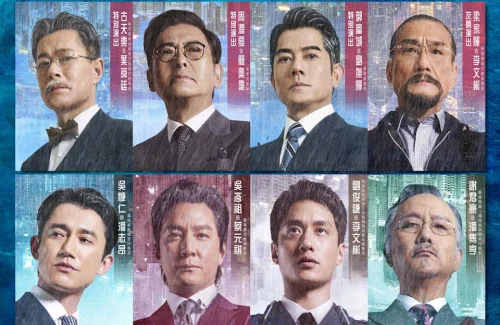
The cinematic landscape is abuzz with the imminent release of "Cold War 1994," a highly anticipated prequel to the acclaimed 2012 film "Cold War." Set to premiere on May 1st, this ambitious production boasts a breathtaking ensemble cast, bringing together some of Hong Kong cinema’s most iconic figures and promising a thrilling journey through a pivotal era. Headlining the stellar lineup are legendary actors Chow Yun-fat and Aaron Kwok, reprising their roles, alongside the formidable talents of Tony Leung Ka-fai and Louis Koo. The film further solidifies its star power with the inclusion of Daniel Wu, Terrance Lau, Wu Kang-ren, Tse Kwan-ho, Louise Wong, and Fish Liew, among a staggering roster of over 40 celebrated actors.
A recently released trailer has offered a tantalizing glimpse into the film’s intricate narrative, masterfully employing a dual-timeline structure to build palpable suspense. The trailer plunges viewers into the year 217, on the precipice of a significant political transition. Adrian Yip, the Chief Executive-elect, portrayed by Louis Koo, finds himself in a precarious situation when the Secretary for Security, M.B. Lee, played by Tony Leung Ka-Fai, mysteriously vanishes. This sudden disappearance triggers an urgent investigation, spearheaded by the Commissioner of Police, Sean Lau, embodied by Aaron Kwok, and the esteemed senior counsel Oswald, brought to life by the inimitable Chow Yun-Fat. Their pursuit of answers unearths a cryptic file dating back to 1994, acting as a critical bridge between the two time periods.
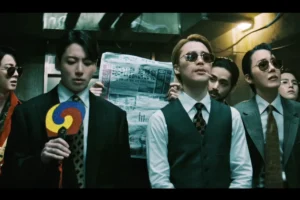
The narrative then deftly transports the audience back to 1994, a period characterized by profound social and political upheaval in Hong Kong. This era is depicted as a crucible of escalating tensions, where explosive gunfights and brutal hand-to-hand combat are not uncommon occurrences. The trailer vividly illustrates a complex web of power struggles, involving the city’s affluent elite, the vigilant police force, clandestine underground factions, and the ever-present influence of the British government. Each entity operates with its own distinct agenda, contributing to a volatile atmosphere ripe for conflict and intrigue.
Adding a significant international dimension to the cast is Aidan Gillen, widely recognized for his impactful performance in the globally acclaimed series "Game of Thrones." Gillen portrays a high-ranking British official whose pronouncements underscore the intricate social hierarchy and the prevailing political machinations. His chilling declaration, "We don’t break the law. We write the law," encapsulates the immense power wielded by certain figures and sets the stage for the moral and ethical dilemmas that characters will face. This line serves as a potent reminder of the era’s colonial legacy and the complexities of governance.
Within this charged environment, the trailer highlights a significant ideological clash between Deputy Commissioner of Police Operations, Peter Choi, played by Daniel Wu, and the younger iteration of M.B. Lee, portrayed by Terrance Lau. Peter Choi, representing a more pragmatic and perhaps morally ambiguous approach to law enforcement, is seen delivering a cautionary directive: "There are things that you can do but can’t say, and there are some things you can say but you can’t do. Understood?" This exchange foreshadows a dynamic relationship built on unspoken rules and differing philosophies of action. The young M.B. Lee, embodying a nascent sense of defiance and concern for the city’s autonomy, firmly pushes back, questioning the very notion of ownership and authority with his pointed retort, "Do you really think you own Hong Kong?" This dialogue exchange poignantly captures the burgeoning national consciousness and the inherent friction between established power structures and those who dare to challenge them.
While the trailer prominently features 12 of the film’s central characters, "Cold War 1994" is distinguished by its ambition to unite an unprecedented 40 internationally acclaimed, cross-generational actors. This monumental undertaking is being hailed as a landmark production in the annals of Hong Kong film history, promising a cinematic experience of rare depth and scope. The film’s casting prowess extends to surprise inclusions, with legendary action star Yuen Biao also slated to make an appearance, further amplifying the excitement among long-time fans of martial arts cinema. The production house has hinted that more hidden characters and surprise star cameos will be gradually revealed in the lead-up to the release, maintaining a high level of anticipation.
The strategic decision to set "Cold War 1994" as a prequel allows for a deeper exploration of the origins and motivations of characters and conflicts that were established in the 2012 film. This approach offers an opportunity to delve into the formative years of key figures, revealing the events and decisions that shaped their trajectories and ultimately led to the circumstances depicted in the original "Cold War." By revisiting the turbulent political climate of 1994, the prequel can illuminate the complex socio-political forces at play in Hong Kong during a period of significant transition, as the handover to China loomed on the horizon. This historical backdrop is crucial for understanding the deep-seated tensions and the intricate power dynamics that have historically defined the city’s narrative.

The dual-timeline narrative is not merely a stylistic choice but a crucial storytelling device that allows "Cold War 1994" to build suspense and thematic resonance. By interweaving events from the past and the future, the film can create a sense of foreboding and anticipation, hinting at the consequences of actions taken in 1994 and their eventual impact on the future. This narrative technique can also be used to explore themes of destiny, causality, and the cyclical nature of power and corruption. The audience is invited to piece together the puzzle, drawing connections between seemingly disparate events and characters, thereby enhancing their engagement with the unfolding mystery.
The film’s emphasis on a diverse and multi-generational cast is a testament to the enduring legacy and evolving landscape of Hong Kong cinema. By bringing together veteran stars and emerging talents, "Cold War 1994" aims to bridge generational divides within the industry and appeal to a broad spectrum of moviegoers. The inclusion of actors from various backgrounds and with different performance styles promises a rich tapestry of characters and a dynamic interplay of on-screen chemistry. This cross-generational collaboration is vital for the continued growth and innovation of the film industry, fostering mentorship and the exchange of creative ideas.
The trailer’s snippets of dialogue, such as Aidan Gillen’s pronouncement and the heated exchange between Daniel Wu and Terrance Lau, offer a window into the film’s thematic concerns. These lines suggest that "Cold War 1994" will not shy away from exploring complex issues of morality, justice, and the corrupting influence of power. The film appears poised to examine the ethical compromises individuals are forced to make in the pursuit of their goals and the societal consequences of such choices. The tension between idealism and pragmatism, between adhering to the law and bending it to one’s will, is likely to be a central driving force in the narrative.
The historical context of 1994 Hong Kong is crucial to understanding the undercurrents of the film. This was a period marked by intense negotiations and anxieties surrounding the impending handover of Hong Kong from British rule to Chinese sovereignty in 1997. The political landscape was a complex mosaic of competing interests, with the British colonial administration, the nascent democratic movement, pro-Beijing factions, and various business and underground elements all vying for influence. This volatile environment provided fertile ground for the kind of intricate plots and power struggles that "Cold War 1994" promises to depict. The film’s exploration of these dynamics offers a valuable lens through which to understand a pivotal moment in Hong Kong’s history.
The decision to cast Chow Yun-fat and Aaron Kwok as central figures in a prequel to "Cold War" suggests a desire to delve deeper into the formative experiences of their characters. Their presence in "Cold War 1994" allows the audience to witness the events that forged their respective roles within the police force and the legal system, and to understand the personal histories that shaped their moral compasses. This approach not only enriches the existing narrative of the original film but also provides an opportunity for these esteemed actors to explore new facets of their iconic characters, showcasing their versatility and enduring appeal.
The inclusion of Tony Leung Ka-fai as M.B. Lee in the contemporary timeline and Terrance Lau as the younger M.B. Lee in the 1994 segment is a significant casting choice. This allows for a direct exploration of character evolution and the impact of past decisions on future consequences. The contrast between the established statesman and the ambitious younger figure promises to be a compelling narrative arc, potentially revealing the compromises and sacrifices made along the way. Their interactions, both within their respective timelines and through the unearthed file, are likely to be pivotal to the unfolding mystery.
Furthermore, the presence of Daniel Wu as Peter Choi, a Deputy Commissioner of Police Operations, introduces another layer of authority and potential conflict. His character’s dialogue suggests a pragmatic, perhaps even Machiavellian, approach to policing, which could place him at odds with more idealistic characters. The dynamic between Wu’s character and Lau’s younger M.B. Lee is particularly intriguing, hinting at a clash of ideologies and methods that will undoubtedly drive significant plot developments.
The anticipation for "Cold War 1994" is further heightened by the promise of a grand production scale, evident in the sheer number of acclaimed actors involved. Such a confluence of talent is a rare occurrence in contemporary cinema and speaks to the ambitious vision of the filmmakers. The film is poised to be a cinematic event, offering a compelling narrative, stellar performances, and a deep dive into a significant period of Hong Kong’s past. The visual spectacle, combined with the intricate plotting, is expected to deliver an immersive and unforgettable viewing experience. The film’s commitment to showcasing both established stars and rising talent ensures its relevance to a wide audience, appealing to both long-time fans of Hong Kong cinema and newcomers alike. The carefully crafted dual-timeline structure, coupled with the high-stakes narrative, positions "Cold War 1994" as a must-watch for aficionados of crime thrillers and historical dramas.