



From Screen Siren to Animal Advocate: The Enduring, Evolving Legacy of Brigitte Bardot
Brigitte Bardot, a name synonymous with the allure and liberation of 1960s cinema, has passed away at the age of 91. Her death was confirmed by Bruno Jacquelin of the Brigitte Bardot Foundation for the protection of animals, who stated she died peacefully at her home in southern France on Sunday. While the cause of death was not disclosed, she had been hospitalized last month, signaling a period of declining health. Funeral and memorial service arrangements are pending.
Bardot burst onto the international stage as a provocative young bride in Roger Vadim’s 1956 film, “And God Created Woman.” The movie, which scandalized audiences with its depiction of a free-spirited woman dancing nude on tables, catapulted the then 22-year-old Bardot to superstardom. Her raw sensuality, combined with a seemingly effortless charm, captivated a global audience and challenged the prevailing bourgeois sensibilities of the era. This role, more than any other, solidified her image as a symbol of burgeoning sexual freedom and a captivating new breed of on-screen femininity.
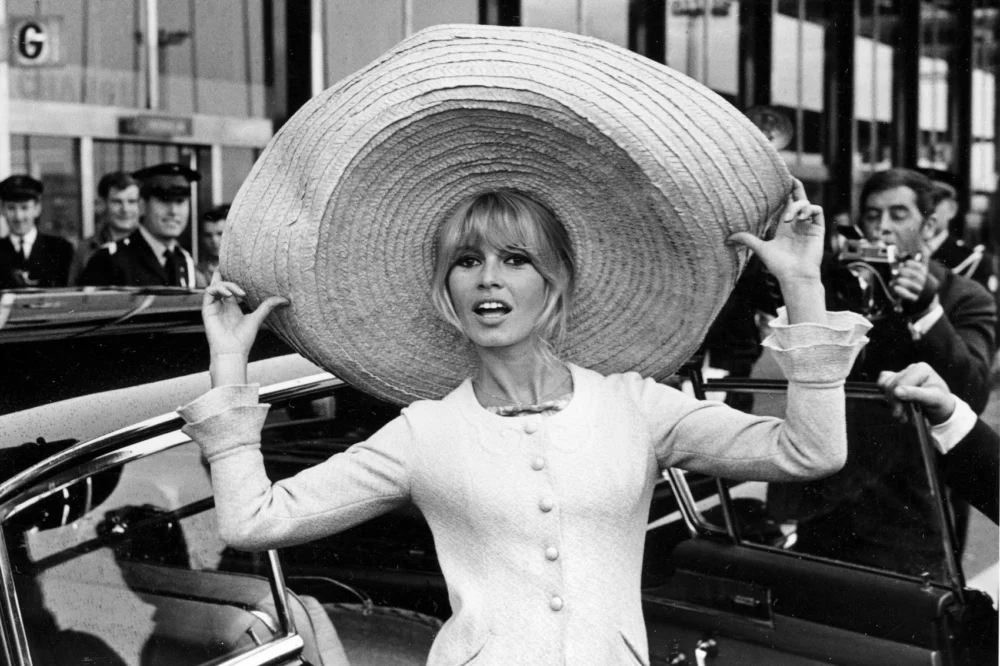
Over the course of a prolific film career that spanned approximately 28 movies and three marriages, Bardot became an enduring icon. Her signature tousled blonde hair, voluptuous figure, and an almost childlike pout became instantly recognizable. She embodied a certain French spirit – one of nonchalant rebellion and unapologetic sensuality – that resonated far beyond the silver screen. Her image was so potent that in 1969, she was chosen to be the model for “Marianne,” the allegorical female figure representing the French Republic. Her likeness graced statues, postage stamps, and even coins, cementing her status as a national treasure.
Beyond her cinematic achievements, Bardot embarked on a second, equally passionate career as a fierce advocate for animal rights. This transition, undertaken with the same intensity she brought to her acting, saw her travel the globe to expose animal suffering. She journeyed to the Arctic to bring attention to the brutal slaughter of baby seals, spoke out against the unethical use of animals in laboratory experiments, and vehemently opposed the controversial practice of sending primates into space. Her commitment to the welfare of animals was unwavering, and she often spoke with profound empathy for creatures unable to defend themselves.
In a candid interview with The Associated Press on her 73rd birthday in 2007, Bardot articulated her perspective with stark clarity: “Man is an insatiable predator,” she stated. “I don’t care about my past glory. That means nothing in the face of an animal that suffers, since it has no power, no words to defend itself.” This powerful sentiment underscored the depth of her convictions and the driving force behind her activism.
Her dedication to animal welfare earned her widespread respect within France, culminating in the prestigious Legion of Honor, the nation’s highest civilian award, in 1985. However, Bardot’s public persona later became more divisive. As her animal protection advocacy intensified, her pronouncements began to take on a more extremist tone. Her political views shifted significantly towards the far-right, and she frequently voiced controversial opinions regarding immigration, particularly concerning Muslim communities in France. These statements led to her being convicted five times in French courts for inciting racial hatred, most notably for her criticism of traditional Muslim slaughtering practices during religious holidays like Eid al-Adha.
Bardot’s marriage in 1992 to Bernard d’Ormale, a former advisor to Jean-Marie Le Pen, a prominent figure in the National Front (now National Rally), is often cited as a catalyst for her political reorientation. She spoke fondly of d’Ormale, describing him as a “lovely, intelligent man,” and her public alignment with his nationalist views became increasingly apparent.
Her controversial stance continued into the 21st century. In 2012, she penned a letter of support for Marine Le Pen in her unsuccessful presidential bid. Later, in 2018, amidst the burgeoning #MeToo movement, Bardot offered a starkly different perspective in an interview, labeling many actresses protesting sexual harassment in Hollywood as “hypocritical” and “ridiculous.” She suggested that some women actively played “the teases” with producers to secure roles. Bardot herself claimed never to have been a victim of sexual harassment, finding it “charming to be told that I was beautiful or that I had a nice little ass.”
Brigitte Anne-Marie Bardot was born on September 28, 1934, into a privileged Parisian family. Her father, an industrialist, was known for his strict discipline, which Bardot described as a “difficult” childhood, occasionally involving physical punishment with a horsewhip. Despite this, a childhood passion for classical ballet emerged. A family friend recognized her potential and arranged for her photograph to grace the cover of Elle magazine at the tender age of 14, marking her earliest foray into the public eye.
It was her first husband, French film producer Roger Vadim, who truly recognized her cinematic potential. He meticulously crafted “And God Created Woman” as a vehicle to showcase her unique blend of innocent youth and potent sexuality. The film’s narrative, which featured Bardot as a restless newlywed entangled in an affair with her brother-in-law, was groundbreaking. Its daring portrayal of desire and its celebration of untamed freedom profoundly influenced the burgeoning French New Wave directors, including Jean-Luc Godard and François Truffaut. The film became an international sensation, and Bardot, with her girlish pout, slender waist, and generous curves, became a global phenomenon, often celebrated more for her physical attributes than her acting prowess.
Bardot herself was often critical of her early performances. “It’s an embarrassment to have acted so badly,” she confessed, reflecting on the initial struggles of her career. “I suffered a lot in the beginning. I was really treated like someone less than nothing.” The intense public scrutiny extended beyond her professional life. Her passionate off-screen romance with co-star Jean-Louis Trintignant further blurred the lines between her private and public existence, making her a constant target for the relentless paparazzi.
The invasive nature of fame took a significant toll on Bardot. She attributed a suicide attempt, which occurred 10 months after the birth of her only child, Nicolas, to the overwhelming press attention. The intrusion was so severe that photographers had reportedly breached her home just two weeks prior to her giving birth, seeking to capture images of her pregnant form.
Nicolas’s father was French actor Jacques Charrier, whom Bardot married in 1959. Charrier reportedly struggled with his role as “Monsieur Bardot,” and Bardot ultimately relinquished custody of their son to him. She later spoke of experiencing chronic depression and feeling unprepared for the responsibilities of motherhood, admitting in an interview, “I was looking for roots then. I had none to offer.” Her 1996 autobiography, “Initiales B.B.,” offered a stark and unflinching account of this period, likening her pregnancy to “a tumor growing inside me” and describing Charrier as “temperamental and abusive.”
Bardot’s third marriage was to West German millionaire playboy Gunter Sachs in 1966, but this union also ended in divorce three years later.
Throughout her acting career, Bardot starred in a diverse range of films, including “A Parisian” (1957), the critically acclaimed “In Case of Misfortune” (1958) alongside screen legend Jean Gabin, “The Truth” (1960), “Private Life” (1962), “A Ravishing Idiot” (1964), “Shalako” (1968), “Women” (1969), “The Bear And The Doll” (1970), “Rum Boulevard” (1971), and “Don Juan” (1973). A notable exception to the often plot-light nature of her films was Jean-Luc Godard’s 1963 masterpiece “Contempt,” which received critical acclaim. More frequently, her films served as showcases for her physical beauty, often featuring her in scanty attire or frolicking nude in sun-drenched landscapes.
Reflecting on her cinematic endeavors, Bardot once stated, “It was never a great passion of mine. And it can be deadly sometimes. Marilyn (Monroe) perished because of it.” This sentiment hinted at a deeper weariness with the demands of Hollywood and the emotional toll it could exact.
Bardot made the pivotal decision to retire from filmmaking at the age of 39 in 1973, following her role in “The Woman Grabber.” She retreated to her villa in St. Tropez on the French Riviera, seeking a life away from the relentless glare of the spotlight.
A decade later, she re-emerged, transformed. Her face now bore the lines etched by years of heavy smoking, and her voice had deepened. She had shed her jet-set lifestyle, opting instead to dedicate herself entirely to animal welfare. She liquidated movie memorabilia and personal jewelry to establish the Brigitte Bardot Foundation, a non-profit organization committed to combating animal cruelty.
Her activism became a global crusade. She implored South Korea to cease the sale of dog meat and penned a letter to then-U.S. President Bill Clinton, questioning the Navy’s decision to recapture dolphins that had been released into the wild. She challenged deeply ingrained traditions, denouncing centuries-old French and Italian sporting practices like the Palio horse race, and tirelessly championed the cause of various animals, from wolves and rabbits to kittens and turtle doves.
By the late 1990s, Bardot’s public pronouncements began to alienate many of her former admirers. Between 1997 and 2008, she was convicted and fined five times for inciting racial hatred. These legal entanglements stemmed from her impassioned and often inflammatory reactions to what she perceived as the slow pace of change in animal welfare and her strong opposition to Muslim animal slaughtering rituals.
“It’s true that sometimes I get carried away, but when I see how slowly things move forward … and despite all the promises that have been made to me by all different governments put together – my distress takes over,” Bardot explained to the AP, attempting to contextualize her outbursts. In 1997, the controversy surrounding her anti-immigrant sentiments led several towns to remove statues of Marianne, the iconic bare-breasted figure of the French Republic, which had been inspired by Bardot’s likeness. That same year, she faced death threats after advocating for a ban on horse meat consumption.
Bardot often expressed a profound sense of identification with the animals she sought to protect. “I can understand hunted animals because of the way I was treated,” she confided. “What happened to me was inhuman. I was constantly surrounded by the world press.” Her own experiences with relentless scrutiny and a feeling of being hunted seemed to fuel her fierce empathy for creatures vulnerable to human exploitation and indifference. Her life, from the dazzling heights of cinematic stardom to the passionate, and at times controversial, advocacy for the voiceless, paints a complex and indelible portrait of a woman who lived life on her own terms, leaving an undeniable mark on both popular culture and the fight for animal rights.
© Copyright 2025 The Associated Press. All rights reserved. This material may not be published, broadcast, rewritten or redistributed without permission.