

The Quiet Anguish: Park Hae Joon Embodies a Reclusive Poet’s Profound Despair in “We Are All Trying Here”
The highly anticipated drama “We Are All Trying Here” is set to plunge viewers into a poignant exploration of struggle, self-worth, and the unspoken battles waged within the confines of family, with newly released stills offering a first, captivating glimpse of veteran actor Park Hae Joon in his transformative role as Hwang Jin Man. Known for his intense portrayals and remarkable versatility, Park Hae Joon is poised to deliver a performance that peels back layers of human vulnerability, anchoring a narrative that promises to resonate deeply with anyone who has ever felt adrift in a world seemingly filled with others’ successes.
At its core, “We Are All Trying Here” weaves the intricate tapestry of the Hwang brothers’ lives. The younger sibling, Hwang Dong Man, played by the equally compelling Koo Kyo Hwan, finds himself in a perpetual state of existential crisis. Surrounded by friends whose lives appear to be flourishing, Dong Man grapples with an overwhelming sense that his own journey is a relentless series of missteps and unfulfilled aspirations. An aspiring film director for two decades, his dreams remain stubbornly out of reach, fueling a consuming anguish, envy, and jealousy that propel him on a quest for inner peace. It is against this backdrop of externalized frustration that Park Hae Joon’s character, Hwang Jin Man, emerges as a stark, introspective counterpoint – a man whose struggles are internalized, manifesting as a profound and pervasive loneliness.
Park Hae Joon steps into the shoes of Hwang Jin Man, a character shrouded in an almost palpable aura of solitude. Once a poet, a dreamer whose words might have once painted vibrant worlds, Jin Man’s artistic ambitions ultimately culminated in a devastating failure. This crushing defeat didn’t just alter his career path; it shattered his spirit, leading to a complete unraveling of his former self. Having experienced the abyss of broken dreams, he has since deliberately severed his ties with the outside world, retreating into a self-imposed exile. His days are now marked by the quiet monotony of manual labor—welding or farm work—a stark contrast to the intellectual pursuit of poetry. His solace, or perhaps his escape, is found in the numbing embrace of alcohol and the flickering distractions of television, tools he uses to navigate the vast emptiness that has become his everyday existence.
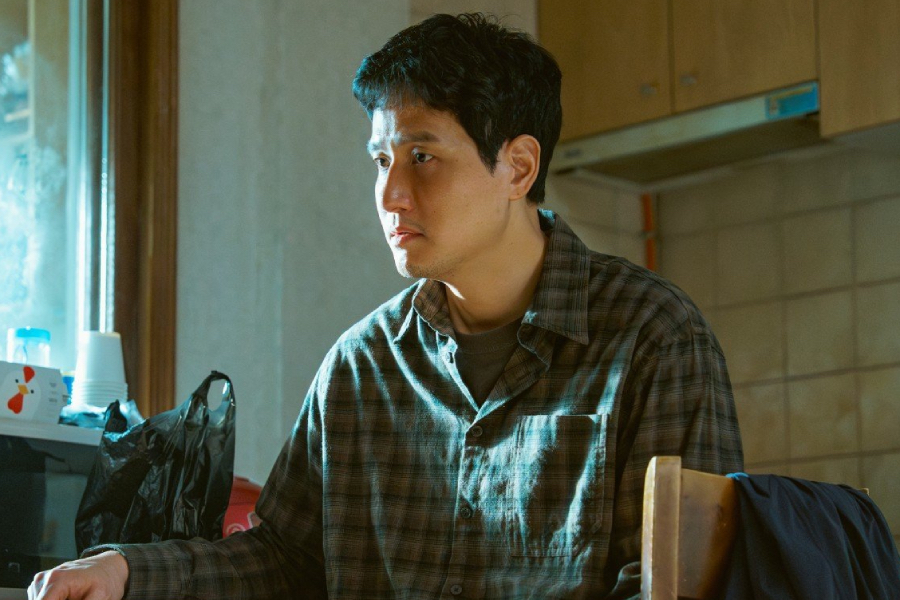
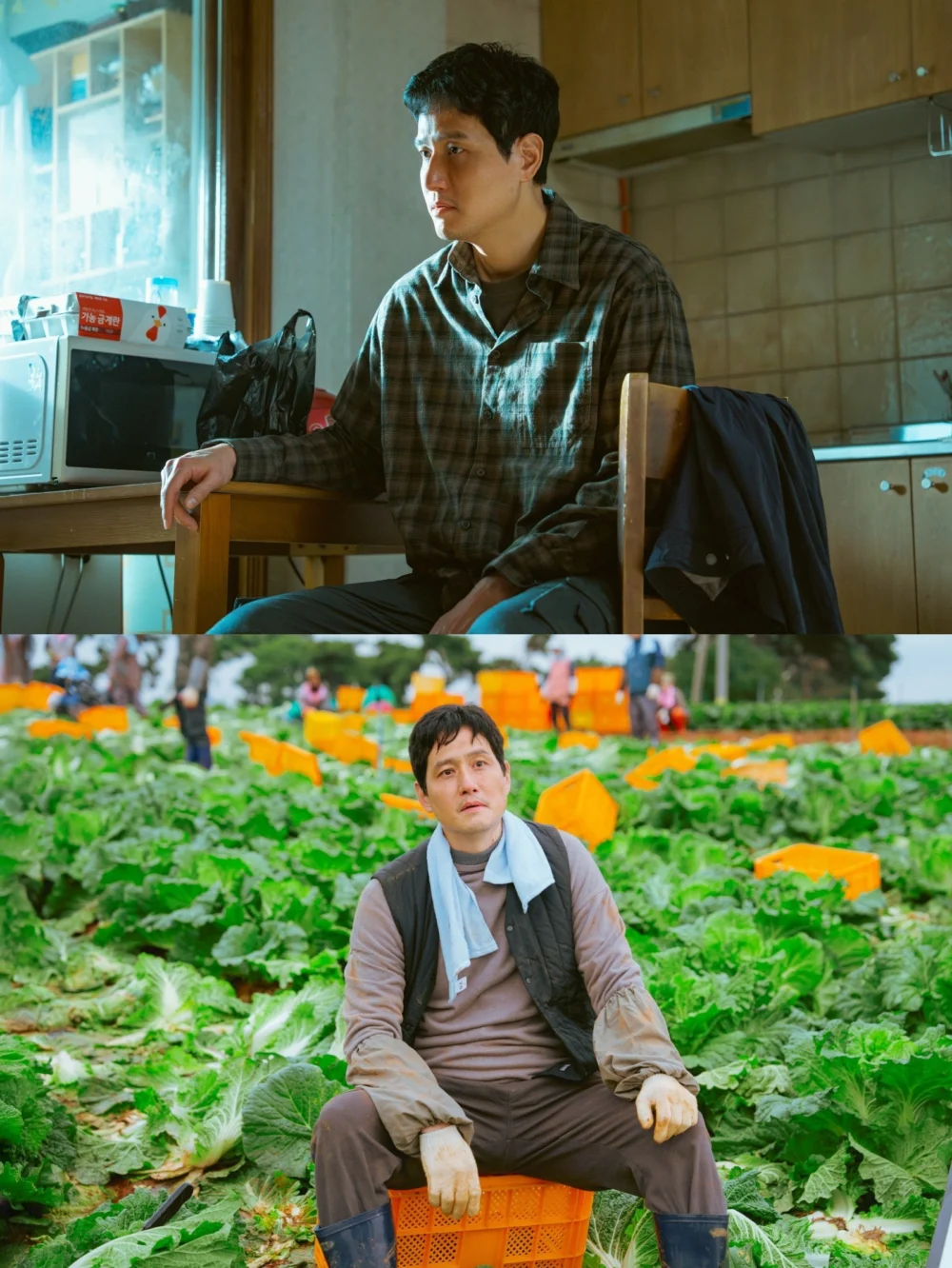
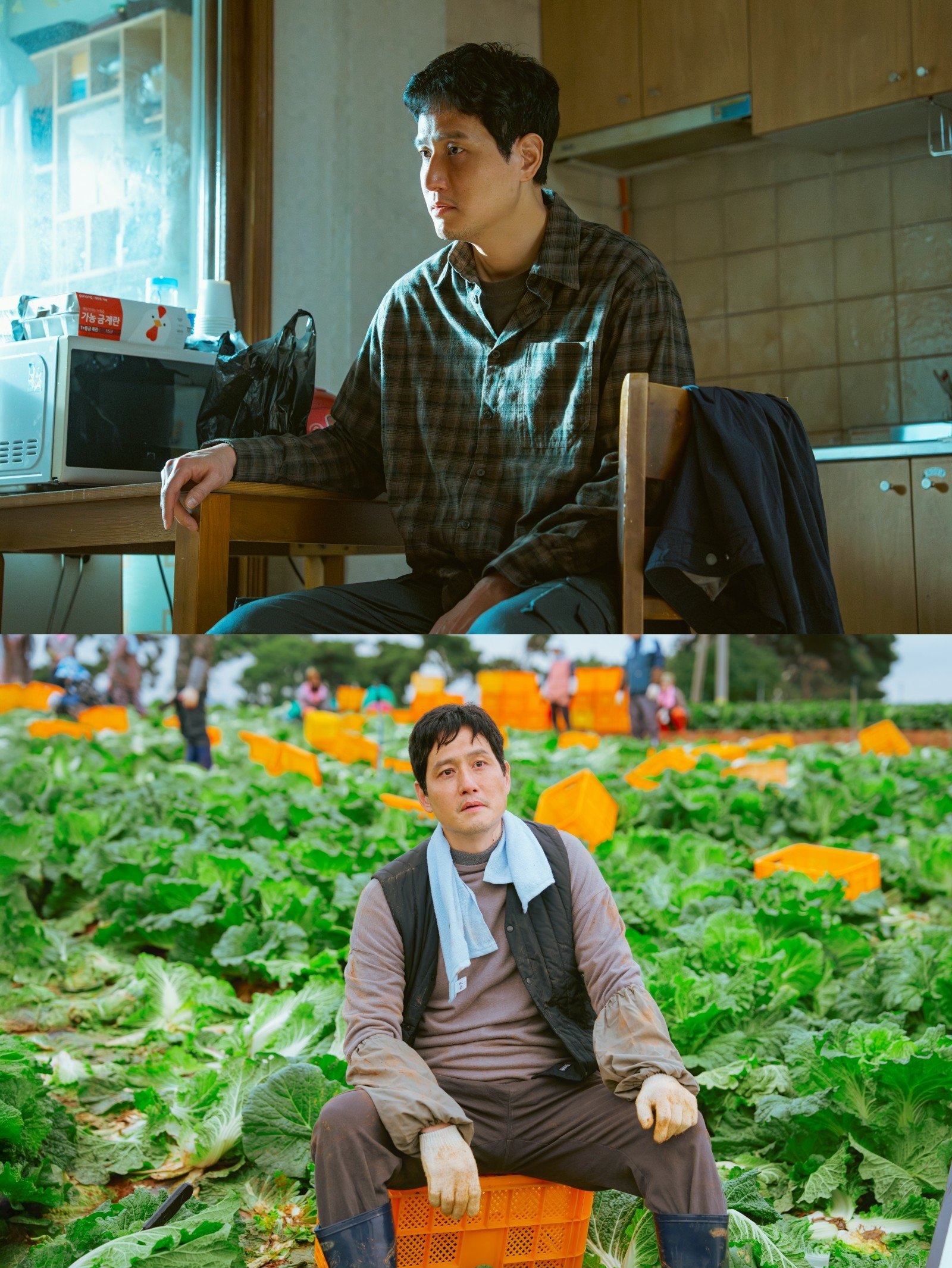
The newly unveiled photographs of Park Hae Joon as Hwang Jin Man are not just promotional images; they are windows into the character’s soul, meticulously crafted to convey the depth of his isolation. One still captures Jin Man seated alone at a dining table, his gaze distant, lost in an empty space that mirrors the void within him. His posture, the subtle lines etched on his face, all speak volumes of a man consumed by his own thoughts, detached from the immediate reality around him. There’s an undeniable weight to his presence, a quiet despair that transcends the visual frame. Another image finds him resting amidst a vibrant cabbage field, seeking respite from the blazing sun. Even in the open expanse of nature, surrounded by life, his solitude remains unbroken. Cooling himself off from the heat, he endures these quiet moments by himself, a ritual that has undeniably become the fabric of his daily routine. These scenes are not dramatic confrontations or grand gestures; they are intimate portraits of a man living on the fringes, finding a fragile equilibrium in his self-imposed detachment, demonstrating Park Hae Joon’s unparalleled ability to convey complex emotions through nuanced expressions and body language.
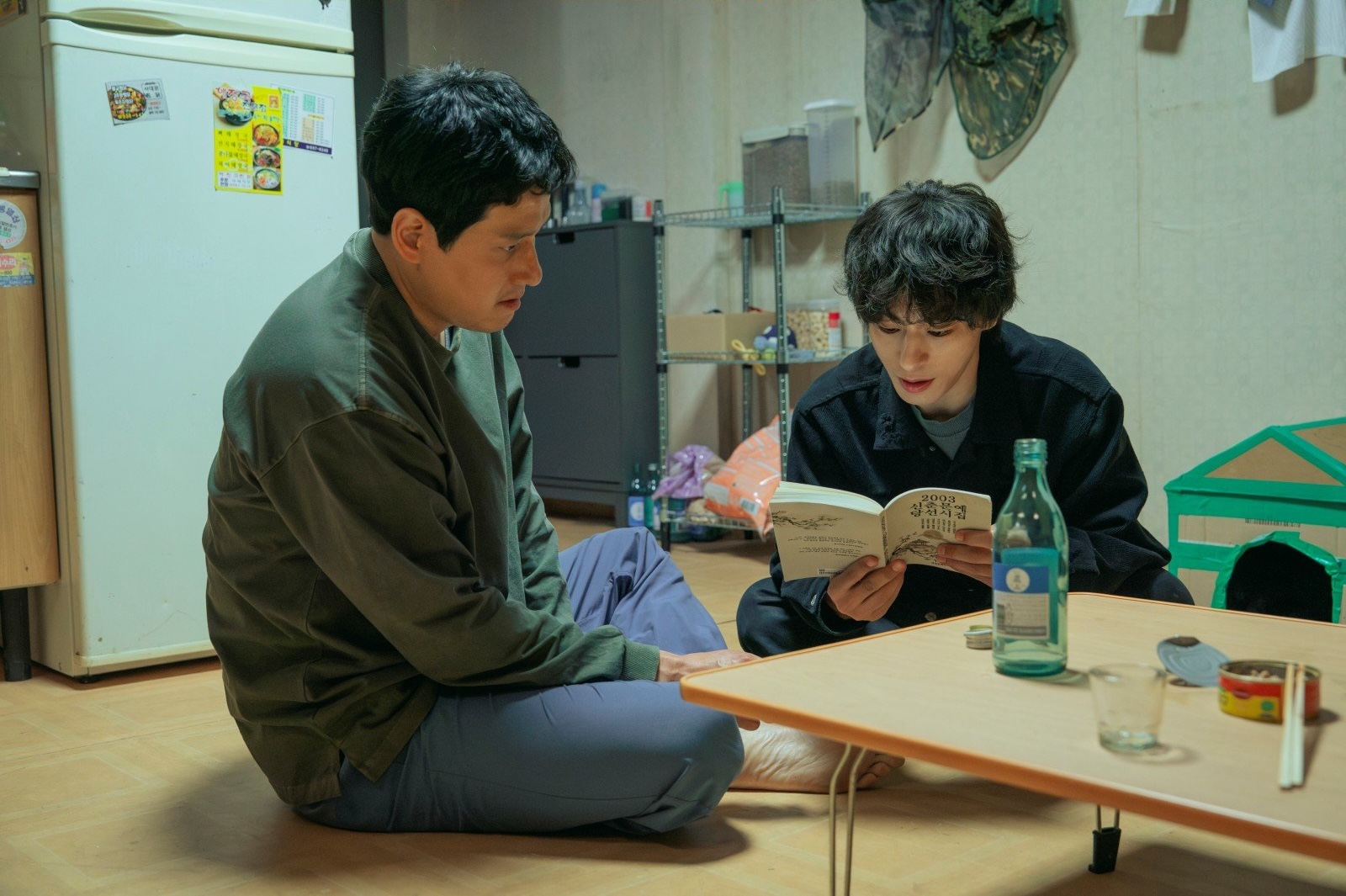
The dynamic between the Hwang brothers forms the emotional core of “We Are All Trying Here,” presenting a compelling study of two men grappling with similar feelings of worthlessness through vastly different coping mechanisms. Hwang Dong Man, the younger brother, externalizes his profound inferiority complex and gnawing anxiety through incessant, long-winded rants. His struggle is loud, a desperate cry for validation, a visible manifestation of his internal turmoil. In stark contrast, Hwang Jin Man, the older brother, is a study in silence. He remains trapped within the labyrinth of his own mind, his pain a private, unvoiced burden. Despite living under the same roof, their worlds are disparate, their emotional landscapes separated by an invisible, yet impenetrable, wall. They are two sides of the same coin, each mirroring the other’s fundamental struggle with self-worth, yet choosing divergent paths to navigate their personal hells. This dichotomy promises a rich narrative, exploring how family members, even those in close proximity, can experience and express their deepest sorrows so uniquely. The drama, therefore, isn’t just about individual struggles but about the complex, often unspoken, connections and disconnections within a family unit.
Park Hae Joon’s illustrious career is a testament to his transformative power as an actor. He has consistently showcased an uncanny ability to inhabit characters, making them entirely his own, often to the point where his real persona fades into the background. From his chillingly realistic portrayal of a morally ambiguous husband in “The World of the Married” to his nuanced performances in films like “Believer” and dramas such as “My Mister,” Park Hae Joon has built a reputation for embodying complex, often troubled, male figures with profound depth and authenticity. His choice to take on Hwang Jin Man in “We Are All Trying Here” is no exception, further cementing his legacy as an actor unafraid to explore the darker, more vulnerable facets of the human condition. His commitment to authenticity is evident in the quiet intensity he brings to Jin Man, allowing viewers to glimpse the hidden turmoil beneath a seemingly placid exterior.
The production team, in their insightful remarks, lauded Park Hae Joon’s contribution, stating, “Park Hae Joon is an actor who completely transforms with every project to the point that it’s hard to remember his real face. This time, he anchors the drama by adding a profound depth to the loneliness of his character, Hwang Jin Man.” This acknowledgement underscores the pivotal role he plays in the drama, his portrayal not merely an act but a profound anchoring of the entire narrative’s emotional weight. They further emphasized, “In particular, his acting chemistry with Koo Kyo Hwan as they portray a brotherhood that struggles with feelings of worthlessness in different ways has greatly enhanced the quality of the project. We hope viewers look forward to it.” This praise highlights the crucial interplay between the two leads, suggesting that their contrasting yet complementary performances will elevate the storytelling, creating a dynamic that is both poignant and compelling. Koo Kyo Hwan, himself an actor celebrated for his unconventional charm and ability to blend humor with intensity in works like “D.P.” and “Kingdom: Ashin of the North,” is an ideal counterpart to Park Hae Joon’s gravitas. Their combined talent promises a nuanced exploration of a fraternal bond tested by individual failures and societal pressures.
“We Are All Trying Here” delves into themes that resonate universally, especially in a society that often places immense pressure on individuals to achieve conventional markers of success. The narrative skillfully examines the insidious nature of an inferiority complex, the corrosive effects of envy, and the silent burden of worthlessness. It prompts viewers to consider the various ways individuals cope with dashed dreams and the relentless pursuit of an elusive “peace.” The drama doesn’t shy away from depicting the messy, often uncomfortable realities of life, painting a picture of characters who are deeply flawed yet profoundly human. The exploration of Jin Man’s past as a poet adds another layer of tragic beauty; a creative soul, perhaps too sensitive for the harsh realities of the world, broken by its indifference. His retreat into manual labor and self-medication is a common, albeit heartbreaking, narrative for those who find themselves unable to reconcile their inner worlds with external expectations.
The premise of “We Are All Trying Here” serves as a powerful mirror to contemporary anxieties. In an age dominated by curated social media feeds and the constant showcasing of triumphs, the quiet struggles of ordinary people often remain unseen and unacknowledged. This drama bravely brings those struggles to the forefront, offering a narrative space for empathy and understanding. It encourages a deeper reflection on what “success” truly means and whether external achievements are the sole determinants of one’s worth. For women, in particular, who often navigate unique societal pressures to excel in multiple spheres—career, family, personal well-being—the themes of self-worth, anxiety, and the search for peace are profoundly relatable. The drama’s title itself, “We Are All Trying Here,” encapsulates a shared human experience, a collective sigh of acknowledgment that beneath the surface, everyone is contending with their own challenges, striving for something better, or simply striving to endure.
The meticulous attention to character development and the promise of powerful performances from Park Hae Joon and Koo Kyo Hwan suggest that “We Are All Trying Here” will be more than just a drama; it will be a profound character study and a moving commentary on the human spirit’s resilience and vulnerability. It invites viewers to witness the quiet heroism of enduring, the subtle pain of unfulfilled potential, and the complex dynamics that bind and sometimes break families. The drama’s focus on internal struggles rather than grand external conflicts makes it particularly compelling, offering a chance for deep introspection and emotional connection.
As the premiere date approaches, anticipation builds for what promises to be a deeply moving and thought-provoking series. “We Are All Trying Here” is poised to offer a raw, honest portrayal of two brothers navigating the turbulent waters of disappointment and self-doubt, proving that even in isolation, the human heart yearns for understanding and connection.
“We Are All Trying Here” is scheduled to make its debut on April 18 at 10:40 p.m. KST, promising an evening of compelling drama and heartfelt storytelling. For those eager to delve into Park Hae Joon’s previous work and witness his range, his recent drama “Love, Take Two” is available for viewing, offering a glimpse into the caliber of acting he consistently brings to the screen. The stage is set for a narrative that will undoubtedly leave a lasting impression, prompting audiences to reflect on their own journeys of trying, failing, and ultimately, finding a way to keep going.